

 YouTube

 Spotify

 Apple Podcasts

 iHeartRadio

 Amazon Music

 Audible
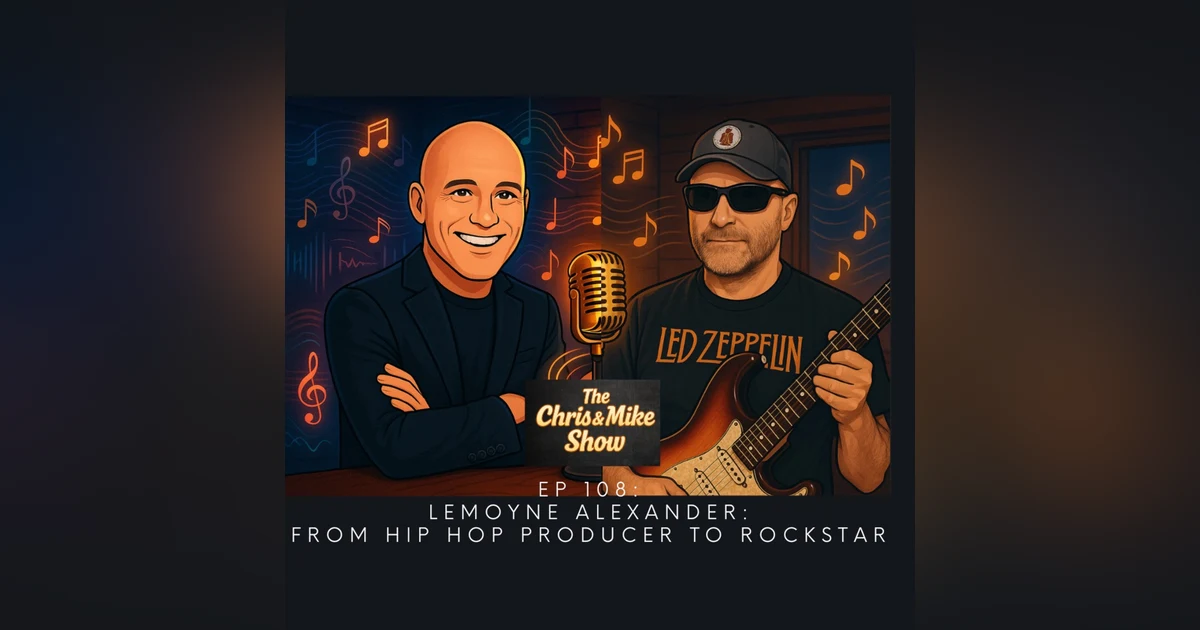
#108 - Lemoyne Alexander - From Hip Hop Producer to Rockstar
Hello Friends,
In this engaging conversation, Lemoyne Alexander shares his remarkable journey from being a prominent figure in the hip hop scene to becoming a successful rock artist.
He discusses the profound influence of family, personal loss, and the creative process behind his music. The impact of social media, particularly TikTok, on music success is explored, along with the dynamics of live performance and the role of instrumentation in rap and rock.
Lemoyne's story is one of self-discovery, resilience, and the power of music to connect with audiences. In this engaging conversation, Lemoyne Alexander and the hosts discuss the legacy of Wolfgang Van Halen, the evolution of music production, and the significant changes in the music industry over the years.
Lemoyne shares his personal journey from the rap world to mainstream music, highlighting his experiences working with notable artists like R. Kelly. The discussion also delves into the challenges artists face with streaming services and the innovative approaches Lemoyne is taking with his upcoming album release.
In this engaging conversation, Lemoyne Alexander, Mike, and Chris explore the transformative power of music, the importance of songwriting with purpose, and the evolution of music promotion in today's industry. They share personal stories of inspiration, collaboration with legendary artists, and the challenges of being a musician. The discussion also delves into the role of producers and the significance of having a supportive network in the creative process.
Check out all of Lemoyne's music at the link below.
https://www.welemoynealexander.com
Subscribe and Comment at our links below.
https://www.youtube.com/@chrisandmikeshow
0:42 So there, boys and girls, welcome to the show. This is Chris, That's Mike. And this is Lemon Alexander. He is, I guess we're super excited to have on the show because his credibility, his life resume is outstanding. You can find us as always, Instagram, Facebook and YouTube. So Lemon Alexander, welcome his name. Is lamoine. Lamoine lamoine. Dammit, lamoine, lamoine. It's. OK, it's OK, I get that all the time. I know, but I I'm not that guy. I like to be like the I'm pronouncing your name properly and plugging. Why? We did this before the show I got. I know just. Balls a little. Bit man, it's, it's my, it's my OCD man. It's just who I am. But now, now I remember Des Moines. Le Moines. Le Moines. Yeah, that's what I I tell everybody. Des Moines, Le Moines. That's great.
1:24 Le Moines. So introduce yourself to our we have this going live right now on YouTube and then we'll be on the podcast platforms as well. So introduce yourself to our our fans. Welcome YouTube viewers, My name is Lamoine Alexander, I'm a recording artist of Rock'n'roll. Right on. Right on. That song you heard from the from the beginning of our show, that's actually Mike and I when we had our band Nemesis. That's a song called Freeman. Yeah. Song called Freeman because it's relevant. I like that. Yeah. Thank you. Thank you. That means a lot coming from you. Absolutely. Thank you. It always means more coming from another musician. Yeah, well, absolutely. We we have our own language.
2:05 Absolutely. So give us, give us, give us. We're in an elevator going to the 22nd floor. This is floor #1 talk about yourself for 22 floors man. Yeah, Where did you get started and how did you go from? So I did my own little research. Chris said that how did you go from the hip hop R&B? How did you go from that side of things to wanting to be a rock'n'roll star? That fascinating. Back in the day, I was a major like force in the rap game producing a lot of big name recording artists. And I know it was around the time when it was the Biggie and the Tupac confusion going on and I lost a lot of casualties in that.
2:51 And I the music changed, everything changed and I wanted no part of it. So I walked away and I had just got offered all these millions of dollars to do all of this stuff that I said I'm not doing it. And I, I cold Turkey walked away. Wow. Yeah, wow, that's that's a lot, man. And then I was stuck with like, OK, So what am I going to do? You know, I've done a lot of TV, I've done a lot of movies, soundtracks and stuff. But I still needed to get some of me out. And I didn't know where to go. And at the time, my dad was he, I didn't know he had had cancer. He was telling me, I really want you to go back and sing and do your own thing.
3:33 It's time for you to stop producing and writing for everybody else. It's time for you to do you. And I was like, I've always hid behind my production and everything. So I never wanted to be upfront. So I started a rock band called State of Grace and we did a lot of songs. And one of those songs that really sparked off everything for us was the the remake of the Killer Queen. With Queen I did a song with Oh. Right on, man Killer. Queen for the for the movie Bohemian Rhapsody. Oh sweet. And it never got picked up, but we still put it on the album and Queen added it to the discography, so I was happy about. That is super impressive.
4:18 Congratulations man. Yeah, that's. Huge. And that's the record right there, if you can see it, that's the, we got a plaque for that. And from that point on, I did, we did 4 albums. And at the end of that term with the band, it lasted 10 years. And I kept saying I, you know, everybody was really complaining in the band because I wrote produce, played all the instruments and all they did was porn. Right. Right. And and my managers was like, see, you're the guy you should be up front and, you know, drop the band. And I was like, no, I'm never going to drop the band.
4:58 And the band dropped me. So I said, OK, it's time for me to figure out what I'm going to do. And I end up going back talking to my dad and me and him had a long talk. And I didn't know at the time we were talking, he was on his deathbed. And he basically said, you know, make a promise to me that you would, you know, record your own stuff. And if you do that, then I'll be there to be with you. And I said, OK. So I left and I went home and I started working on solitude and. Solitude was 2018. Right. Yes, yes, one of my favorite albums. Plus it was my debut album.
5:41 OK, right on. He. Passed during the making of the album, and I dedicated the whole album to him. In fact, I was almost going to quit, but you know, I just kept going because I knew that's what he would want me to do. And I didn't even get a chance to shop it. I just, you know, talked to 1, maybe one or two people about the record and Isotopia picked it up right away, told me to finish it, and then they dropped it. And then I did the second album. A perfect world. Same way during the pandemic, it was always something going on when I was working on both of my albums. And then I ended my contract with Isotopia and I was in the middle of a divorce.
6:31 And that divorce prompt me to write more songs and like Insecurity was one of my favorite songs which we was not planning on putting that out and my management team. I said, isn't it amazing how relationship turmoil, it's just some of the best. Some of the best. Recorded best, yeah. It's just, it's 'cause everybody can gravate to to it, right? Everybody can. Yeah, I mean, I've, I've gotten that. But you what? You what you guys don't know was I was in the middle of divorce when that happened and I was single and I wrote the lyrics based on a date that I had went out on. And I knew that me and her would, you know, because I was so insecure because of my divorce. I really felt like I can't be, you know, in a relationship or dating or anybody.
7:28 I don't even know why I was doing it. And I kept it real with this person and I told him the truth and I wrote lyrics about it. And that's how that song came about. It was for therapy for me, but when management heard it, there's like, you need to put this record out. This is this is going to help a lot of people in the world. And I clearly didn't think like, you know, I wasn't thinking like that. And so I ended up talking to with with my management got me another deal with a company called Wicked records. And we ended up all three of us talking together and say, Hey, let's make this the search the first single. And and with the first single, they decided to do an animation video, which was different. I've never seen that before.
8:13 And it it turned, I had no idea, you guys, I had no idea that that song was going do as much as it did. I've just heard that story. I've heard that story so many times, man, where like, probably one of the most famous is Hetfield talking about nothing else matters. He's like, that was for me and I played it for me. And I accidentally played it in front of one of those guys one of those days. And they were like, I think it was Bob Rock heard it first, you know? Hey, what's that like? No, no, no, no, I'm not taking this too much. No, you don't understand. I can't play this in front of these guys. That was the story. The producer heard it first and he's like, I can't go play this pretty stuff in front of those guys. You know, they're going to laugh at me. And Bob Rock was like, no, you don't understand. That's going to be the biggest song you ever had. And.
9:01 And and clearly I didn't when I was doing and you write about that because I love that song that they did, but. Me too. Clearly when I was doing Insecure as I was writing the lyrics and singing it to it, you know, I I was like, there's something with this song and I had a flight like the previous morning and I was driving in the car like 4. I had just finished the song 4 O clock in the morning. I'm driving and it just I don't know what it did. It was like magic. It just it touched. Me. And I almost had a car, literally had a car accident, and I said something about this song. I had a ravine and I got out and nobody was around during the during during the process of the accident, I got back in the car.
9:48 The song was still playing and I just drove to the house, packed up and and got on a plane and I had it in my headphones. I'm like, there's something about this song. I don't know what it is, but it's something about this song. And when management heard it, like I said, you know, I was like, I really, I felt like, like head feel like, you know, this is this is for me. You know, when I, when I'm starting to feel, you know, I have to remind myself when you're listening to to help me understand what my position is and what I can and cannot do. So I. Those are the best moments because like Chris always uses the word vulnerable, right? When someone is willing to be 100% vulnerable, that's when your true self comes out and that's what people want to see, right?
10:32 That's. True. Yeah, you're absolutely right about. That, but it's hard to do that. It is hard. It's hard. But for me it was like magic. I did the lyrics, I wrote the lyrics. I sang a song one time, that was it. And I didn't even go back to listen to it. I just put playing it in the car and that's it. And we took it from there. When they heard it, they were playing it every day and they called me. I said, man, we, we, we have to put this out. And I was. A little skeptical about it at first, but then I was like, you know what? Let's see. I had no idea TikTok would it would be on TikTok with 3.41 million. Wow, that sounds congratulations. So, so, so people that just joining us, you know, on the YouTube side of it, drop, drop the name of that album again and which song you're talking about. It's called Insecurity by Lamar Alexander from the album alone. Right on and now all your products you can find on on Apple Music, Spotify.
11:28 Spotify. YouTube every every place where you can get music, I'm there. Cool. Yeah, I just went on to your YouTube channel. I saw that. I I didn't play it obviously because we're having a conversation, but I saw the the animated video pop up right away. Yeah, Vivo picked it up right away. I didn't even know that either. When I found out about it they called me and said Vivo just picked up your video. Right now. So your transition from the rap world to the rock world was rock something you just wanted to try? Is that where your heart's always lied? Well. It it there's a story behind that. When I was growing up, I was influenced by guitars.
12:10 Awesome. Me too. At the first, first real sound that got my attention was the guitar in Me Too, the Diana Ross and The Supremes song, Someday We'll Be Together. That part, I was listening to it. I was a kid. I was like maybe 889 years old. And I'm. Listening to it and it it, it really mesmerized me. I mean, put a spell on me and I was like, whatever that is, I love it and I want to play that. And as I was growing as a teenager, the my first reaction to guitars was in church.
12:56 When I go to church and I see the guy playing the guitar with Wawa that that influenced, I was like, I got to play guitar your church. Played but not at mine, yeah. Our churches didn't do that, man. You went to the cool. Church. Yeah. Yeah, exactly. Yeah, but my church was when they was doing all this and I'm like, I was going to church to. Church. I wasn't even paying attention to the pastor. I'm dead center looking at the guy played the guitar. I was like, Oh my God, that's what I want to do. And and then as my brother, I had, well it started with me being suspended from school and there was an old beat up guitar in the closet during the winter of me being suspended and I had to do a whole week with my dad at his house.
13:47 My parents were divorced and that. Was your and that was and that was your punishment. Stay with my dad, that was it. And he was not nobody to play around with. So he when he would leave to go to work, I'd be bored. So I went in the closet and I don't know what I was in the closet for, but I felt something behind all of the clothes. And it was this old beat up guitar. I said, you got to be kidding me. And I took it and it, you know, I just went berserk over it had no name. It was my uncle's guitar. And so I, I used it as a project. I re cleaned. It was it. Was it acoustic or was it electric? No, it was electric.
14:30 And then I passed it up. I smoothed it out, put stickers and stuff on it and it was no good. Maybe 2 strings on it or whatever. And I just started playing whatever I could think of and, and it, you know, from that point on I just did it every day and my dad would come home like what is he in there doing? And he found out that I was totally into the guitar. Yeah. That's cool. And then you. Know did he embrace? Did he embrace that in champion? Yes, he did. He did fully develop me to a point where he saw some interest he saw me have an interest in. Music. My parents did that same thing. They paid for my lessons, yeah. Yes, yeah, mine was a complete opposite her.
15:15 Her statement was, oh, you don't need to get into that shitty world. You don't need to play, you don't need to be one of those people like. We had supportive parents in the morning. Chris did not. Yes. Yeah, like. You don't want to get in that world, like, OK. But but as I was going and now I have really found my sound, I had the guitar cleaned up and the guy that the musician, the music shop, he fixed it up, put the clean the pots, put new strings on it. Now I had to learn it was 6 strings. So I'm like what do I do with six strings? So what I did was I watched as a kid. I was watching Midnight Special and rock concert every Friday.
15:56 How old are you? How old are? How old are you? At that time I think I was 11. How old are you? How do you right now? You wouldn't believe it man, I am 52. I'm 55, I'm 55, right? I'll be 52. That's why I want to know, because I remember that I remember those. Yeah, we all watched the same thing growing up. I watched it and I was like I had my guitar in my head and I was watching everything that they were doing and I was playing everything. I picked up everything, especially on Midnight Special. Midnight Special was the best because all the rock bands was was playing very few R&B and funk bands. But I said I want to start a band. So I got with my brother and my best friend and he got his sister and the four of us started a band and it was that's all they wanted to play was funk.
16:43 I was saying no, no, no, let's play some some wild cherry and some let's do some other stuff. Nobody wanted to play rock. So Rush and and and then Lizzy and all of these bands, Van Halen and nobody wanted to play they they all wanted to play funk and R and. B And I was like, you should have, you should have called me. And Mike, man, what's up? So I was like, all right, I'll, I'll for, for now, I'll entertain you guys with learning how to play everything, which was the, the rhythm section of, of music from Parliament Funkadelic all the way to slide and a family stone. I was picking up everything, but my true heart belongs to rock.
17:24 So I learned all the solos from Led Zeppelin, Stairway in Heaven, Wild Cherry, guitar solos, Rush. I did everything and then everybody was looking at me. That's amazing. But we can't do that stuff, you know? We don't do that kind of music. I was like, yeah, but one day I am going to do that kind of. So here's what I learned. I was working at Guitar Center for a couple years, and that's where, for me, the cultures started to mix, right. I learned that people are people, so when the black guys would come in, they would want to know what I knew just as much as I would want to know what they knew. About. So I wanted to know about Motown and R&B and rap, and they wanted to know the guys who had your interest, right?
18:10 This is what fascinated me. I'm like, man, people are people, you know? People get pigeonholed by the media, right? People listen to rap, white people listen to country or rock and. Yeah. That's weird. No, that's. Not the way life is. So these guys would come in and we'd start talking and they would be just as fascinated with what I knew as I was with what they knew. Just that's why I asked the question, where did your heart lie? Because people would be fascinated that you know, all along you like that sound of Van Halen and ACDC and because you didn't and Rush because you heard what we heard. It's not just straight ahead rock.
18:52 Van Halen is a swing. ACDC is a swing. People don't realize till they sit down to try and play it. It's like, wow, this is harder than it looks, right? So. Let me. Tell you this story, I walked away. I did my last rap record with Too Short and Jazzy Fate and I walked away. I was completely done with rap. They asked me to promote it. I don't even want to promote it. I'm like, you guys do whatever. And then I got an offer. When I was with rap a lot, I had another artist come to me and they everybody was throwing the kitchen sink at me to come back to produce. And I was like, Nope, I'm done.
19:33 What I did was I gave them all of my files of all of the rock. I mean the rap stuff, you can have it, take it. I didn't even ask for no money, Just take it. Wow, that's. Crazy. Two days later I was stuck in the house and I picked up my guitar and I started playing cool. This true story. And the song was a cheap trick. I want you to want me. Dude, great band, great song, underrated. So I started playing. I want you to want me. I have my whole studio set up. I said what? Let me record this and I recorded the vocals, the guitars, the bass, the drums, everything. I had everything.
20:16 And I played the drums, I played the bass and I had a whole complete song. The next day I heard the full song and I couldn't believe it. I was like, I got it. I can still do this. I want to do rock. And because I did that Cheap Trick song, I went in and I recorded all brand new rock stuff and it and I didn't even be honest with you, I didn't even have the proper guitar. I think I used the bass for some rhythm sections of the guitar because I had the software to change the bass into a guitar. Oh, that's brilliant. And I, I just went berserk. So I knew then that I wanted to go back to guitars because my last production in rap, I influenced guitars in my rap production. Oh, right on.
21:05 I wanted to have some kind of live guitars going on in my rap. And that's what those guys wanted that were coming into guitars. And that's why they were coming to me, because most of my stuff was based on live, you know, music and instrumentation. What year was? When I did that song. Yeah. What year was this? Lemone Lemone this. Was 2008 or 9, No 2009. And I went into the studio the next day and I cut the song called Life Goes On because I knew when I did the cheap trick, I knew I could do my own music. So I wrote Life Goes On and I played it for this other guy.
21:47 And at the time I was seeing this girl, she heard the song and she took the song. She said, Lamoyne, this is this is a great song. You need to you need to really do something with this. And I was like, I'm just messing around with it. She took it and gave it to a radio stage, wasn't even mixed her anything. And they played it on the radio. And when they called me, the radio station called me with you're like, you know, this is beautiful. We're going to have this song on regular rotation. And I was like, Oh my God, can you not do that yet? Let me go and mix it, have it properly done, and then I'll send it to you. And so that's what I did. I paid for the song to get mixed and everything. And I sent it to them. And then they played it every day.
22:27 I said, OK, I'm putting the band together. I put a band together and the rest is history. Man, man. It's been I've been making rock songs ever since. And that was that. What's the band's name again? Date of grace with an 8. Yep, St. 8 OK. Yeah, State. And the last song I did with them was a song called Chasing Tie. OK well that's why when I hit State of grace on YouTube I couldn't find you but now it's state St. 8 of Grace. ST8, the number 8, that was my son's idea. He was like, no, that put eight there and man, we toured everywhere. We we opened up for a lot of big bands against me, George Clinton, we did a lot of stuff. I had no idea that the band especially Life Goes on, 15 minutes of fame.
23:17 And I think there was one more song the the the song we did with Queen and it was another song. All four of those songs really took us to new heights. But then, you know, once again, I started like feeling like, you know, I'm doing too much because I write, producing all the instruments. And people got used to IT. People will get used to me just doing everything. And I got to the point where I can do this myself. I don't need a whole band no more. And management was like, yo, man, you need to stop hiding behind a band, man. You need to just come out front. So I said, OK, I'm going to take a chance.
23:57 Yeah. So I did and. He never and he never looked back. I never looked back and here we are today. As far as singing goes, is that what you're saying, being a front man? Yeah, they wanted me to be the front man. To make that clear to the people that are listening. The three of us are musicians. We've been doing this our whole lives. We can talk our own language. He's talking about, you know, I came out front and I became the leader of the band. Yeah, and, and, and and remind you, I was the leader of our funk band when we were kids and we won all the state championship awards, even in Chicago. You know, I had no idea that once I got in front of an audience that they would tell me, my band, my family, everybody would say you would get possessed.
24:45 It's like you don't even know what you're doing when you're. I'm a completely different person when I'm on stage. 100. Percent, man. Chris will attest to that. I'm a pretty mellow guy out off the stage. Yeah, yeah. I don't know what happened to out there. I'm really shy most of the time. But yeah, man, I saw a tape of what we perform especially like even with now with some of the shows that I've done and they're true, that they're telling the truth. I get possessed when I'm on stage. It's. Like, I'm glad there's video evidence because I've, you know, he shared what he had left of, you know, the shows that we recorded and some of those scenes I see. I'm like, who is that guy? Yeah, yeah. But see man, see, I'm the I'm the front man too, so I understand.
25:28 So you know what I'm talking about. But you have. To tell you my band. Yeah, my band, band in the background would be like, it's going to be interesting to see what he's going to do tonight because they never know what I'm going to do. No. And see, my, my, my difference was with when we would go live. We got so comfortable with our music because we rehearsed so much that that they would follow me going off my little improv tangents. When? And back when we were when we were doing it, nobody was improving. So I had this weird thing I did. I called, I called spoken singing. When I would, there were there were songs that I would kind of speak sing to it. But again, because of how we wrote and everything and we were so tight as a group, it didn't matter where I went, they would follow me. So but you, you and I can attest to the fact you have to engage the crowd.
26:14 The the crowd has to go through you before they go back to those guys. So if you're not doing your job, it's not going to go past you into the whole musicianship and the whole product itself. It falls flat. Well, let me ask you, since you know where you know where I am because you do the same thing I do. One time I did a show and I never forget this. This was, it must have been like 1000 people out there and I rehearsed with the band One time. Wow, never did that before. I know I do not like that. I like rehearsing Pastor Me until I get on stage, but things were so crazy I had to fly in and the whole thing, so we did the show. And has this ever happened to you when you're performing because you're such a perfectionist when you're on stage?
27:01 I know how to reach my fans, but the music behind me, I'm listening to these guys and I want them to play the song the way I wrote the song, the way the song should be. And they they, I don't mind them changing it and channeling it into whatever they want it to be, but it still has to sound good. Do you pay attention even while you're in the middle of a song to what everybody's doing in the background? And you know, I've done that a few times and I go. You know. What are they playing back there, you know? Yeah, I, I was blessed with the fact when it with, with Nemesis anyway, that that we were. So we did because we did so much rehearsing and so much writing and whatnot that I would follow stuff that Scott done the drums for cues.
27:48 I would follow stuff that Rick did on bass for cues and stuff Mike did, especially coming in out of solos and stuff. So I would bring a lyric sheet to Mike and say, here, this is what I got. OK, so I wrote a song called Vision, right? So I gave it to Mike. Mike took the vision lyrics and and the innate ability he and I have. He could take the emotional content from my lyrics without knowing what the content was and and pairing it perfectly. So it was just a dynamic that he and I had. So then I'm a good. Chandler in the morning, right? Right. So he so we would recreate the the basic melody from that and then bring it to Scott and and Rick in a practice. And then Rick's bass would change the dynamic of it. Scott's drumming would change the dynamic of it.
28:28 So then we certain parts of every song we would do to where I would come in after Scott hit a certain beat on the drum, you know, and it wasn't Even so much the normal count stuff. It was just different elements from the from the verse to the chorus verse. To the bridge to the. Chorus. So I get what you're saying. Yeah. So. Here's It doesn't throw you off in the middle because you. Know, here's a, here's a good way to put it, Lemoy, not to interrupt you, but this is going to fascinate you as a songwriter and a musician. Basically what he's saying is like Freeman is a 3 minute and 24 second song, right? Yes. We could turn that into a 9 minute song if we wanted to, and all Scott would have to do is 1 quick little fill that would trigger Chris's brain to go, OK, we're going back into the song now, right?
29:12 We had little magical things built into our songs like that so that we could either shorten them, extend them, do whatever we needed to do. So like he was almost like the general, you know, the, the he was the point guard of the band, right? He's the man. He's the one that he's the guy with the stick in his hand doing like this. But we were blessed, and Chris always gives everybody else props for this, and so do I. We were blessed that the three of us look to him to be the leader in that respect. You know, it wasn't like nobody had an ego in that band. No, that's what it takes. To have that, I think that's the only way you can have a jam band or improv, improvise on stage, which we love to do, you know?
29:55 Yeah, I never had lead singer disease. Yes. Me neither, me neither. The only thing that that used to irritate me. Most of them especially. Well, all the bands I played with. They all do like to what are we going to do next, you know, and I go, OK, you got you got you guys got to, you know, evolve, put more input in it. So we could. You know, vibe off of each other. Everybody looked for me for answers all the time. That's where Chris took over. You know what? Are we going to do next? He would be like, let's just fucking play, man. I just, that was my answer. Let's just fucking jam man, Who cares what we? Play. Let's go. That's usually the, the key point, you know, just jamming. Let's just have some fun.
30:36 And like I said, you know, this new band that I'm working with, I'm very, very, these guys are pros, man. They know exactly what to do, how to do it. And I don't even have pretty much have to even play. They play that well, you know, and I could play with them or not play and still feel the drive from the songs and it motivates me. And that's all I was looking for really, to jail with a good band that I know that can help excel and bring me out where I could, you know, be more focused with the fans and and the audience. So here's a question for you because you touched on this with with your home studio and stuff and playing every instrument when you laid down the I want you to want me from cheap Trick, right?
31:20 So with every instrument you play, you self-taught with everything that you play. Everything. That was my question. Thank. You everything. Everything. I played live. I played drums. I played bass. Yeah, I played guitar. Yeah. I play Congress. Any type of percussions, OK, And I do all the vocals. I got a three-point octave range voice. I can go high, low and me. Right on. And and I write all of the songs. That's cool, man. Very. Piano. Piano keyboards. Piano too. Piano. I had to. I taught myself how to play piano for that started when I started producing. Rap. That was the real the work instrument because, you know, everything was centered around the piano, so I really had to learn how to play that.
32:10 So here's the thing. But here's here's I want to go down the rap path because I've never been a big rap fan. Just not my thing. So this may come across as a completely ignorant question or it may be something that's completely enlightening. So from a musical, from a music standpoint, instrumentation wise, what what what is typically guitar? Like you talked about bringing guitars in the rap, right? And and so you have are you talking everything with a band would have, because most of the rap artists you see now when they go on stage, right, they have the tracks behind them. They're just on stage by themselves. That's true. You know, so you don't see the musicianship part of it, right. So you're, you're in the studio. You mentioned Tupac, so I'm assuming you did something with Tupac.
32:52 I did. I was getting ready to work with Tupac before he died. OK, cool. OK, that's right. So, so you're in the you're in the you're in the studio with a, with a rap, a rapper, a rap artist. What's what's the music behind what they're doing? Because all I hear from all I hear in rap is is the. Samples and scratches. Right. OK, what I usually do, I incorporate. The only thing I incorporate that's live. When I was doing towards the end of my rap career, production was mostly guitars, bass and some drums. But most of the drums was always sampled in drum machine. You know, most of the time.
33:33 I mean, maybe I would try something different occasionally, but most of the time is drum machine. OK. So with the with the drum machine is that is that because then you don't have to worry about the human element as far as the timing goes Exactly and. Rappers don't care about, you know, live musician, they just want to get the beat off so they can do their rap over it. So that was simple for me. But being eclectic and being different and trying to come up with different styles, you know, I didn't want to sound like everybody else. So I incorporated live bass playing over the drum tracks. Really. Because it was live, you know, and if there was a mistake maybe, but you in my tracks, you would never hear the same repetitive bass line.
34:21 This is towards the end and when I started, yes, I take a, a, a, a mood bass or something and sample, I mean recorded 4 beats of it and copy and paste it. So I'm done. Then I said that's what everybody else do, I want to do something different. So I started playing from the top of the song to the end with all these these notations that would change the dynamic or the baseline straight to the end. And I like that. So I said I can do the same thing with guitars. So I'd do a strum or Wawa or something and they go, oh man, that's too live. Can you cut it up and not paint? I would cut. I would play live. And cut. And chop it up and put it in the drum machine to make it sound like it was simple. But you're still getting that human. Element, right?
35:09 Yeah, it still has the human element. In it but yeah sometimes I would sample myself and put it in a drum machine so I can still have that rap element and that's what everybody like because I could play every any instrument any instrument so as a producer you're. Injecting these these musical instruments into the song that you're producing to make it stand out even more than it's already trying. Because absolutely the rap music industry is everything like rock and you got to you got to have something's got to stand out. You got to have the hook. Something's got to break you because you know what? 1000 people want to be a rap star, right? So what's that one thing? Is they're going to take you. Over the knot, over the top, right? So if you're making that much fuller of a sound behind the rap artist, I think that would give them an edge when it came to airplay and and popularity and, and grabbing the hook and stuff, right? Yes, exactly.
35:57 Yeah. And when I did. That. It was so different and unique. They would pass it on and that's how I got signed to rap a lot because they would pass it on to other rappers and yo man, where'd you get that beat from? And then it just just would just spread and then go on. I ran that label on one who ran that label? You were. Signed to. Who ran it? Yeah. Which? I'm. Assigned to multiple labels? Which one? The one that you just mentioned. Rap a lot. Rap a lot. Yeah, I've heard. That. Name. Yeah, Rap a lot is a. Big name, a big record company. Oh my God.
36:37 Oh. My God, I'm just seeing them last. Night. I forgot his name right now. That's cool you. Know he he's really. Good He he knows how to pick most of the the the rappers and, and he pretty much called me and asked me to. We had a big meeting over the last artist. And this was during the time when when I was getting ready to to work with R Kelly's brother. He was a rapper, you know, and. We never. Got around to doing he was probably, I would say, my last rapper that I was getting ready to work with.
37:19 Never heard of R Kelly having a. Brother who was going to be a rapper? Yeah, yes. You and you never will. But you know, the guy is fantastic. That's, you know, he can't shine past his brother, but that's why that's that's a. That's a terrible shadow to follow to. It is because everybody. Has a right to be their own individual and that that's super sad to me that, you know, one person can ruin it that bad for somebody else. But you're right. He did. Yeah, well. It's kind of like. Yeah, it's kind of like Michael Jordan's kids. None of them play basketball because how could you? How could you live up to your father? Well, they all tried. No, it's. Impossible. They they tried. But they failed. But it's it's just, I mean, Lebron's kids can live up to him. They just got to flop better, you know, But it's you just it's hard to live up to somebody with that magnitude.
38:05 Like Jacob Dylan is Bob Dylan's kid. He's he's good in his own right, but he'll never reach the level that Bob did. You only, you know. You only. Get that? Yeah, You talking about? Dylan Bob Dylan's son from Dylan. Yeah, Wallflowers. Yeah. Wallflowers. Yeah, The Wallflowers. Yeah, like. Like. He's a great singer. He is, absolutely. But he'll never. He's the son of Bob Dylan, so. Right, right. You just. Never. You can never aspire. Like if Mick Jagger had a kid in Rock'n'roll, yeah, it's not happening. And as he's got a kid, but he's not in. Rock'n'roll and as good as he is. Wolfgang Van Halen is in the same light, right? You're right. We only get one Eddie Van Halen.
38:45 Yeah, yeah, and and. And Wolf was named Wolfgang. Yep, Wolfgang. He's fantastic. He's fantastic. Mammoth that's. The name of Mammoth? Yep, Mammoth. Yeah, and. He's and he and he owns his space. He owns and he's good at like I didn't give him credibility when they first came out because I, like everybody else thought, oh, riding the coattails of Eddie. And then they opened up for one of my favorite bands, Alter Bridge, and I was blown away. I was just, I was blown away by his stage presence. A nice band too. Alter Bridge is fantastic man. And the nicest, most humble, down to earth guys you'll ever meet in in at least I may just, I just, you know, just amazing. But the way he commanded the stage and the presence that he had and his engagement with the crowd and I was just like, holy shit.
39:31 He he's, he's carving his own slot in this industry and he's doing it without emulating his father. Now he had exactly. And now that was one thing. That impressed me. I was like, he's doing it without, you know, no help for his dad or nothing, you know, and he found his own sound and everything. I was very proud of him for that. Yeah. Yeah, he had a couple moments. Yeah, yeah, couple moments can't get past their dads or or. Anybody that's. In the game. You know you can't pass them. And like he, he plays. Every instrument that's also impressive. Yeah. Yeah. And he's self-taught. Yep. Yeah, he's self-taught and you know. His dad. Helped him. A little bit, he said his dad was the worst teacher.
40:12 Ever though. That's on. Record, yeah. His dad was. The worst teacher? Yeah, he said. My dad's one of those. Guys that can do it. And yes, he's Eddie Van Halen. But I'm telling you right now, he's one of the worst teachers ever because he can't slow things down. You know he only plays it at 1 speed, so you got to be able to either keep up or. Right. And I. Don't. Take away from shredders I think. Shredders are that's that's cool with them. I shredders I can if I wanted to, but so can I. There's a. Place for it? Yeah, I'm, I'm, I'm deep. When I play my solos, my souls, my solos are like spiritual.
40:56 Yep. Yeah, I want to hear one note that's gonna means something. B.B. King means B.B. King means more to. Me than Ingvae Malmstein, right? Or Joe Satriani, Then you know what I'm talking about. I can. Listen to BB play all. Day long. I can listen to Stevie Ray play all day long because Stevie Ray knew when to play fast. But when he hit you with that note that didn't belong there, you're like, Oh my God, where'd that come from? You know? And then he would. Just hang on it like. Why do you do that? BBBB is. Another one that taught me resilience and and feelings when you're playing. My dad used to tell me listen to B.B. King and I was like, I don't, he's a Blues guy. I don't want to hear him.
41:39 I heard him. The thrill is gone. Yep, Yep. What's? The. Space in between. Right. Oh my God, I was for that right. Spot. I was like, OK, I'll see. What they talk about, yes. I was very impressed. The one thing I studied him too. The one the one thing I was. Going to mention earlier when I had when I was at the the Ultra Bridge show with Wolfgang Van Halen, he only, he only did the the Eddie Picken thing once in the whole show. Oh the tap fret board tapping. Only once. Only once. Yeah, only one time. Yeah, only one. Time and so that I thought was cool too, because he he really wasn't trying to be his father no, he was just. Wanting to be himself.
42:24 Which is cool. Man it is man so. Let's let's dive more into your. Your life resume Lemoyne I want to know I want to know how old were you when you first got to the. Level to where you. Were being paid significantly for for either performing or producing and what did that look like? Was that the rap world? Yeah, it started in a rap. Row and by the way, the the guy the the president of rap a lot is Jay Prince. That's his name. What up? What up, Jay Prince? Shout out, yeah. My my career started picked up I to be honest with you, yeah, I was doing plays, doing music and plays OK and. After.
43:14 A little bit a little bit of time I spent in that after my family, my brothers, cuz I did a band with my brothers called Generation. And then we get another band after that going into the 80s called The Fascination, and we score maybe about three hits, like literal record company hits and everything. And then I got out of it and then I started producing with some of the guys that was in the band, and that's how we started producing. Oh, gotcha. You know, my first real job came when I was in college, Davenport College at the time, and I got a phone. Call and.
43:58 They said that, you know, they wanted me to come to Chicago and I was like, for what? You know, I was like, man, we need you here. And, and I was like, you know, I spoke to them and little that I knew, it was Mr. Lee and they wanted me to work with R Kelly and R. Kelly needs a team of. Producers and some positions. And so I said, OK, So I packed my bags and I moved to Chicago and I went to work with R Kelly at the time. And two years I spent learning how to program and make beats and all of that because like I said, I come from a musician's background where everything was live.
44:39 So I had to learn how to contain all of that in machines and. Being around. These guys, they taught me how to do all of that and I said, well, I got to be different than what everybody else is doing. So I spent days and nights trying to perfect my craft all the time. And that's. When I started. Getting paid working for R Kelly and then it went from there because I left R Kelly and I started working for Michael Bivens from. Yeah, and his company, same. Thing I spent a year with him doing the same thing, you know, making beats for his artist. Then I left Bivens and went to Motown, same thing a year with them.
45:23 Then it just spiraled into other things with with, you know, I work with McMillan, who was manager managing Prince and Stevie Wonder at the time. And. You know, we formed this connection and then I started working with him for like two or three years and he brought me a lot of clients. And that's why I said this was during the time where I was literally about to work with Notorious BIG before he got killed. And. And faith and Faith Evans and doing all these beats, you know, I just learned how to do my craft where everybody was coming to me based on, on, you know, my experience. And then from there I started making all this money doing all of this just producing stuff.
46:11 And, and then I got an offer to from working with another artist that took me to rap a lot. And at that time when I started working for rap a lot, I did a like a 10 year contract with them. Didn't know it, but I did a 10 year contract with them. And it during the process of that, you know, things started drifting and slowing. So I started spreading my music around working with Murder Inc. During the time I did something with Murder Inc, RCA and I met a Tron, which was Tupac's the manager, and we were talking about doing some stuff for Tupac, but then he got killed right after that. So, you know, the whole rap game just was just gave me a bad feeling.
47:00 You know the. Longevity. Of it, the safeness of it, it's just I didn't feel comfortable doing it no more. The bigger that I. The bigger I got in producing and making beats, the less I wanted to do it. Wow, interesting. Yeah, the less I wanted to. Do it, You know, I'm not going to lie. It made me a lot of money, lots of money. I was able to buy stuff and do stuff for my families and everything. But the IT just just, I just, I just didn't like it. Yeah, I just, you know it. Just wasn't. For me and then people. Go ahead.
47:42 I should say when so. When you turn on the radio. When you turn on SiriusXM, whatever you choose to to listen to music, how often do you hear samples of your stuff in the music room? Yeah, that's the beauty of it. You know, I could go back YouTube and I could go back and listen to a lot of stuff that I produce and it makes me feel good, you know? Right. Yeah, and I still get checks for it today. And it's not as big as it was. Back then, but I still but still, you know, but still. Yeah, let me ask you this, Lemoyne. The behind the scenes for me, the fascination. I was like a little kid at Christmas the first time I saw a recording studio. Just all the lights and the, you know, like the little kid in me came out, all the knobs and the like.
48:27 I got it Is that you know what? I know that feeling. What? You're talking about. Is that what made you want to do it? Because I think you either have it or you don't, right? Yes. OK. I don't know, You know when they. They talk about you got that it thing. Yes, that's what people. Used to say to me. You got that it thing and I go what the fuck is that? It. Yeah. What is the? It I just like making music, you know, but. And I don't know, I kind of, I kind of like measured it as like the IT thing being maybe you would dedicate your entire life to it and you don't give a shit about nothing else but that. Yeah, right. That's how I. Put it you know I. Don't know? Well, like Chris.
49:08 Chris. Gave me a huge compliment earlier today. You know that I have my own style and I'm super proud of that because I I can't play a bunch of cover songs, right? That wasn't my thing. I wanted to figure out what the guitar meant to me. You said it earlier, spiritually, that's what, that's what made me understand what my place here on earth was, right When I learned how to do that and make people happy doing it, I'm like, well, that's cool. You know this must be my thing. You know this is beautiful. That we're doing this guitar talk. You guys make it When I start on my when I start my next album, I want you guys on my album. We want to stay. In connection with each other.
49:50 Because I want to hear this, I got to hear you guys play. I want to talk beats with you. Because that's the part I suck at. So this is beautiful for me, too. Yeah, I tell you, Lemoyne, he's been. Harpering on me forever to get musicians on the show. I'm like, dude, I'm trying, I'm trying, I'm trying. So when when she reached out to us, it was just like, yes, right on. And then such a spiritual connection before. We ever met, man? Yeah. Because it's it's. All we're all old. You got to be for what? For what we always wanted to do and you're still doing it, which kudos to you. Your soul has to be so old. You have to have roots that that just ground you to be. That's true because you want. Because. We all know this and, and the lead singers for sure. We're walking on stage in front of people that don't know us. Yes, we're walking.
50:36 Without crowd. Right. And the crowd has to like with the arrogance to think that. We belong there, right? Yes, Without. Without. Without being an arrogant, narcissistic ass hat. That's the key, right? Because. Then you don't. You know you don't. I don't think I think with. Lead singers, they'll never get past that, but it's rare to get one that. Doesn't have lead singer disease, which I was lucky Chris never. Made us feel like this is my band and without us we're not. I agree with you on that. And even with my band now, you know, even when we play, I always said, hey, look, I'm, you know, we're banned. Let's all work together as a team. I'm not that guy.
51:19 Look, you do it this way or you're going to get fired or no, I don't do all that. I never done. But here's the purpose. But. Here's where. I'll give my drummer. And I credit we founded that band. Chris joined shortly after we founded the band. We were smart enough to know what people related to, right? They related to him because he was the one that they heard from first. Hey, it's Friday night at the Mason Jar in Phoenix, AZ. How we doing? Right. That's that's it. That's what they saw. So everybody gravitates towards the singer. We, we as musicians, allowed him the opportunity and the affordability to do his job without thinking he was trying to be an egomaniac.
51:59 Right. Right. He was a huge personality on stage every night. He just was. Yeah. But then in everyday life. You just, you know, I'm just a social butterfly. But I had the, I had the presence on stage, the Iron Dog, and we'll explain that some other time. But that was my persona. That was my persona on. Stage I mean. You know, I there's one side of the Mason jar where I reached up and grabbed the light trust and was swinging on it and and I looked down at Mike and Mike looks over at the whatever guy over there and then he's like, get off of that. I'm like, my bad, but you know, get off of that. It was just. But that was The thing is. Like you step on stage, you have to. It's like kind of like a hell. It's like a possession, man. I don't know. It's just you got to turn it on.
52:41 You got to be able to. Yeah, yeah. It just turns on once you once you whatever you do. Like I sell houses so when my phone rings, I can turn on the real estate guy like that. No matter what my day is like, I go, hey, there's some real estate guy, you know. Good afternoon. But so, so it's the same concept with what you, what we do as musicians. You walk on that stage, that's it. This is the moment in time. You only have one chance to be in front of this group of people at this point in time in life. And you either knock it out of the ballpark or you fall flat on your ass. And that's going to determine your trajectory for the next show you do. Yep, that's true. That's true. The guy that taught me to. Play. Guitar Lemoyne. He kind of said exactly what Chris said when he was teaching me to be a lead guitar player.
53:21 He says Eddie Van Halen described it best. It's like falling down the stairs. You know there's no real right or wrong way to do it as long as you land on your feet when it's over, right there you go. That's a great. Analysis. I like that. And the next time you listen to a van? Halen Solo. You'll listen to it in a different light. I did. Ever since I've heard him say that. Yeah, you write about that. That's a good way of doing. That, I mean, I never really analyzed it like that in my head, but that's, that's the other famous quote that he's got. That always stuck with me in my head as a player when I was told I was doing something right or wrong. Either way, I'm like, you know Eddie said it best. You got 8 notes. Actually, you have 7 notes in the octave, right? So you have 8 notes.
54:04 How you mix them up is your business. There are no right if. It sounds good if. It sounds good, It is good that always. Stuck with me that is. All true. This is this is one of these most different interviews I've ever done and you know I like talking with the musicians man so just to let you know if you guys need me to do a show, I would love to come out and do a show with you guys man we'll. See, here's the fun thing. I'm in Arizona. Mike's in Illinois, yeah. Yeah, where are you? At I'm in Illinois, right? Now I was just in Arizona. I got to go back again. When you come to Arizona, reach out man. We'll go to. Dinner or something? You got it.
54:45 That's exactly what I'll. Do Where are you at in Illinois, Lemoy? I'm in. The South Side of Chicago. Oh man. So yeah. So we're like. 2. And a half hours apart. I'm in Pontiac, if you know. Oh, yeah, I know what that is. Yeah, I know. Exactly what it is we're world famous for our prison. Wow. That's about all we got going on. Here. It's all right. A lot of cornfields. Yeah. That's why I'm. I'm trying to figure out some of these these these. Conventions and. Some of these outdoor performances and stuff that they have in Chicago, you know, I just got here so you know, I'm trying to jump on wherever they want me to play it. So that's where they trying to figure out now where they going to place me.
55:35 That's cool, man. So what do you, what do you, what's, what's your world look like right now as far as you're working? You're working with a new band, you said. Is it still state of grace? No, no, no. It's just. The one Alexander OK and I have a backup band now and I. Just finished the album too so. OK, so when's that album drop? We just. Found out the new single drops on July 6th and the album follows it. So maybe about a week after the single comes out, the album comes out. So it's all in July. OK. Are you doing? This on your own now. Self production, self distribution, every single. The first album was. All Me. The second album was All Me and the third album was All What's this Album called In the Morning? Alone. Alone. Alone, yeah.
56:16 Limon. Alexander alone and is it? Is it so? Did you create your own label? No, no, this. Is the company is called Wicked Entertainment. Oh, that's right. OK, so Wicked Entertainment is a. Label and the distribution, yes. As a matter of fact. We're we're dealing with some new distributors right now as we speak. Cool. So for the people that under. Don't understand the whole concept of of music distribution and stuff. Give us a little insight of the struggles with that now versus 20 years ago, oh, 20 years ago it. Was totally different. Thank you. Thank. You, Mike, it's nothing like it is. Please kind of break that down. When you got into the business, how you got paid and what your life was like and now what your life is like.
56:57 That's a great question, Chris. OK. That's, that's a good question. And I'll try to be as persistent with this. In short, yeah, that's cool. We got all the time in. The world, man, you're fine when you're when. You're a producer, artist during the good days, OK, They give you a budget. Yeah, sometimes those budgets could, could, could be ranging from 200,000 to 9 to 1,000,000, right, Right now out of those budgets you get. The you have to pay for. The studio, those budgets, you know, they, you have to pay for studio, you have to pay for videos they're charging you, but for everything that they give you, including your advance money. Sometimes they don't charge you for the advance money, but at some point, you know, you got to pay it back. It's not much different you're going to. A bank and getting a loan correct? Exactly.
57:52 Pretty much. So with all the the money that they've given you on top, they have to use their own money to promote you, right And. That's a whole different. Budget so you look at what you're worth is from your album sales. Back then, OK. Right now, when you. Your. Album sales are growing and growing and growing. They're going to make their money back, yes. Now you're the writer. You're going to make the money. If you're right, you're also a publisher publishing your music, which no label is going to let you completely take full publishing. They got to split it with you.
58:34 You're going to get paid. Now most people, producers as producers, they're getting paid behind because they're making the songs, the artist. If if, if you get an artist and they're making that, they're really pretty much singing what you make them sing and what you write for them. They're not getting paid. The only time they get paid is when they go on the road to perform the song, right. So let's break it. Let's. Break it down like this real quick. You got a dollar, you make a dollar, and out of that dollar the label gets how much? The label. Gets honestly out of that dollar about $0.75.
59:17 OK, so you have 1/4 left and out of. That quarter left, you're paying the writer, you have to pay the rider, so. By the time you get paid, you probably got about $0.10, right? So out of $0.25. Leftover from that dollar which which is I've I've lived that with when we when you when council was signed with this is a band after Mike and I signed with Universal Records a little subsidy platinum plus records. There was never seen a dime because they just they. Take it all right, Snoop Dogg. Snoop Dogg came out right, right. And Snoop Dogg came out recently not to interject that he had, what was it, a billion downloads, Mike, not too long ago? And he made like $40,000. She's like, where's my $34,000? On 1 billion downloads, yeah, yeah. And that's what I want, people.
1:00:02 To understand so that's the dollar breakdown so that's the dollar breakdown so continue on your path of educating the world lamoine ohh man let me tell you something the. Biggest the biggest RIP off to me. He's just explained the good days. Right. Yeah. The good days was. If if for a producer, he can make a lot of money, a producer is he's the one that's going to always make money, right, right. Because he's the one that's behind the scenes making the music, making everything happy, right? Artists. No, no, but today, now we're talking Spotify and all these other outlets where Spotify came from. I don't even know. All I know was they they just decided to form a company to take artists and exploit them and get paid off of them. Did Lars not try and warn?
1:00:51 Us about this during the yesterday's yes he did can. You explain a little bit about that real quick for the. People who still hate Lars. Yes, Lars, he to me, he's my hero because, you know, he, he did a lot to, to teach us. Yeah, that. You know that's not. Fair. They're ripping us all. People work hard to make the music. Nobody listens. This is how you support your family, right? Yes, this is how we. Support our family. A prime example, the Queen record, that was the one I was telling you where we got about 2 million on Spotify, 2 million. I think it's 2 million instant change or whatever. Yeah, which is the got a check.
1:01:35 Literally. The check came back for $600.00. Yeah, 2 million. Plays yeah 600 dollars $600.00 now back now. Now back in now. Back in the day when you started. Now, back in the day 2. Million sold a record. Double. If you got, if you sold 2 million records, you got damn near $1,000,000, right? That's the difference. Right. See, that's what I want people to understand the difference between now and then and what Napster did to the culture of music. Because when when when we got signed with Universal, it was on that on that cusp. Everything was was going away from the label backing up. And it was, it was jumping into the whole online Spotify, Napster, Apple Music, because it was 2008 when that was released.
1:02:21 So and it wasn't it again, it was the last band I was in. It wasn't Mike and I cuz you know, Mike and I is the best band I've ever been in. But I could tell by just the label itself. They were just they were just in it for this. They could give a fuck about the no they. Could like the people. Behind the scenes, the producer we had Tony Miglioria producer, which is claimed to fame was he plays the the piano and keyboard on Bye Bye Miss American Pie, Don McLean, It says keyboard pianist, right? Robert Metzger, the guy that was behind the label was tied to Elvis in some way, shape and form, but he was just a he was a shoe salesman piece of shit. Like just, I mean, you know, used car sales. I'm just like, you could just tell, right.
1:03:03 And, and so I don't I don't. The experience was great. You know, I, I was, I recorded in, in Gravity Studios in, in Nashville, which is the only part of the studio that was something that, you know, not many people can say we were in, in, in, oh, there's not a Brentwood Nashville or Brentwood, TN Alan Jackson and George, George, George. Was it George Strait or Yeah, I think George Strait's studio over there. Chelsea Music, Chelsea Music Group, right. I mean, it was the things we did were cool. And the experience was great. You know, and and I'll never regret doing that stuff, but it was gave me insight to the bullshit. So I like how you just, that's why I asked that question, because you just kind of nailed a hammer on the head, right?
1:03:47 20 years ago, you sell 2 million records, you're making $1,000,000. Yeah, you're making a million. Dollars to you said it best Yeah, you said it best. If you pay attention to what he said, he he's like how the hell can we make a living? Yeah. When companies like Spotify and all these other streaming services take our music. Yeah. And they get paid. Yeah. And give us this much in sale, they're making 12. Dollars a month off 200 million subscribers. Yeah, that's insane. And taking the royalties. Do the math. Yeah. And taking the. Artist Royalties. That's a huge point now, now for me, Limone.
1:04:27 OK, I'm the guy that I buy the entire album on Apple Music. I don't buy single songs on Spotify. If you're on Apple Music, I'll go download your entire album. Yes, it is. It's our Apple. Right, because to me that. I don't I don't know how much of that you get from that, but I'd rather do that than subscribe and just be able to listen for free because I know how hard it is right Music yes, I think that's beautiful. Thank. You for, for that, you know, you go, you go to iTunes. To me, it's like a record store to me, Yeah, exactly. You know, and that's what. We used to me and you and and Mike, we were influenced by going to the record store. We hear what we hear.
1:05:10 We like it, we pay for it, and we leave. Take it home. Yep, Tower. Records, man. Well, since we're the same age, let me. Tell you a funny story about the record store. I went there one day and I'm leafing through the records and I'm like, look at that. This is the coolest. This is going to be the coolest heavy metal band I've ever seen in my life. Look, I've heard this. Story. That's where it lasts. Artwork that's so cool I get it home in the first time. I used to love it. You can. Listen to the music, touch it, Hold on, hold on, hold on, hold on. Lemon, you gotta listen to this punchline here. I get home and it's Molly Hatchet. So the first. Song I hear is flirting with. Disaster. I'm like, this isn't heavy metal at all, but I love it. So that that was one of my introductions into Southern rock was I thought I was buying a heavy metal album because they had the coolest artwork, man.
1:05:58 And that's the other thing. Think about. It not think about it. Back in our day when you bought a record, first of all, you could buy a whole album for seven or 8 bucks under $10. Oh yeah, absolutely you can. Open it up. You can. See your favorite artist, you can read the credits, you can see the pictures, and I love all that stuff. Yeah. You can read the lyrics, what do you get? Now what do you get? Now when you buy now, not a damn thing man, you get. Something I'm changing that. Let me tell you. What I'm doing Cool. Prime example. I'm going to show you something. OK, right on. Lemoyne. Alexander, ladies and gentlemen. Lemoyne Alexander. Yeah, this is something new. OK. This is.
1:06:40 My album. Oh. Right on. It's a guitar, dude. That is bad ass. You open this up. Put it in your computer. You're going to see the credits, you're going to see the photos, you're going to get the album, you're going to get rarities, you're going to get everything on this right here. So if you want to download an album cover, you can get it from here. Put it right on your screen. You can, you can. It's got a it's got a little device in here where you can make posters and and go get posters made. Dude, I love that that's. Fantastic Lemoyne this. This is going to be my new album. Just like this when it comes out, buying it right like that, that's awesome. I got to have one that that's legit, man, that is. Brilliant.
1:07:23 That is absolutely brilliant. My management came up with that it. Was like, look, we going back to the old school, but the old school you even you can, there's ways you can even get vinyl from here, really. It's got so much information. In here for you to get everything you need just like it was when we can go to the record store and buy all of it. It's got the credits, photographs, rarities, and you want vinyl, you can. You can order vinyl in here. Videos, you even get videos in here. Everything is crazy, man. And what's that? And what's that going to? Cost this this year is. Probably. Honestly, yeah, At best, maybe 20 bucks or less right now.
1:08:04 That's cool. Yep, that's cool. That will. Be in my. Studio, right? Here as soon as it comes out. That's cool. That's very Yeah, that's the way we doing it now you. Know and I and I agreed to it because it was like, you know, I want to go back to the way things were when music was fun and you can purchase music you know people are scared to buy because you're not getting nothing when you buy the songs. It's just a song you download and put it, and that's why I won't just. Download a song, download and I've discovered, I've discovered better music on the artist that I downloaded for that I bought the album for one song. Then all of a sudden like the entire album I'm like, holy shit, these guys are great.
1:08:45 Which I never would have done if I was just buying song by song by song Exactly. You know, like. Alter Bridge. I never would. Have I never would have fell in love with Alter Bridge had I just downloaded Rise today, but something that we all talked. About earlier the band has to prove to us that they can write an entire album these days too, right? So many people are writing for the. Single right they don't care everything else is just filler or they're not doing an entire album at all yeah and I've had that problem too where I've. Downloaded an album because I wanted one song and the rest of the song, the album sucks and that's but that's let's see, that's the brilliant of of in our generation going to the record store, right? You know, Mötley Crüe comes out, you see shout at the devil album cover. All this is going to be legit.
1:09:28 And then you may only like one song like you. It was a gamble. We knew that. You, but that was the cool thing. About it because part of the thing about it. And you're right, it is a gamble, but if you really look at it, it's really not because they're giving you more music for you to learn and choose from that you would get that you would normally get back in those days that you can't do today. Well, and I'll tell you one of the things. That we talk about that is a lost art these days is when you did find that album like Shouting the Devil, that was great all the way through. You got your buddies together and everybody just listened to it over and over and over again, man. You know, that's how you spent your Friday and Saturday nights. Yep.
1:10:10 Until the next. I'm going to tell you guys something. Yeah. On the 1st. Album. Solitude. There's a last song when you get a chance to it. Once you go listen to that last song. The song is called Euphoria. It's a 8. Minute. Song of just instrumentals of. Me just. Jamming through genres that I learned how to perfect, I did everything. The only genre that's not in that that particular song is rap, but all the genres that I was influenced with. I played guitar solos over all of that. Now when? I. Was doing the album. I was asked why are you doing that? I said because I want to go back to the way things was back in the old days when you can buy a full length album and you get that instrumental where it's it's just nothing but just music, yeah. And when I did it, it it.
1:11:04 It went people with my fans were nuts. Well, now I'll. Now, I'll tell you something that'll be on parallel with that. I was always super insecure as a songwriter because I had nothing to compare myself to. Right When I met these guys, they gave me more compliments that we never talked about until now. That like when Chris wanted me to write music for his spoken word, you know, I knew how much that meant to him. But then I understood that all this, what I thought was nonsense, was really music, right? Because I would just sit there and play and these guys would be like, hey, what's that, you know, Or what's that? Do that again.
1:11:44 You know that's true. My my. Problem is my. Brain is so chaotic that I don't think like a drummer. That's why I don't. I'm not well at beats. I can. I can't wait to mute you guys. I can. Write riffs till the cows come. Home but a lot, a lot of them just overlap each other, right. So these guys would slow my brain down enough to say hey, I like that do that again or I like this do that again. Yeah, because the way I missed that the way I write. It's basically a poetry. It's a poem. It's 4 verses, 4 line verses, and then a four line course. And then we would just, I'd give that to Mike and then we would evolve it, however we evolved it. But it always started out in the basic ballad format of poetry because that's when I first started writing in that. And that style was high school because an English teacher challenged me to stop being a dumb jock and write a poem. OK, you guys got great stories, man, Great. Stories, you know, but that's, that's kind of how. That evolved so that I learned how to write just from, from a poetry standpoint.
1:12:42 And then it's, you know, it just evolved from there, you know, and it's still writing from a poetry standpoint. When I send him stuff, it's like, here, check this out, you know, and he can pick up the, yeah, he can pick up the attitude from it instantly. That's the primary. Reason why I did these instrumentals because I wanted people to just euphoria means, you know, be relaxed and listen to music. So I said, well, I'm just going to make a song where it's just nothing but just music and I'm just doing my guitar solos over. It went over really well. They asked me to do a second one. I did it on the second album and now I'm doing it on the third album. So there's three parts of it all right on you get to. You get to listen.
1:13:26 To all three, if you and I just did an interview last week and they said, you know, we heard them, we heard them and you know, why don't you suggest that I do a release of all of the Euphorias on one album? Not like a trilogy, that's. Awesome. And I said that's a good. Idea. So I think I'm going to do that after I get about two more, you know, because I'm going to keep the train going. The next album I'm going to do another one and another one, and then I'll put them, I'll compile them all on one album. That's cool. I have a piece of music like that. It's it's just two pieces, but I wrote it when I was going through the throes of my addiction and I credit that piece of music was saving my life because I played it over and over and over and in the in the middle of the night one night, a guy that was, you know, was unsavory character, but he was around a lot. He heard that piece of music.
1:14:22 And this is not what you would expect from this guy. He said, you know, keep playing stuff like that man, because the world needs more of it. Yes, that is so true. The world needs. Fresh music. Lemoyne It stopped me dead in my tracks. Because it came from somebody. That guy was he didn't talk like that, you know, But he playing that piece of music changed his brain at that moment in time from being a mean, tough, cussing, drug addict, alcoholic. What you know, he was just that kind of guy and he talked that way, but he he stopped me dead in. My tracks, you know. That was a moment in time, and I have a lot of those where I know music can change someone, you know?
1:15:03 Yeah, music can. And. And that's the prime example of of insecurity. When you hear insecurity, even now, when I even go back and listen to it, I'm like, oh, wow, you know, I see what everybody is talking about now, you know? And it's a staple, one of my biggest songs, and it's a staple in my career that it's more than just a song to me. It's, it's, it's like, like you just said, it saved your life. This song really helped me, you know, get over a lot of things hearing you tell that story. Makes me inspired to, you know, I have to get that recorded because I think the world needs to hear it that that guy that made that statement is no longer with us.
1:15:43 So there was a reason he was placed on this earth and I know it was for more than that, but he was in my life. He was placed there to say that at that moment in time. So and and it helped you and. Yeah, and here and here and here. In your story, you know you were. I put it out there. Because this is. How I was feeling, I don't know how people are going to react to it, right. And it spoke to them because it came from your soul, you know? Exactly. Yes, that's exactly you put. It perfectly. And that goes back to songwriting itself. When you're writing a song that's just just about, you know, going out and getting drunk and getting laid, there's no meaning to that. There's no, you're not going to look back on that 20 years and reflect. Oh, Oh yeah. The. Stuff. Everything I've ever written that was.
1:16:24 Down to music I can I can listen to that song and I can know it takes me back exactly to why I wrote it most of the time where I wrote it, where I came up with it and I can remember the structure of it because it has meaning because there's purpose behind it. Like a lot of people always asked us because we were we were we were abandoned the early 90s and stuff. So when we when we disbanded, it was 9596. So we we, we didn't really go as high as we could have gone, but we were Creed before Creed was Creed because that's how I write. I write about life and things like that. I have a better range than step had or has, But that's kind of why we were able to play with as many different acts that we played with. We open for everybody from Marshall Tucker Band to Enough Is Enough because we we were just a good old fashioned rock'n'roll band that had substance and we had enough of a draw because back then, which you can probably relate to, you had to sell tickets to your shows like nobody was promoting you but yourself.
1:17:21 Yeah, our moment of days. Right, so the crowd was dependent on. What we did to promote ourselves. And that's lost in this world now too, because nobody's doing the work. Nobody's spending the time to stand in front of a janitor and two waitresses and the bartender or, or 3000 people you know, packed in because you've, you've grown organically over time. You don't get that. It's, it's instant. I want one song to make, you know, 3,000,000 downloads. So I make $800 next and the label gets all of it next, next. Just like we could spend 1000. Dollars a week promoting this podcast and we could have millions of hits right none of them mean anything because they're all bots right right right we we've grown this. Thing organically Lemoyne to the fact that we really started paying attention to at least I did from some content wise on YouTube in March.
1:18:12 We just passed 85,000 views. Now to put it in perspective, my business YouTube pages I've had since 2005 or 6. I'm just under 500,000 views and I have probably 600 different 600 videos and congratulations to put it into. Perspective for you even. More, that's a 70% increase in three months because you only had, we only had about 30,000 views up till that point when he shifted his focus to being consistent and doing things a certain way. And all of a sudden I was like, you know, you're rapidly approaching 100,000 views and I'm like, no. Because they don't look at the. Members news, guys, congratulations. Thank you. And that's and I don't even pay. Attention to it, I just do it.
1:18:54 So that's what makes it even more special is that there's not we're not paying for it. So many like we get hit up all the time all $200. We'll get you 100,000 views. No. What do you mean no, no. And for me. Selfishly, this is He's fulfilling my dream by finding a musician that is speaking on the same level as we are as songwriters and as a musician reached heights that, you know, we had aspirations to at that time of reaching and for, you know, whatever reason or another, the stars weren't aligned at that time. But I agree with Chris, man. I never had more fun musically in my life and never felt more free as a musician or a human being as the time that I was surrounded by those three guys.
1:19:37 That's what they meant to me, right? Yeah. And it's a it's a brotherhood. Man, it's a family. This is definitely a brotherhood. Vans Brotherhood. I love it. Yes, yeah. And as musicians. We all stick. Together. That's why this is a dream for me. Part of starting this podcast was to be creative again and to grow something from the ground up, like planting a seed, Right. I'm not a gardener. This is my garden. This is our playground. You know, every now and then we get the, well, you know, maybe a cuss a little too much or whatever. Yeah, we do. This is our. For good or bad ladies and. Gentlemen, this is my playground. I have to have a place where I can be creative, right? Chris has to have a place where he can feel like himself as an artist.
1:20:17 Yep. So we're, we're we. We're sorry. For the language every now and then. But you know, Lemoyne will back us up. Musicians have their own language. They do. Yes, we do. Amen. Amen. I want to I want to ask you something about your life resume in, in, in the music industry, Lemoyne. I want to know, I want to know in your opinion, because it sounds like you have met a ton of people along your journey, what would be the the one that that that that starstruck you that you met? Did we lose him? I was going to say, did you I, I. Lost his video. I lost his video too. Hello. Hello. Lamone.
1:20:59 Lamoine. I keep saying Lamone. Lamoine. Lamoine. Like Des Moines? Yeah. We may have lost Lamoine. I don't know if I have his number to call him either. Oh oh, I wonder if his Internet went out. They might be having storms up that way. Today. There was a frost moving through. I didn't know he was in Chicago. I didn't either. I didn't either. So dude, what a fascinating individual. Right, that was dude. Very cool guy, very good human. I wanted to ask him about his. Songs he wrote for DMX and Aaliyah too. Yeah, well, I just. That's why I was. Kind of going with that, I wanted to see what he said as far as, you know, who he had met and that kind of thing. Then then take that to a whole new all new level on you.
1:21:40 Know because it'd be interesting to see. Because the names that he dropped to the people he worked with and, you know, would you ever have actually been starstruck? Like, I wanted to ask him if he reference Prince. Like, dude, did you never meet Prince, You know, because R Kelly, R Kelly's kind of, you know, dark. Yeah, he definitely. Tainted his own name. Yeah. Yeah. So not that. It wasn't impressive that he worked with R Kelly a little bit. You know, that's just one of those names where. It's not like Ted Nugent where you can go. Yeah, I love his music, but I hate his politics. Right. Or whatever you hate about him. You know, you can't take away from the fact that Uncle Ted is an amazing guitar player. No, you can't. And then he is for. Sure. Give it a second and see if he can, yeah. I'm going to.
1:22:21 I'm going. To the e-mail, and I'm going to e-mail him and see what's what if he responds. That dude's definitely legit though man. Holy crap. Very, very. Much as. Far as. A life's resume and music goes he's he's been there, done that on both sides of the fence, as a rock'n'roll guy and as a hip hop guy and as a rap guy. Yep. Yeah, it's amazing that that's why I asked him. About the rap, because I've never really gotten to rap, as you know, but it was interesting that his. His. What he did for how he how?
1:23:02 He brought the the. Guitars and the bass and stuff into rap was was pretty legit. And it's funny because. That was about the same time I was at Guitar Center a couple years before that, but it would have been along the same timeline as Sorry about that guys. No, they're totally fine. Hang on, dude. I was just, I was just, I was just emailing you. Modern technology it doesn't. Work all the time and we were just talking like that and. And you're sideways. And we were. Talking about you behind your phone. I'm here. We hear you. We hear. You. It's all good. Man. So MM has a couple questions for you that that he was hoping, he was hoping you'd come back so he could ask. So I'm here.
1:23:46 Yeah. Yeah. So when I was doing my research. I saw that you were somehow involved in writing songs for DMX and Aaliyah. Yes, yes. Tell me, tell me about those, please. The. Process with Aaliyah first was when, remember I told you, you know, the guys called me down and they wanted me to work with R Kelly. Yeah, my, I had. 22. Guys that called me and they wanted me to be a part of the team. R Kelly's music team and. How that? Happened was he was literally in the studio working and they asked me and the other two guys to to participate in helping with the production of the song and that's what we did. We spent like, honestly.
1:24:34 On that one song, I think we spent. About 3 days straight. Nobody showered or nothing. You can imagine what it smelled like. Yeah, buddy. And once R Kelly did his job, he left the rest of it to us. Then we end up going into the studio and we finalized the project. And once it was done with all our expertise together, you know, we all gel together to make that song sound good and. And it was approved and it came out. What was the name of that? Song. Yeah. Back and forth. OK, I wanted to. Look that one up.
1:25:15 Let me see do. I have the record for that. I think I do some of them. Yes, it was called back and forth. And that was debut album from her debut album. OK, there's the record. You were saying the. DMX. The DMX. And I, we became good friends back right a little bit before he died and there was a song we were working on together. Hey yo Cato, for a friend of ours that that passed and. We had planned on. He he was me and him was talking about joining his company.
1:25:55 He had a new company he had just started. I forgot the name of it, but we were talking about me signing with him during that that time. But then he got caught up in some other stuff and not shortly he passed. But yeah. We did. We had. Started on. I was particularly asked to join in on from a friend of mine to produce for him when he flew into Chicago and they called me and I went to the studio and that's when I met him and I came up with these ideas for songs for him. And it went from I just finished doing the soundtrack for Crime partners or film where Ice T and Snoop Dogg.
1:26:38 So my friend Cato wanted to get involved with the soundtrack, but the soundtrack was already done. So when I told him I was working with, well, I'm getting ready to do some stuff with DMX, he said, oh man, I got to meet him. Let me meet him. So when DMX came in, I'd introduced them two together and they became best friends, the two of them alone. And he had just started his new production company, which we were talking about. And my friend that I introduced to to Cato was buying a song, buying a spot on his production company for the for the movie.
1:27:19 I forgot the name of the movie that. DMX was doing the soundtrack for and and we were all involved in it. And what happened was he got killed. That's a bad thing. That's a bad thing, yeah. He got killed and DMX went nuts and we all came together to try to come up with a song for his passing. And that's that's what the Ayokado song was about from that point on. But you know, after that, DMX lost it and we lost contact with each other. I think he just went sideways and you know, from that and from him going in that direction, I couldn't reach him. And then and when I heard the news that he had passed, it was too late by the end.
1:28:03 I know a lot of. People that I work. With during my career as a producer, I can't reach none of these people no more because you know, they have the insurance and outs. Some people I can still get a hold to, you know, if I if I work a little bit harder to get to them, you know, But you know, that was during the the rap days, you know, pretty much most of those people that I work for and did records where they're not even doing rap anymore. Not at all. Yeah. Wow. So one of the things. One of the things I wanted to ask you like, like you've dropped, you've dropped some amazing names in the music industry, right? Like just, you know, I'd have to tell you that what's the one artist you've ever worked with or met that you just were kind of like?
1:28:49 I would, I would have loved to work. With and I was getting close. That's another one with Michael Jackson. Yeah, that would have been that would have been cool. Everybody has a Prince story. I do have a Prince story. Right on. Let's hear the Prince story, man. Because. Because Prince. Just so you understand. It's OK, So Mike and I are Mike and I, and as far as Prince is concerned as a musician, he's one of the most prolific musicians that I, I just the dude just I would love to be in his brain for an hour because because to me, the songs that like that, he like little red Corvette, right? Like you, you. How much of that did he hear in his head right before he actually put it down? And the fact that he could take what he has in his head and put that down and produce it to every, it's just, I wish I could do that and I can't.
1:29:36 I don't have that innate ability that, that someone like him had. I need people like Mike to help put my, when we were writing our music and stuff to put my, my vision of what I hear down. But I think somebody like Prince and the Michael Jackson's and even Kid Rock, because they, they're, and probably you too, because you can play everything. So you can probably hear everything and in your head kind of like Mozart, right? Like a composure, you're hearing all these different elements and you know where they can go and you just know how to put them down into the system and make it come out like so, so. So. So. Yes, bring us your Prince story, please. Well. On the highlight of my career, I was doing, I was doing production and my lawyers reached out to me and they asked me, you know, would you like to work for Prince? Prince is looking for somebody to program for him at at Paisley Park.
1:30:31 Nice. Really. You know the. Opportunity like. Really. And they came to me and they asked me. So I was like, I was, I was like, devastated, right? So, yeah, yeah. Yeah, I. Said So what's the? What's the? What you know, tell me the details about the job and everything. Yeah, yeah, yeah. And so when they. Brought it to. Me, he had already heard who I was and there was a conflict in the early part of a song that I had did using a sample from another producer that we did together that, you know, it got blown over and we, you know, he, he didn't want to he didn't bother me about it no more. But what I did learn about it was that he had heard my production and, you know, he he's considering me working for him. And I, I thought about it for like 2 days. Well, yeah.
1:31:25 And like you just. Said you know. I looked up to Prince. How could you not? I mean. As a musician, how could you matter, right? His recording stopped against. Had her my life behind. Him to a point where. OK, OK. You know. I was so. Highly influenced by this man. It didn't even you know the thought of me working for him was just no brainer. But the second. I think it was the. Third day they called me back saying I was like, are you going to do it? And I was like, I thought about it and thought about it. I said no because I know if I do it I'm not going to have.
1:32:07 The same respect for. Him because I grew up respecting him, I. Guess you know what I'm saying, because once you start working. For somebody that you that you. It were. Highly influenced. You see flaws, you see things, you hear things and you go, oh man, I didn't know it was like this. And then it changes your perspective of that artist that you grew up listening to. So I was like, I think I, I. I'm cool with the. Way that it is right now. So I like that. I like that. Response. Yeah, that's good. And and I and I. Respected them for asking me and I and even him considering me working for him but I think because I I couldn't do. It I think.
1:32:52 That might be the most. Impressive response to being comfortable in your own skin as an artist that I've ever heard, yeah. But I but I but I and. I get that response because, again, you have somebody on such a a high level because he's Prince. Yeah. And then and then you you could theoretically see the dark side and not like what you see. And then all of a sudden that that that person you hold in such high esteem, it completely changes. You know, it's. Yeah. And that's what I was afraid. Of yeah, I thought about it for two days. I mean, they had been calling me every day and on the on the third day I was like, I had to turn it down. It's like, man, are you and and weirdest thing was you're crazy. Why would you turn?
1:33:35 What? Well, no matter what he was. Offering because what? He was offering to pay me was ridiculous, but you know, of course it was Prince Money man, it was. Prince, it was just the fact. That it was Prince. But see. But see that goes back. To that Nietzsche. Quote Careful how long you gaze into the abyss, because the abyss also gazes into you, right? That's exactly what Chris just said. You know, you pull the curtain back, you never know what you're going to see. And I was afraid of. That and I thought about it and I and so I shared this information with you the same thing I told him and he thought I was crazy. He literally thought that man, that's Prince. How could you turn down Prince?
1:34:16 And I was like, you know, I have too much respect for him to work for him, right? Because how could you? How could you? Comfortably give him your opinion like he's Prince, OK man. You know that part in purple ranges? I don't. Like that, I think you need to go this way. I wish I could. Give the guy credit. But I remember 1 of Stevie Ray Vaughn's producers and one of the documentaries I wrote, he said Stevie would play between 60 and 62 solos on average for every piece of music that he wrote. And then he would ask him to pick one and he's like, all 62 were fucking brilliant. So how do you pick exactly? He's like. There. Wasn't one. Flaw in any of them.
1:34:57 They were just different, right? Yeah, yeah. He's like, that's how good Stevie Ray Vaughan was. I've never been able to say that about anybody else. He's like all 62 of them were brilliant, that is. Crazy. So you know. Like I said. Those. Those times I've met lots of people in my career and, you know, I've been blessed to be able to work and and have all of this stuff happening at the same time. But my biggest accomplishment to me is actually doing my own music now. I feel so much better about that, Yeah. And then and right, rightfully so, because you've been doing it for so long. It's it's about time you you got your, your turn.
1:35:39 Like we had a guy on that's that's a boxer, right? He's been boxing for 16 plus years. He just finally got to the pros. Like it it literally since he was 19 years old, 15 years old. He started boxing amateur when he was when he was 19. But that was, I forget what he called it, but it was basically the what he called that the Pee Wee League. He did that. Yeah, he. Did that for a. Certain amount of time. Then he was an amateur, I think for 10 years. The Open Pro or the Open Amateur? League, right? Open Amateur league. Well, you. You. Know so it's it's amazing that 16 plus years just to get to become a pro and he's he's just he's going to have his third professional fight next week musicians are very. Much the same way, right? And he's 36 years old. It's.
1:36:19 Like, and so that was fascinating to me because the, the time that you put in musicians put in and and it's not just wake up one day. I mean ran it when we're in the zone and the muses there, right? I could write a song. I could write 5 songs right now if I was in that zone and I could could write music for my boom. All of a sudden you have 5 songs. Yeah. But people don't understand that. How much of that is, how much of that is a craft? And you have to hold that. It's definitely a craft, you know? It takes time to really, really put songs together, especially songs that's meaningful that people can get out of. Well, I thinking about it, I think Chris I.
1:37:00 Think Chris just said it best. The mood has to be right. The time has to be right. I apologize for interrupting you, but people don't. No, no, no, you're absolutely right. Everything has its timing, and what I learned is I don't put a lot of emphasis and oh, I got to find the right song. I just write. I write what I feel I. Do. What I do and I just keep it going and I don't even think twice about it. I'll come back and listen to it and go, that sounds good or no, just saying a word. And I usually pass it off to some of my friends that are not in the music business, you know, some girls I know or whatever, and say, listen to this, tell me what you think of it. And they'll tell me the truth. And we go from there and, and then I'll take a chance on it. And, you know, but I don't, I don't, you know, you know, I have this pen and you know, this word and this and that. I just write what I feel.
1:37:51 I go in and I sing it. That's it. I don't put any thought into it. I just go for it. No, it's. Like it's one of the coolest. Stories I've ever heard about music and bands. Bon Jovi when they were writing New Jersey, right? Their, their breakthrough, right? They would, they would lay down, they would lay down songs in the studio and then go to the local the the pizza, just a pizza joint near the studio and they would play it, they would play it at the pizza joint on the jukebox and watch the kids reaction. And then based on that reaction, they knew if that song should make the album or not. And they would go And they just, that's a great tactic, right? And. They just kept doing right. They just kept doing that till they had 12 songs on that record. They knew we're going to relate because everybody in that pizza shop was, you know, jive into those songs. What time of the day?
1:38:35 You. Just you. Just you. Just reminded me of something when I was doing rap, when I was a rap producer majority and I used to teach everybody this when I would be doing an artist. If I'm working with an artist, I said OK, look, we'll take a break, we'll do the beat. They finished the song. We're not mixing it. We just did a rough mix of it. Yeah, we'll go to the nearest club, play the DJ, play the song, he'll play it in. The club and. Get a response to it and then we'll go back into the studio. Hey, that bass was too low. We need to bring that back up. Nice. The people like that little break. Let's make the the break longer and we'll we'll do these kind of things to to make the song better, go back into the studio and fix it.
1:39:19 This is all in one night of us producing the song. That's cool, that's cool, and that's to. Do that back in the day. Yep. Yeah. And see to. Me, that's what a producer. Should do it should take your product and elevate it, not, not just sit there and OK, you're going to do this and let me change the volume and the sets and this is this. They should take that product. And and that's what I knew when, when we did the whole thing with with Universal Records, that he wasn't a producer. He was a producer. He was an engineer. Basically, yeah, that's what. His role was and because I because I kept kind of saying like, well, what should we do here? Well, it's your song. I know what. Produce it, man, Produce me. That is true, I think. That and. Lemoyne, you can back me up. I think that we owe the audience a definition of a producer, and the easiest layman's terms for me is if you've ever heard a band play a song before it was actually recorded and the producer got a hold of it.
1:40:13 That's a great example of why that guy is there. Right? Exactly. That is so true. You hit it right on the nail. The song sounds one way before. You hear it and then you hear all the I just got asked this question by a guy that I work with the other day. He says, how do you know where to put certain things in a song? I said sometimes, you know, as the songwriter and I. Got those questions. Too I'm. Like how do you know? Even with my own. Songs I'm like I it just it's in the universe. You just yeah. But then there's. But then there's. Times where I might write something and you hear it and you're like, hey man, have you ever thought about this section here? Have you ever thought about doing this? And I'm like, no, I'd never.
1:40:53 That thought would have never crossed my mind. Yes, I got lots of those too. That's. What a producer does a. Producer takes a piece of music and hears things that the artist didn't hear when they were writing the song correctly. Is that a good layman? Layman's terms? Definition. Great definition, OK. Fantastic. That's it's so true. We keep talking like we have. Our own language. And I just realized we're saying things that people probably like, you know, what's a producer? What's an engineer? An engineer is what Chris described. He's the guy that actually puts the equipment where it needs to be to make the sound, Yes. That is so true. And it sucks when you. Have a guy who. Says he's a producer and all he's doing is dialing in a sound. Yeah, yeah.
1:41:39 Yeah, the one, but the one I don't like. Those kind of producers I. Mean to me, producers are the essential part of any song, right? And that's what you expect. They, they may not be able to, all of them may not play instruments, but they have some kind of knowledge from the instrument by mixing and producing it true enough that they can hear whether it goes there or not. Yes, correct. Even the vocals, even the smallest thing like a triangle bill or Congo or something like, no, don't put that there. Put it right here. You know what I'm saying? You know, it's like, yeah, it's like the cowbell man.
1:42:19 Exactly. Exactly. So when I when I say. Producer, that's what you need. A real producer knows music and not Today's producers are like, you know, Fruity Loops and and because they can do a song. On on a. Laptop, they call themselves a producer. That's not a producer. You put a budget in his hand, he wouldn't know what to do. Correct? Agreed. Agreed. Yeah. Yeah, huh. You know and and. That's not me. You know, I could take a whole full, I could take a, a, a, a $40,000 song. And when I'm done with it, right it I can cut that cost down to half or even less than that time wise because I don't really need the artist. Once the artist does his job, the rest is on me. The artist can go home and go to club or whatever. And then I take it from there.
1:43:15 And I don't spend a lot of time like, you know, the older producers, they'd be in the studio for days and days. And the record companies budgets is like damn near 100 grand. I think it's stupid to waste all that time sitting in the studio pushing one button at a time when you can knock all that out in 2448 hours and you got a whole project done. OK, let me ask you this with that. Said you're familiar. With Metallica's black. Album, right? Yes. What would you agree that that is sonically not one of the best sounding albums? And heavy metal I would agree. I would definitely agree. I think that that the Black Album was really underplayed and they didn't really do it, wouldn't dive into it. They didn't.
1:44:04 Dive into it. They played Inner Sandman for the most part and it's all you ever hear from Black on a commercial level. Is that one song. So you know that that album took. Over a year to make and it cost over $1,000,000, right? That's what I heard, yeah. Could you? Have do you think? That you could have done that album cheaper at that time? Because I think yes, really. 100%. OK, 100. Percent. I'm gonna be out. I'm gonna be. Honest with you? Yeah, I would have got that album done honestly in two months for for maybe 50. $60,000. So here's where I think Bob Rock. Would disagree with you. He would say that you could have never got those guys under control for that short of time to be that. That's the only problem, remember. What I said earlier, right, right. You the.
1:44:55 Work is with the producer. Bob Rock is the producer. So as long as they do their job and you get in there, get them in, get them the hell out of there because you'll never get no work done while they're there. So my job was to make sure, hey, you got your shit done, OK, you can leave, go have a drink, go to the club or something and let me do what I do. Here's the reason I asked that. Question and you can you know, I think you would enjoy it. I ran across 2 hours and 14 minutes of outtakes from a year and a half in the life of Metallica, right? We've all seen a year and a half in the life of Metallica. If you're into Hard Rock music or heavy metal, it's it's one of the most famous documentaries in the history of the world.
1:45:36 At this point, I just. Saw two hours and. 14 minutes that we've never seen last night. Oh, I'd like to see, yeah. Where'd? You get that? I will. I will do my best to. Find it again and I'll send you guys a link. Cool. Because I'm sure, I'm sure it's in my past history. What I got out of that Lemoyne was how integral Lars is to the songwriting process. And he is outvoted like 3 or 4 or 5 to 1 and ends up. Getting his way because. He keeps explaining it in a different way, but I think that's where a lot of the time constraints came from that took so long is because they were changing things even after they started recording, which, you know, is not ideal.
1:46:22 But I was fascinated with what he would hear in his head and say, you guys are missing what I'm saying, man, he's doing this shit too much. I want him to lay back on the backbeat. You know, I want him to follow the hi hat or the Toms or, you know, his ability to hear things like you're saying that the artist normally wouldn't hear just fascinated me. They would not be. That. Band without. That guy, people need to understand that they hate him. You know you. Know with my experience. As a producer, you know. I. I learned a lot about how I produce by working with with multiple artists and of different genres.
1:47:04 But the challenge has always been because I'm a producer and I'm producing myself, right? And you're. Harder on yourself. I have to double question. Myself, like, absolutely. And so. I, I usually have to bring somebody in. Mostly my manager is like that. You know, he's that second guy that would give me what I'm looking for, the truth behind what, what, what I'm doing. No, no, no, don't do that. That's not a good idea. And I have to follow it because I'm merely producing myself as opposed to if I was producing another artist, I wouldn't need his compliment or anything because I know exactly what that artist need.
1:47:45 And I know what's what's going on, what to do with that artist. But when I'm doing me, it's it's I'm very critical and I can't get all. I know what I want, I know what I hear and I know what what I'm trying to do. But am I sure about it? It's hard to get away from it when. You're the one on the inside. Yeah. Because, you know, I don't want to be like, well. This is, you know, I'm, I'm listening to my own music and, and it sounds good to me. I don't care about everybody else. But that's, you know, because that's not how I am. I want everybody to love it besides me, right? Agreed. So you know, I have. I have. Problems with that? You know, I still have problems with that till this day.
1:48:27 So, you know, 9 times out of 10, I'll do a song, send it to my manager what you think it is, you know, hey, change, change that one word and you good or change that baseline or and that's where. You. That's where the trust comes into people that you surround yourself with when you're creating what you're creating, regardless of what it is. You have to be able to rely on them for their honest opinion, not just being yes or no, you know? Yeah, when I went to these. Guys, I was honestly looking for their opinion, where if it was somebody from the outside looking in, you're always a little more guarded, right? Like now that I know you, if I sent you a piece of music and you said, hey, man, have you ever thought about this or that, I would be all ears, right?
1:49:08 Yeah, let's try it. If Chris says, hey, you know, let's make this verse a little bit longer. I need a little more time to get what I want out. I'm all ears, man. I I'm here to serve the song, right? I'm not serving myself as a player. It's all about the song. Thank you. Take, take all options and take opportunities from other people. Whoever is giving you advice on, on anything, take it because you never know what you're going to come across, right? I'll tell you the funniest story. About jamming with my drummer for the first or second time is I love drums, man. I wanted to be a drummer. My wanting to do so far outweighed my ability to do so right.
1:49:48 So we're jamming, writing songs, and I'm like I'd. Hit him harder. You. Know just, I want to hear him, you know, I want more, you know, he started laughing. He's like, man, I jammed with a lot of people. And he says, I always heard the opposite. You're playing too fast, you're playing or you're playing too hard. You're playing too much. And here you are telling me to play louder and more like, well, I love drums, man. You know, I want to hear that rhythm. That's what makes people move. That is true. Guitar's fun for you and I to sit around. And play by ourselves because we love guitar, but people only want to hear so much of that by itself before we want to hear that beat. Man, that backbeat.
1:50:29 Is the one yes, yeah, Chris said it best earlier when you. Throw the bass in there, the whole song changes. It does, yes. It does everything. That's why I buy a. Prince. You know when he did, when Doves cried, tried everything. He could. To put a bass line in that song and it just didn't fit. Yep. So he relied heavily on the drums. You know, without that, that song wouldn't have. Been nothing. The beat is what carried when everybody knows that beat. Yep, Yep, Yep. We could go on. For everybody. I don't think we should. We're like Chris Joy. Talking music with you guys I. Know we're like too forward to meeting. You, yeah.
1:51:11 Working with you guys. Yeah, that would be fun. Man, that would. Be fun, I know you know and now is your home relationship going? Absolutely is. Your home is your home. Based Chicago. Yeah, right now. OK, OK. You know. Record company had. Me come here so. I could do DC interviews and, you know, work on promos and try to finish up my album. Which I just. Wrapped up in 2 days ago if you're going to be here through the summer. Man, we'll have to figure out a way to meet like in Joliet or something. They're opening up a new casino there in August, hey. Man, we could meet. There for dinner or. Something if you got a way to get down there and meet for, yeah, I could do that, in fact. Let's see if we can get some live performances up in there.
1:51:52 Let's write some. Songs first I'm. Down for that man I'd love. To do that, I'll come jam with you. Right on. Cool, let's do. It cool I. Sent you my. I sent you my. Cell when you when you disappeared, I, I emailed you and said where did you go? So my cell number's in there. So if you respond back to that with yours, I'll share I'll share it with Mike and then we'll all group text and say hello and and then just keep in touch and you know like I said when you when you're getting ready to come to Arizona, man reach out. You know, I sure will. Definitely. Who's in Arizona? You. I mean, I'm Chris is in Arizona. Mike's in Illinois. I'm in Illinois. OK, Chris, I'll. Be in in. Arizona in about less than a week and I'll just reach out to you and let you know when I'm there. Absolutely. And we'll see if. You and when I get back, Mike, you and I will get.
1:52:33 Together whenever. Because I'm here all the time. Yeah, we'll plan a day for sure, man. There you go, I want to say. Yes, first I want to say thank you Laura for this, this interview. Absolutely. See Laura. The bomb. Laura is really the bomb. I want to thank Charles Swift, my record company, Wicked Entertainment. But more importantly, I want to thank all my fans because, you know, without, without my fans, none of this would be possible. And I, and I love the fact that they love my music. And I'm going to keep doing music as long as I can. And, and #1I thank God for, for, for all of this happening. There you go. What's the best place? People can find you online.
1:53:13 You can find me online at. We Lemoine, alexander.com, Google search, Lemoy and Alexander. You can go to Spotify, Apple and everywhere in the world. All you have to do is just type in the name. LEMOYNE Alexander. There you go. Hey, we always. Wrap our show up like this. If you're having a bad day, don't let the bad days win. Somebody Loves You. Somebody will miss you if you take your life. So don't do that. If you need somebody to talk to, you can go to the Google machine, find somebody that then they could listen to your and help talk you off that Cliff or reach out to family and friends because you never know. They actually do want to hear from you and they will help you overcome whatever trauma you're dealing with. That moment in time for Chris and Mike. This is the Chris and Mike show for the world's world, famously Moon Alexander.
1:53:59 Dude, such a treat having you on the show, man. Thanks for doing this man Damn. Nice meeting you. Yeah, and and we don't look. At this as an interview, we look at it as a conversation because that's just how we roll, man. So anytime you want to come back on and have a conversation with us, let us know. We're happy to do it. Yeah, after your albums been out for a little. Bit give it a couple months and reach out to Chris again, let us know how the albums doing, what kind of reaction you got, what you're up to. Okay, yeah, I sure will. I will reach out. To you guys as soon. As the album is once again, yeah, Once it's done and looks like this, we'll reach out to you guys. Yeah, because I want to buy one. Yeah, I. Want one too? Absolutely. You got it no problem. Guys, hey, have a great man have. A have a great man, have a great day. Anything you need, just reach out and then like I said, respond to that e-mail and we'll exchange all our digits and and we'll start in touch and and make the world a better place to live in.
1:54:47 You got it. Thank you guys. Thank you, have a good weekend. Peace, you too. Love you. Love you love. You, Mike. Love you too brother too. Bye man. We're clear, we don't want to fly in this up to you. Look the temple. You're insane. Feel the tears. Open your eyes on your journey. This is the place where you will go. Feel the trail behind your eyes. Feel the soul and meet you. Take a moment.
1:55:30 Look until you see him. Fight the battle. That's you for the Squeers. Fight the battle, but you for queer who is your baby to your fear.
1:56:49 The. Come down here. We haven't found Sally and see the sand. You can fight him. Wait for the dead. When? He's closer. I've been hit by. The wind, you ain't no creature. We're playing smiles and you should you quit on the almighty days. How to dream? Who in your life to keep our soul in every man.
1:57:35 Take the turn behind your eyes. Feel the soul evolution now. Yeah, yeah, yeah, yeah, yeah, yeah. Take your moment.


