
 YouTube

 Spotify

 Apple Podcasts

 iHeartRadio

 Amazon Music

 Audible
#96 - Mark Jeffrey - A Lifetime in Radio, Podcasting, & Multi-Media
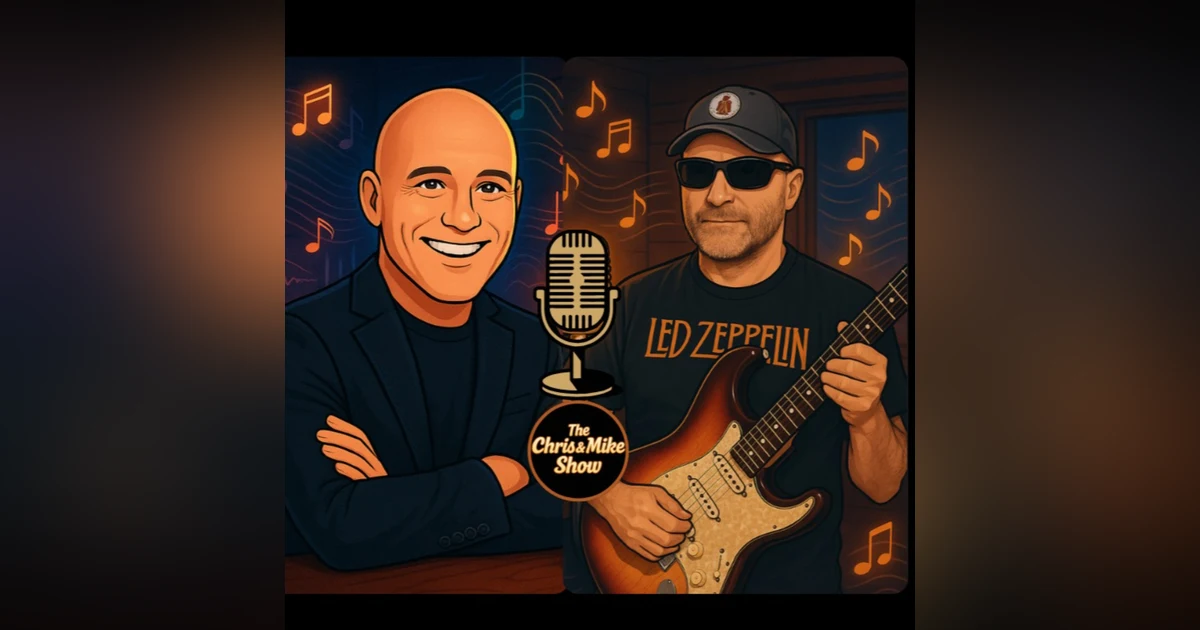

Hello Friends,
In this engaging conversation, Mark Jeffrey, a legendary figure in Arizona radio, shares his journey from being influenced by his father's career in radio to becoming a prominent voice in traffic reporting and podcasting. He discusses the evolution of the radio industry, the impact of podcasting, and memorable experiences with various artists. Mark emphasizes the importance of community, networking, and being adaptable in communication. He also shares insights into his unique beer can collection, reflecting his personality and interests. In this engaging conversation, Mark Jeffrey shares his passion for collecting beer cans, recounting his journey from childhood to becoming a prominent member of the beer can collectors community. The discussion transitions into his experiences as a musician, touching on the challenges and joys of performing live. Mark also delves into the creative process behind songwriting and the importance of community in podcasting, emphasizing the need for shameless self-promotion and audience engagement. The conversation wraps up with insights on building a podcast and the significance of sharing personal stories.
Thank you all for listening and sharing us!!
Subscribe and Comment at our links below.
https://www.youtube.com/@chrisandmikeshow
0:00 So this is Mike and I show and today we have a world famous like legendary radio icon iheart local Arizona media like the guy has just this long listed resume of just outstanding awesomeness if none other than the legendary Mr.
0:53 Mark Jeffrey welcome. Mark. Thanks, Mike. Thanks, Chris. And I'm happy to be here. So we're happy to have you, Mike. So for those of you don't know, my my, I spent some time on iheart and that's How I Met Mark. So the cool thing about my show, every time I'd have guests on, then we'd we'd kind of tore the facility with Steve Giannini, who is kind of helping me facilitate my radio stint. And the first tour I ever did, I ran into Mark. And Mark was such a super nice guy. He kind of took over the tour and was engaging, was funny. People just shammered about him throughout the rest of the day when we were doing the show off and on air. And then he and I kind of became friends. And you know, by the grace of God, Mark chose me to help him buy his house, which is really cool because this house, the way I look at Mark is he has like so many people tammering for him and, and talking to him and running into him, so many Realtors in and out of the building and lenders and out of the building.
1:50 And it shows me. So it was very humbling. So we've had a relationship, a really good friendship ever since. And, and so I was, I kept bugging like, dude, we need to get you on the show, man. Absolutely happy to do or he is happy to do it. I'll finish off that story real quick. So I lived in my old house for about 30 years. We're talking 2017. I'm sitting there with my wife, this is in North Phoenix and came across the listing for a basement home. I'm in a band, been in several bands and annoyed my neighbors constantly. And, and, and my wife, my wife plays drums and guitar. I play keys and stuff. And, and so we have a lot of people. We have a hair metal band or I've been in those overtime. We could be loud and obnoxious to our neighbors. So our goal was, hey, if a if a basement home opens up. Anyway, one day just happened to stumble on when I'm looking at this and I thought I wasn't even in the market for a house. And I thought, shoot, what do I do? Hey, so I called up Chris.
2:41 I owe Chris. There's this house up the street. Well, I I'm interested in what do I do? And he goes, what's the address? I'll call you back. Call me back. He goes, you want to go look at it? I go, yeah, we went and looked at it and and I said, OK, we want it. What do we do? And it's like, OK, so he set us up and then we went home and I thought, oh, shoot, I got to pack up my old house. But anyway, it's because of Chris. And it all happened so quickly because he was responsive. He took care of us. I didn't know about loan. I didn't know anything because I'd never looked for a house for 30 years. And Chris, you were the guy who set me up with a bunch of folks, yourself included, to help get it all done in a short period of time. So I owe you for that one. It's the house I'm in now. I'm in my basement office. I got a studio right behind me on the other side of this wall. Big ass studio.
3:25 We're bringing musicians and we don't. I know the neighbors as much anymore because we're below ground. They can hear us. You just you just they just feel the vibration of the base. That's right, I know there's a party in Mark's house. Which is awesome. So as as, as, as I mentioned to you before the show, we're just going to we're just going to, you know, talk about whatever the hell we're going to talk about. Mike, I know you and I have talked about how Mark on the show. Is there anything you want to start off with him with having this human on with us? So just to give people an idea what your background is, you know, where did you start out at, How'd you get into radio and where have you gone on and what are you doing now, I guess. Is piece of cake.
4:05 I can give you my demo Short Strokes. I was born in the 60s. My dad at the time was a Top 40 DJ. My dad used to talk like this in the 1960s when he was on WPRO, Providence, RI. So I was born into that lifestyle. We moved around a lot. Dad was what you would call a Top 40 jock, moved all over the kind of the the East Coast, the most of the original 13 colonies. And then dad ended up here. My dad, Jim Jeffrey is the sports guy on Channel 3. Up until about 1987 when I got out of high school, I was bumming around with friends back east. Parents are divorced, Dad's out here. I had long hair. I was smoking weed, doing all kinds of stuff I shouldn't do and and I thought I'm out of high school and I want to do something else, but it's really difficult to change your life when you're in those kind of circumstances.
4:50 So I thought, you know what, I'm moving to a new city, reinvent myself. Dad said, you know, we talked about getting into radio. He first tried to talk me out of it or he was he go. Are you sure? So I I went into it. So 1982 started working for Cool FM as a Weekender, mostly because I could do an impersonation of my dad when I was 19 years old. So they hired me to do oldies even though I was just a kid. About a year later traffic job came up. My mother's side of the family are cops and firefighters, so I knew police scanners. My dad had small planes, so I knew how to fly small planes a little bit and learn more. And so the traffic job came up and then for the next 40 years I was airborne traffic guy. I ended up on all the I heart stations. KFYKEZKNIX KISS FM mix 96.9 KOY that's. What I wanted you to get to because, ladies and gentlemen, this is the voice I remember from living in Arizona from 1993 until 2009 as my traffic guy tell to tell me where not to go. Yeah, no, I tell you where to go without using any swear words. But one of the reasons I wanted to work in what they did for a living with traffic is we'll give you some inclination. People listening go.
6:05 Why the hell does this guy talk so fast? It's because I was trained to. I had 30 seconds. I had a guy like Mike going, hey, it's 62°. We've got, you know, Steppenwolf coming up. Mark, what's going on in the streets? And I had like 25 or 30 seconds. I had to squeeze all the stuff in. So I have a habit that I haven't lost yet about. I have a tendency to talk a little bit fast, but I did my 40 years with I Heart. The last 20 years I was running nine. I was on the air every day. But when I got off the air at 9, I was operations manager for the region, western region, for I Heart Media. So my job was to provide news, traffic, weather, sports people, about 80 of my people to 9 different cities around the region, Phoenix, Tucson, Albuquerque, Denver, Salt Lake City, OK.
6:46 And I put those people on different shows depending on what the stations needed and wrap that up the end of 2022 because, you know, it's like, all right, I, I passed 60 and I was thinking, well, what do I want to do now? So I kind of cashed in all that I was in a position to do so, and shortly after that I got together with a local legend, Dave Pratt, who is mornings on KUPD, a rock radio. The mayor? Yeah. The Red Rocker. So Dave and I started chatting and he's got a star Worldwide studios in Scottsdale, He said, Mark, my marketing agency blowing up. I have less time at the studios. You know how microphones work. You spent your life behind it. How about you kind of take over and help some of the podcasters that are here do some consulting? I was like, cool, but I set my own hours. We set some parameters because it's like I didn't want a job, but I like helping people.
7:34 I love talking to people about what their dream is, how to make the, you know, how to, how to queue up their communication skills, that sort of thing. So for the last year plus I've been working at * worldwide studios consulting podcasters from we've done about 50,000 podcast episodes out of that studio and I'm having a blast doing that. So it kind of brings you up to speed on SO. You're basically been going non-stop in radio since you were 19 years old. Before that, Mike, because here's a funny story. So let's go back. I'll just, I'll just tell you because whenever I was born in 1962, at the time, my dad was the nighttime DJ on WPRO Providence, RI. This was 62. So they were playing hits of the time, Elvis and, and, you know, Ricky Nelson and all that. Yeah, yeah.
8:17 Beatles weren't quite breaking yet. So my mom, who was a nurse, calls my dad at the studio and says, hey, Jim, I'm going to the hospital. The baby's coming. That's that'd be me. My dad leaves his radio show goes to where I was born. And in the maternity ward, he goes, hey, ladies, he did a call in on his own show and announced my birth. And in the background on the phone, you could hear me crying. So literally, dude, I was about an hour old when I first made noise. And then once I hit three years old, I would be on my dad's radio shows 456 times a year where you'd have me come in on agreed as weather or do a sportsline or something like that. So I never really had a fear of microphones or anything. And so I just continued to do that.
8:58 And then that's how I ended up doing so in radio. I started when I was literally an hour old. So that was kind of polar opposite. I've kind of learned to be halfway comfortable just through this guy. Well, I was always behind the scenes. I ran sound, I played guitar, you know, I wrote songs with this guy. It was always a one-on-one or at best, or at worst a three or four on one, you know? Yeah, and see what your dad did with you, Mark. I've I did with Little Man. So when I was running Good News Arizona, the little, the little caveat at the end of every episode, there was something that Little Man was doing. So whether he was, you know, like chasing the dogs or walking around the backyard or staring at the sky, he was, he was a little Easter egg at the end of every single episode. So people watched the, the, the show and then they let the credits roll, which the credits roll Always funny if people paid attention to that because they were, you know, my sense of humor was injected in the, in the comments in the, in the credits as well.
9:58 But then there's a little man at the end of it just wrapping everything up. So he kind of is like that, like he doesn't have a fear of a microphone. And even though he wasn't like miked up, he still I was always doing something with him, you know. So Skylar's wedding, he he got the microphone out and and shit, you not said the pledge allegiance to the crowd and then sang a song about dinosaurs and was like singling, you know, like it's a move. I'm like, yeah, Mike's starting. I'm like, there you go. That's it. You start him and I was like, damn, he's got some moves. Right. You start him young and that's it. He'll a, he'll have those memories like I do with my dad. BI was from that point forward, I was never really afraid of microphones, or at least I wasn't afraid of gosh, what will people think?
10:43 Am I looking silly? I never cared. That's the biggest thing, right? Everybody is so self-conscious when they step in front of a microphone or camera. They don't realize you're just having a conversation. That's it. And you just, whoever you're talking to just happens to be this phallic symbol in front of you, but you're still just talking. And that's how you kind of calm me down was you said it's just me and you, man, just like we're sitting Outback after practice bullshitting or whatever, you know, think of it that way. Don't worry about anybody that's listening. It's just me and you. And from that point forward, that made sense. Yeah. Let me ask you one question. Since you have been on both sides of the fence, from a radio station which is clearly owned by corporate America and you have to follow their rules, to podcasting, what? Why would you say that podcasting took off at the level it did so quickly?
11:32 Well, I think it's because it gives individuals a voice. You don't have to do the corporate ladder or find a slot to get in the radio. I did a lot of. I probably hired two different people to be on radio stations around the region. And when they would come into my office, I'd go, OK, what are your visions? Where, where do you want to be in three, five years? Because right now I don't care. You'll do whatever I tell you to do. And if I tell you to be on some little podunk station in El Paso doing overnight news, that's what you're going to do. You're going to like it. Do the best you can. So what podcasting is done is is giving people a chance to kind of jump start that. The thing I think that gives podcast a tremendous advantage is you could do niche marketing. When I was on Beth and Friends in the Morning, at times we had a quarter of a million listeners out listening at one time, like live.
12:18 OK, yeah, yeah. And so, but it would it appealed to a broad audience, but you're not really sure what that audience is there for. Is it because Beth is kind of funny? Is it because they play the latest Taylor Swift? Is it because we do these jokes? She would do her wine pics of the week. There'd be different segments. Maybe they just said it and forget it. It's a comfortable station when you do a podcast. I think what appealed to people is they can get real nichy about what they want to listen to. You know, it might only have, you know, 3005 thousand listeners to a particular podcast, but you can really drill in deep and you don't have to worry about, oh, shoot, I'm losing listeners. Once the listeners connect with you and your message, then, you know, the real community starts.
12:59 So I think the podcasting has the advantage of community where you can really get to know your listeners instead of broadcasting. And then if I said an off color joke and I said, Manny, I'll give you an example. One time I said in while he's in my plane, I was doing traffic report to the construction zone. I said that's a real pain in the asphalt. OK, thank you. Thank you. You guys got it. Well, I got called into the office because a couple of ladies, couple of ladies complain. I was going well, I say asphalt all the time, but they said, well, Mark, I know, but it's the way you said it, so let's try to not to. Hey Mark, how about if you don't? I was like, all right, whatever you guys thought it was funny. And it's like, I'm trying to set myself apart. So the I think the other advantage with podcast is that you can do that.
13:44 I could say whatever I want and if people are gone, that's OK. It's on me. I wouldn't do anything on your your show here, you know, the Chris and Mike podcast. I wouldn't do anything on your show to try to drive your listeners away. But but also, there's something to remember when you're on somebody else's. We've already done that for you, by the way. Before we, before we get too far removed, before we get too far more removed from Beth and friends. Yes, Sir. That's Beth, for those of you don't know who Beth is. Yeah, that's a sweetheart. Ladies and gentlemen, he's showing a picture of himself. Of of Beth McDonald, who's in the Broadcasters Hall of Fame, one of the top female morning people of all time.
14:27 And it's not because women weren't necessarily qualified for that. It's because in order to be a top morning person, you have to be edgy. You just do. And so Beth had an edginess to her and I had fun because at the same time I would be on KFYI, which was news talk and a little bit more in your face. And then I also got to be on Kiss FM, which was aimed at kids. So what I would do is depending on the show I was on, I would adjust my personality a little bit. It was still me, but when people would want to get on the radio or they'd come into my office, you know, I'd get them started. Or remember I, I would say be yourself, but be a version of yourself that works in certain situations. Give you an example.
15:13 So when I was starting in radio early on and I started to become a party DJ, I became Mark the party DJ. So I was 20 years old. I had a tux on. I remember I did my first 50th anniversary. I'm 20 years old and I'm doing a 50th anniversary. I channeled my father because my dad was one of those smooth guys on the stage who always had a joke ready. He just had a so I was myself, but I channeled that portion. Then I've been in some hair metal bands like you guys. When I'm hanging around those guys, it's a whole different form of communication. So it's about be yourself, but a version of yourself that can work depending on the setting. I don't, I don't think people realize that that anybody who is, who is, is insanely creative like the three of us are.
15:55 We're all schizophrenic in a way, but but in a positive way. Because, because I can do the same thing, Mark, I can turn on the Real Estate guy. I can turn on Chris the Rock'n'roll lead singer guy. I can turn on the podcast guy. I can turn on the Good News Arizona guy. I can turn on that Real Talk USA guy. It's just it's all different niches of who you are and those personalities just kind of breakthrough on their own because it's who you are, but it's just a piece of who you are and everything else is still genuine and transparent and engaging. Well, it's funny you say that because I was thinking the other day somebody made a comment, you know, I can't turn my mind off. And later on in the day I just had a thought. I'm like that. That's cute, you know, because as a musician or as a just a part of a band in general, even if you're the singer, the timing that is involved, if you're going let's say 160 beats a minute, right, your brain, the synapses are firing at a level that most people have never experienced in their life, right? So when the three of us say, man, I can't turn my mind off, it's at a level that is on steroids. To people that make that comment, you know, like you don't understand, I have a Symphony going on in my head at the moment.
17:03 OK, so I'm going to start firing questions that you can mark. So because you've had such a long illustrious career in in radio and and again, because you started out not just doing traffic, right. So you were you were DJ and things like that. So it was at any time during your career was there a certain song that you played that you knew once you heard it, like this band was going to explode and then they actually exploded onto the scene. Great. Question. 1000% because it's the reason I I was only fired once. I was on the radio for 40 years. OK, I still fill in here and there, but anyway, I was on the on the radio every day for 40 straight years and I only got fired once. And that was for my very first radio job. So my first radio job was a country station. OK, so my dad's channel three, he's the sports guy, and I started applying for jobs and I had two offers the Storm to do overnight weekends here, which was like, hey, we know Zeppelin has hits, but we're going to play the songs that weren't Zeppelin hit.
18:00 They should have been. It was that kind of egotistical. We know music. OK, so was that overnight? Songs. Yeah, or it was KCKYA Country Station in Coolidge where I'd be full time afternoons and music director. And so I went to my I was like, I don't, I don't even like country music. And he lived in to me. He goes, are you a broadcast professional or not? And I said, well, yeah, he goes, you won't like the music you play anyway. So I took the job, KCKY. And yeah, he said, you got to suck for a long time, son. And you're going to, you know, you need to get used to the process where you sit down, you introduce a song, you're going to give a message, news, whatever. So I took the country job right two months into it. 2 1/2 months into it my boss leaves on vacation. He tells me before I go no I'm music director so I pick what's in the rotation but I would go over with him. He goes don't put anything in hot rotation till I come back hot.
18:52 Rotation. Hot rotation means that basically every radio station has a clock. And if you look at a clock, it's like we're going to play a Top 40 hit here, here, here and here. And after the other spaces, we'll play a hit from last year here, here and here. And then twice an hour we're going to play an oldies hit. OK, so that's that's how your clock was. So he said don't put anything in hot rotation, which means don't put in anything that's going to run like once an hour constantly because you think it's a hit. I was like, fine, fine, fine. He takes off anyway, I get all the records would come to me. I'm listening to him. And then I heard Alabama's mountain music, and I don't like country music, but I was like. That is a good song.
19:32 Son of a bitch that's. And it's Poppy. And it's poppy. And I was like, but he said, don't put it in. I'm driving home. I'm listening to KNIX, right? The country leader in the country, literally KNIX has it in a hot rotation. Because I could tell because they were playing this off. And I was like, so I drove back the next day and I these were records. And what you do is put a little red sticker on it and you'd put it in the hot rotation slide. So you'd take the record out, play it and you put it in the back. Was it a 45 or the IT was a? These are 45 records. Let me ask you a quick question about that. Were those spots guaranteed to certain labels? Like, you know, the whole Paola thing? Well, OK, I'll answer it this way. Yes, that happened a lot.
20:13 No, because my station was a little podunk station in a home down in Cassa Coolidge and no one, no sound guy or no record guy would drive down there to give me coke, if that's what you mean. But later on when I work for. Power 92. Well, no, later on when I worked for Power 92, I saw it all because we were we were a large Phoenix hip hop station. And you bet your ass that those record guys, what do you want? OK, so there be some drugs or whatever, but it wasn't necessarily by that time money. It would be stuff. It's like here's here's some dinner passes to Tarbells, here's some, you know, whatever, whatever. So they grease the wheels. Yeah, yeah, yeah. So to answer your question, Mike, yes, that happened up until not too long ago and then corporate radio took over and the favors are a different way happening in in big cities. Favors are a different way.
21:03 Yeah, so the favors are happening a different way, but not on a local level. Exactly. So I put in Alabama's mountain music into hot rotation, and we're getting a great reaction. Listeners are calling and going, love this tune, Love this tune. And I'm thinking, I don't like country music, but Dang, play me some. OK, so my boss comes back and. And his first day back, he did a show just before me. And he goes, I want to talk to you after my show. I said cool, and so he brought me in his office. He goes, hey dude, you put Alabama's mount music and hot rotation. What did I tell you? I go, no dude, I didn't put in Willie Nelson's always on my mind. I didn't put that not rotation. I knew that was going to be it. And and we went back and forth and I was arrogant at the time because the dude literally knew less than I did because I grew up around radio. My mistake was letting him know that and telling him to F off and he said you're fired.
21:57 So I was fired on the spot. So that was 2 1/2 months into my radio career. Never got fired after that. Learned a lot of lessons about that. I was right, but I. Learned where the line was right. I did. I learned, you know, and I think. All three of us would admit that we found the line in whatever subject. Whatever bro. It's like, OK because I was people, you know? And the sad part, Mike was, I did know more about radio than that guy. He's a nice guy and I won't say his name, but it's like, dude, I grew up in the business you're doing. You're doing this wrong, man. You're just, the way you do your breaks is wrong. You come out, you play 2 slow songs in a row. You don't do that. You never play 2 slow songs in a row. At the time, you didn't play 2 chicks in a row. You just didn't, you know, and you just. Yeah.
22:38 And see, that's my biggest problem with country music now because because Mike and I have talked about music all the time. Like we, we like everything up and down the dial, right? Well, Nikki and I go country dances Saturday nights at Denim and Diamonds right in Mesa. And, and they used to have this really cool format where they play all these upbeat songs. Then they then they'd throw in two to three line dances and then they'd have a couple slow songs coming out of that. Rightfully so, because line dances, you know, get all the women sweating and all that kind of shit. And then they we like sweaty women go. Ahead we do, and we like them bouncing up and down. We like watching shaking their ass and stuff, you know, having fun. There's nothing better than watching watching your wife shake her ass on a dance floor with, you know, 100 other women just saying so. Nobody's arguing. No, but now they, but now they kind of evolved that shit to where it's there's, there's too many slow songs and stuff. And so when we go, when we're heading out there, we put on, you know, a country station, just kind of whatever. And there's so much slow music now. It's it's like country should be upbeat. I mean, I get the old school country I grew up on Conway Twitty, Charlie Pride, Oak Ridge Boys, Tattler Brothers, you know, all that stuff.
23:42 Eddie Rabbit, you know. Eddie Rabbit. Love a rainy night? Right, exactly so. But their upbeat stuff is so much more engaging, I think, than this sappy little slow stuff. Because you, this is nobody wants to dance like this on a Saturday night. Oh, you know, it's like pick it up. Even some of the even some of the kind of the pop rock country guys like Stapleton, really good voice, kind of like his lyrics and shit, but so much of his stuff is so slow and boring. It's like, come on man, take advantage of your raspiness, take advantage of that growl and fucking launch out, you know? Do some hitting Bob Seger. Right, there you go, Bob Seger. Who? Doesn't go. That's an interview I have a long time ago. That's a whole.
24:25 Other story, so that was see, that was that was going to be my next question. Out of everybody you've ever talked to in your 40 years career, what would you, I don't want you to go down the path of every single interview because that would probably take you forever. But like, what are the top three interviews that you've done and and what sticks out most in your mind about those? OK, well, first I will start with Bob Seger because it was right when I started. So this was the Against the Wind tour. OK, OK, the wind and all that. And I was already a Seger fan because I, I love Turn the Page. That song hit me in a lot of ways because I was that kid. I I had long hair. I moved around a lot. People made assumptions of me when I walked into a new school and whatever. And OK, so turn the page question, what do you think about Metallica's cover of Turn the Page? Love it because that's the version our band used to play. Thank you.
25:09 Because we would, yeah. And obviously you saw the video of Metallica's turn the page, right? Yep. And the contrast between Seger's and Metallica's I think is just genius because I never would have thought of that approach until and and being our father, when I first saw that video, I was disturbed. I'm like, what the fuck did they do to Bob Seger? Yep. But then as you listen to it, it just. Wasn't that Wayne Isham, Mark? I think so. Yeah, probably. Amazing, amazing musical director. Yeah. So go so so go back to your story about Bob Seger. Yeah, so the early 80s Against the Wind tour. So Daddy's working at Channel 3, as I said, and I was killing time. So I was in the Channel 3 studios a lot when I wasn't doing my radio work, whatnot. And because it's like I had acts, I had the codes to get into an Effort TV station, you know, it's like I'm sitting there on the even when my dad wasn't there, the guys knew me. So anyway, I saw up on the assignment board, it said Bob Seger, Veterans Memorial Coliseum, and I saw the cameraman's name, who I'd been introduced to. So my dad sits down.
26:08 What? What's that? The Madhouse on McDowell. The Madhouse on McDowell So my dad sits down at his desk and and I said, hey dad, what? What's up with that? What's he goes up? Bob Seger. That means that they're I go. I know what it means, but he goes, you want to go and they go, oh, hell yeah. So he calls over the cameraman. He goes, hey, is it OK if my son is the grip on this? And the grip means I carry the battery pack and everything else and the camera goes hell yeah, because then he doesn't have to. So the cameraman and I were strung together with about a 10 foot heavy cable because he had a big shoulder Cam and I had to stay within 10 feet of him the whole time. I had battery packs like Bandoleros. I'm like, so I was all loaded up.
26:49 I was, you know, but but that meant. So we went over at 4:00 because we were going to film sound check. And then we got to interview Bob Seger, now the reporter, Alan Rapp. Yeah. Alan Rappaport as we're driving there. He's going, you guys, I got to admit, I don't know how much Bob Seger I go. I, I often love him, dude. And so I was feeding Alan questions to ask him that went back to night moves and things like that. And the Against the Wind tour. And the Against the Wind really was a commercial success. He'd already had it. But this made nationwide. So I'd have to say that was because I sat literally 3 feet away from Bob Seger as he chain smoked. And he even says it one of his songs he smokes 4-4 packs of cigarettes a day. He chain smoked and, and, but I was just sitting there and he had these stories.
27:36 And so I'm feeding the questions in real time to the reporter so he can ask them. And then, but anyway, so I, I kind of got to inter interview him as far as other people. Gosh, you know, I'd rather give you examples of people I was on the air with some some super talented radio people like you have Beth MacDonald. I spent a lot of time with her and how her brain works. One guy was Danny Bonaducci, who was, yeah, yeah. When he was at Power 92 back in the day, they brought him in as a morning guy. Whatever happened to He ended up being a DJ in Seattle for a number of years. Successful morning. Morning. Has done a great million episodes of World's Dumbest too. Yeah, he so he did everything he was. He would say it if he was here.
28:23 He was a media whore. What do you want him to do? He recently retired because he had that brain surgery which he's recovering from and I believe he's living in Palm Springs. But so I really enjoyed. But you know, you guys, you said not to give you a list. One of the well, one of the advantages of me. Let me set the stage for you. So from 2012 until 2022, I worked in the iheart building. And in that iheart building you had eight radio stations. OK, sure. You had KISS FM 95.5, the mountain, I'm counting down the hall 95.5, the Mountain Mix 96.9 Knix Country Kez. You had KFYI, you had Extra Sports 910 and you had KOA, 3 letter radio station that for the most part would play classic hits. Because of those eight different stations, each one would have different types of celebrities or musicians in to serve that station.
29:15 So we literally had everybody. I remember seeing Taylor Swift when she was 13. They her parent, her mother paraded her and she performed for it. Justin Bieber came in as a kid because we are such a large media presence. We had we had 43% of the Phoenix listenership. So I mean, there was just always these celebrities coming in, so. That's crazy, 43%. OK, so, so, so, so, so typically like, like just in case you join us boys and girls, this is Mark Jeffrey. He's a, he's an icon in the, in the radio industry in Arizona. His his dad was in, in the radio industry, TV industry forever and ever. So he and I met years ago. I've been bugging him like hell to come on the show. So here he is. So we're talking about his experience in his life behind the microphone.
29:57 So this will be a good one, I think, because you always remember the ones that pissed you off. It's so, so in your in your time, right at I heart. Let's just narrow it down to I heart because like you just said, eight different stations, so many people coming in and out. That's where you and I'm at. Who, who can you remember one single artist or group that you just absolutely met and saw? Like, wow, these guys are just fucking assholes. Well, yeah, I'd hate to say that because I'm not a negative guy, OK, OK. And I'll say it this way. I'll say it this way, OK? OK. So I was on the air every morning. I was on Radio Phoenix radio at six O 1:00 AM for 40 straight years. OK. Yep. And so I would be on till 9:00. I also did split shift for about 27 years. I'd be on the afternoon.
30:40 But let's talk about mornings, OK? When you bring any musician in the world, Yep, at 6:30 you're parading him into a studio and he just did a concert maybe the night before and he's got a concert your time that night, right. He's not at his best. They I mean, I can't tell you how many guys that came in, they were quiet, they had bags under their eyes. You get I would get them coffee artist, but they're not you know, it's like now we're we're a bunch of morning radio people. I'm a spaz. So dude, I wake up in the morning like this now and you're probably thinking, Oh my God, how's your wife let? Me. Ask it. Let me ask you that question in a different way. There you go. OK. Who genuinely acted like they wanted to be there? And who acted like they were just going through the motions the most to you?
31:27 That's a good question. Instead of, you know, instead of like, they were assholes. They were just like, Oh my God, it's just another interview. Yeah, yeah. Yeah, I think I'm more interested in who did you think genuinely acted like that? This is my life and I love being here and you know, if you want to keep it positive. Yeah, yeah. OK. Well, let's start with do you remember the band Nelson? The 2 Nelson Boys? Yep. Oh yeah, absolutely can't live without your love and affection. Dude and and the sons of Ricky Nelson and the grandsons of Ozzie Nelson, yes. And they're so lucid and non drugged up. I talked to those guys. They talked to a group of us for like 2. Hours, Gunner and Matthew. Right. Yeah, that's right. Yeah. Just fabulous, nice guys. Just so glad to be there, so giving of their time as we brought people in.
32:13 They did a an acoustic show for us with that crowd. I'd also put in Rob Thomas for Matchbox 20. Nice, sweet, didn't know I'm sweetheart of a guy. As a matter of fact, as they were coming in and we knew they were going to come in. So the next day. So Chris Barber, one of our engineers, they're great. Chris Barber, great engineer here in Phoenix for a long time came to be go. Mark, you're a musician. I know you play keys. Dude, I need a keyboard stand and I need it for tomorrow morning. I said cool, I got several. I play keys. I'll bring one in for you. I didn't know, but that was for Rob Thomas. Rob Thomas said yeah, yeah. So I have pictures of Rob Thomas not only used my keyboard stand, but used my microphone stand because he had to have a for people who are just listening and, and I'd see it.
32:53 He required a stick microphone. He didn't like one on an angle because he was used to holding a stick microphone with a, a round heavy bass to it. That's what he used. I had one. We didn't have one anywhere. We had eight radio stations, dude, we looked everywhere. We didn't have one there. That's because. All of ours were mounted like ours are mounted. You know, they were all mounted mics, yeah. What you're talking about was what we used on stage, because I used that for years. Too. That's absolutely. Like the weighted bass, because then you can get rocking with the song and the motion and stuff and you know it's. Got a heavy bass to it and you can do it. You can have a lot of fun. You can roll it whatever, whatever. So so Rob Thomas was super giving. Also, I'd like to point out Lady Antebellum because.
33:36 I like that band too as a country band. Dude, dude. And I saw them before they were established. So here's what happened. And this would happen often because we had eight radio stations. What would happen? We had a performance studio and two or three times a week, a band that you may or may not have heard of would be in that performance studio because all they want to do, hey, can we just come demo for you? I Heart guys, because I Heart Media, the largest media company in the world. We had 850 radio stations, which was four times more than any other entity on the planet. OK, so pleasing. I Heart could go a long way, right? And pissing off. On the opposite. Direction, Gianini told me. Gianini told me many stories about the bands that came in and we're just assholes and you never heard from them again. Yeah, yeah.
34:22 So I would get, we would get alerts. Hey, so and so I would hang around, I'd go have lunch up in the performance studio. If there was any band there at all, I'd just sit in the back, eat my sandwich and and watch many bands that would never amount to anything. They sounded good. So one day it was like Lady Antebellum never heard of them because they weren't out yet. And so they walked in. They did an unplugged acoustic set and I was like, holy crap, really. They were tight. They were on it. They were pleasant, they were engaging. They took a couple of requests of some classic oldies and I, I'm not even a country fader really. I was sitting there eating, going those those people are good. They're polished. They walked in. They said yes, ma'am, no ma'am. They said thank you because if you could get yourself on Knix boy, you could really skyrocket yourself in a hurry.
35:07 It would. It would really help. So I know when monster K&X same. With Travis Tritt, super nice guy, All right, All the country guys, I have to say most of the country guys were. You know, did Garth Brooks ever come through Phoenix? Garth Brooks, Sure. K&IX broke him. He gives When he gave his acceptance speech to the Hall of Fame, he mentioned K&IX, OK, Because we are one of the first stations to play him. Oh, no, that's very back in the day. Yeah, yeah, yeah. Super nice guy. So my interaction with him was just a couple of words. But let me set the stage for you guys this way, because I know you keep saying icon. I. Appreciate it but but but I think of myself. Marks really humble boys and girls, so he doesn't really he doesn't really think that like like Mike said like Mike remembers hearing Mark his entire.
35:53 Life. Oh, your voice is just so familiar to me. You know, it's like I'm talking to one of my friends and I just met this guy. So that's how familiar you are to me. And that's, and that's Mark's personality. Mike, to be honest with you, that's just like the first time I met him, really. It was like this guy's my friend and I just met him, but. Yeah, this is amazing. I'm having a blast. And so and so like involved in the. Jam together, Mike. It's. Absolutely. So involved in my podunk little show, but he made my guests feel that much more important because he took over the tours, like showing them all the things so that but that's just Mark. That's so cool. Very giving. We had a blast, you know? And I appreciate that. And some of the way I got there is because my dad raised me that way. I grew up around a lot of stars that my dad knew. So I could never get ahead of myself because you guys, my dad was on television.
36:43 Sure, you could be on radio and I can walk around. Nobody knows who I am. Try walking around with a guy like my dad who was on TV every day. I mean in in the city that he's on because John hooks one of my best friends. So when John the Hook and I, they look, they don't look at me. John Hook looks like he's on Channel 10, Fox 10 here. He's the afternoon and night time anchor. Been so for a long time. So when I started to get into radio, my first goal was I wanted to be a cool nighttime rock jock. I wanted to play Bob Seger. I wanted I was in love with the early metal, even Alice Cooper, things like that. Love, love, love the Scorpions and I got it. So I wanted to play that music, right. But as I got into radio, I had a choice. When I was working for Cool FM, kool-aid and FM, we were playing classic hits and everything like that. Great opportunity.
37:33 A job for traffic started. It was open. So I would be on Cool AM and FM right in the morning and afternoon on both. So I would be on four different radio shows, right? On 2 morning Kool AM and FM, 2 afternoon Kool AM and FM, right? Yeah, yeah. And the Kool AM and FM were ranked top ten in the market right now. So I went to my dad and we had a long talk about it. And So what I determined at that time was I could fight and scratch to have my own show or I could do what I always did. And I'm like a good offensive lineman on a football team. I don't need the accolades. I want to be on the winning team. That puts me on the other side of the velvet rope. That's why I joined bands to play keys. I'm in the back. I sing back up and I'm thinking, this is awesome because I got to.
38:17 I didn't need to be the Chris guy out in front. You know, I would. I would align myself with the talented people. So I get to go too. Yeah. Yeah. So it allowed me. So what I did in radio, that's what I was allowed to do because I was on a bunch of different radio stations. A lot of people don't know this, but when I did traffic in the morning, I would be on like 4 stations live at once because they did breaks at different times. So I switched from one to another to another to another. Yeah. And the people who listen to each one wouldn't necessarily know I was on the. Because they think it was recording because you sounded the same. Yeah, yeah, yeah. Or or. It's like if you're KNIX, you're not listening to KISS FM. Well, unless unless you're someone like me that that channels well, you guys commercial would come on.
38:59 I'd be like, oh, here's this station. Then I'd go like, fuck, he's there again. Like, you know, and they can't get every song in the Here Comes again, like. Well, the reason why I'm annoying to you is because according to my wife's calculation, and I kind of agree with the math, although I think it's maybe a little low or a little high is yeah, Jackie's my wife. She I've done 3/4 of a million traffic reports in Phoenix. Holy shit. And so here's the advantage. What I learned because, OK, I was a little maniacal, you guys. So not only did I by taking traffic, I got to be 4 times an hour on some of the biggest shows in Phoenix in the morning. The advantage OK, so I said this to Dave Pratt the other long time morning guy talked about to Tim Tim Hatchrick on K and I actually still there.
39:41 I I asked Dave Pratt when I we were just joking with somebody. I go how many times did you say your name during your show Dave and he was owned. Oh, I don't think I did. I go. How many times did I say my name at the end of every goddamn traffic report? Yep, yeah. Right. Yeah. So whose name? So I did 3/4 of a million traffic reports at the end of every one of those Mark Jeffrey Valley Traffic or Mark Jeffrey Kez or. Whatever. Didn't have to tell me who you were. He's like, do you remember Mark Jeffrey? I'm like, Oh yeah. Good. So it's I appreciate it, but that's so part of it was like I was thinking yeah, hell yeah. So when I was doing, there was a time on KFYI when we did traffic, it was we pushed news in the morning at one point during the format changes where I would be doing traffic 6 times an hour.
40:26 Dude, my name's at the end of every one of those reports. So Mark Jeffrey Kfyi in the sky, Mark. Jeffrey Kfyi in the sky Mark, you know so. Now, are you a contract employee to every one of those stations is. That no, I was an I Heart employee. OK, so. So I heart paid me. So I was, I got, I was in a weird position. So I was taken out of the iheart Phoenix radio budget for some of my pay. And then I was taken out of what was called the Total Traffic and News Network budget on a national level. Because I distribute, I coordinated news, traffic, weather, sports to a bunch of cities and states on this part of the United States. So if you don't mind, I'll tell you in one minute what that meant.
41:11 Let's say Mike, you on a radio station, you're in El Paso, TX, you don't have a lot of money, but you got a morning guy and it's going to be you, Mike, and it's your station, okay? You're the morning guy. Congratulations. It's going to be a rock station. It's going to kick ass. You know you're yeah, it's the stations ranked 23 in El Paso. But you have ideas. You're going to flip around. You're the morning guy, and then you've got enough money where you can hire a pretty good afternoon person for mid days. You're going to pipe that in from another. You're just going to pay a syndication to bring it in, whoever that might be. Not hard to do. Same with your overnights. So you and I connect because usually I would seek you out and go, hey, Mike, do you want news? And you go, yeah, I want news. I can't afford it. I go. You don't need to afford it, dude. I'll get you a news guy and I'll send you 10 different demos. Male, female, young, old and of different people reading the news, you're going to pick one.
41:57 You go, I like this guy, I like Stan, he sounds good. I'm going to say cool. You're going to get Stan to do a news for you 4 times every morning. He'll send it at the top of the hour in a file. It's going to go right into your program blog. You don't have to do anything but play it. At the end of that newscast is a 15 second commercial that belongs to me. You get your talent that you can't afford. I'll get you LA level talent. Do you want a weather guy? Do you want a sports guy? Do you want country news guy? I can get you whatever you want. And at the end is a 15 second commercial. So for I heart for my 9 cities that I mentioned earlier, I gathered up all those commercials, sent them to New York corporate and I heart in New York. And then they, they would sell those to, if there was a sponsor going, we want to appeal to 18 year old females.
42:40 They're going cool. All right, we're going to put you on in the morning on Kiss FM in Phoenix. We'll put you at the end of the newscast there. We've got the KRQ in LA and so and so on and so forth. So what I did was I provided talent to radio stations that otherwise couldn't afford high level. That's see that gives people a behind the scenes of how the radio business actually works and where those personalities are coming from. And because I think people understand they're not always local, but they don't understand where they're coming from, you know? Well, and what's impressive about that, Mark? You did that in exactly 60 seconds. Thank you very much. Because I watched the clock I wanted. To see like. Of course you were going to do this in 60 seconds. I don't. Even I was not tired. That's impressive. That was my game buddy.
43:25 I know, I know, I know. It's funny how him and I are OCD differently. Oh, you and I like, like things that I care about, you don't care about and things, I mean a lot of things we have in common, but there's certain things like that I would have never. I didn't even think about it because he said it. I was like, I'm gonna. I just when he said I just looked at the clock. I'm like, OK, let's see what? Makes this amazing brother. It was well, and that's kind of built in. I you know, what one of the things I do now and I really enjoyed is I go to networking meetings and I'd never done that before a because I didn't have time, because I mean this without ego. I didn't need the network. No, I was Mark Jeffrey. I worked at the biggest media company in Phoenix, one of the biggest in the world. People would go, I could connect, I could pick up the phone and go, hey, dude. And people go, dude, because they wanted to, you know, it's like, how can I get connected to iheart, whatever their business might be?
44:08 Right, so, so the the small world with this, right? The guy that I connected Mark with to buy his house when he was selling it to buy the house I helped him buy is a really good friend of mine who started a networking group in the Phoenix area, which I actually bugged him a year prior to do something like that. And then we just kind of never reconnected and all this. And I see Valley Connections coming. I'm like, dude, like we talked about this a year ago and now Mark. I've watched Mark actually grow with that and actually help people from that group as far as podcasting and things like that. So that shows you how closely knit this world really is because our mutual friend, I've known God 15 years and he and we trust him so much. He's he handles my trust if Nikki and I. Former Phoenix cop too, right?
44:55 And an Army vet. Yeah, we had him on the show. Mike Torsten. Oh yeah. Karsten Coulson Yeah, great. Yeah. So it's fabulous guy. That's just kind of how this world works. That's why I joined the networking group, because it was him, because I didn't need to. And I said, dude, I don't need networking. We started talking this No, you have information that could probably be helpful to the people there. I go, well, OK, if they want to listen. So I go to networking groups and talk about messaging and branding and that sort of thing. It's like, are you serious about your brand? Most people aren't serious. You guys know this. Most people yap. I want to be have my own brand. It's like, look, I come from a world that's put up or shut up. How many people wanted? That's what you and I were talking about before, you know, when Chris was getting ready to hit record I, that was part of my vision and starting this podcast, was being able to meet interesting people like yourself.
45:45 Who? Basically achieved their dream as a young man, did what they love for their entire life. I'm I think that's so cool, but then Chris and I get torn between him and I like to talk about things that we like to talk about amongst ourselves too. You know, we found that we have this connection that got rekindled that we had not forgotten about. But you kind of you get away from it for so long that when you get back to it, it's like, Oh yeah, I remember hanging out with. This guy, but it's the same with that's and again, not to not to keep keep giving you accolades, Mark. But that's the cool thing about Mark. Like I've met enough people in in my time when I was on iheart and different disc jockeys and stuff and just the different things I've done in my real estate career. Mark is a genuine human.
46:32 Like there's like there's people in that industry that aren't genuine. Like Neanderthal is a genuine human being. Like I got to become friends with him. There's genuine people in that industry where a lot of people think they're, oh, you can't touch them all as you know, he's narcissistic and arrogant. They're really not. They're just normal everyday people like us. That's just their job. And because it's a really, it's a fun job and it's, you know. Well, I think knowing that now, that was the key to yours. And you know, every person that Chris just named that was the key to their success is behind the scenes. You really were that guy. You know, that voice that we heard that told us what the weather was, the traffic was, that seemed like they were happy and doing what they love.
47:14 You know, a lot of times in the back of your mind it's like, Yep, that's what he gets paid for. But now to know you and to talk to you and to know Chris, who really knows you, you are, you are that person. And I think that lent to your success in that business. Well, I appreciate it with one qualification. OK, so I did mention I was on the radio. I did a traffic report at six O 1:00 AM every day for 40 years. There was times when I didn't go to sleep the night before because I'd be at some frigging concert or whatever doing stuff I wasn't supposed to be doing. And so when you said is he having a good time? Most of the time I was having a good time but but what I could always do was I you know this is going to sound weird, but I can always turn Mark Jeffrey on when I need to. No, but I can turn the.
48:01 You know what I mean? It's like, and you guys are the same. It's like sure. It's like, whoa, I feel like crap, I'm in the plane. I really wish I wasn't bouncing around right now because it's not the place I want to be. But anyway, hey, here I am. Good morning guys. Glad to be with you and talk about US 60 being backed up near rural or whatever. There's gigs I did not want to do as a musician, you know, you just, everybody has those dates. It's like, I'm not sure I want to be blasted by Mach 10 level volume right now, you know? But here we go and. Then and then. Yeah, well, you only had to turn up because the drums are so loud and then the bass got to turn up and so, so this lead singer and that means you got to turn up again. And then the keyboard. And I can't hear myself. And I'm. And it's this thing. We've all been through it as musicians that everybody cranks it up just a little bit more as the as the set continues.
48:45 OK, You know, the blessing that we had is that's one thing Chris and I, we talk about ad nauseam is the four of us were four of the most respectful people. Towards the other person, it was almost the opposite. There were times when our saw man had to tell me to turn up and I was like, OK, if you insist. Yeah. So it for those of you that that are just joining us, this Mark Jeffrey retired traffic. I'm not retired. Well, okay. Well, I walked away from it. Walked away from. Radio, but he still does things, so it's like. The mafia, they drug him back in, right? But some of it is like, I'll say it this way, Chris, you're absolutely right. And I can guess this about you two guys, you won't retire. I stopped being in charge of corporate news and traffic and weather stuff for one of the largest media companies in the world because it was a 24/7, 365 operation.
49:33 I had 80 employees in nine cities. That's why I sound mental. I still haven't recovered from that world where I'm always looking at my friggin phone because it was my responsibility to make sure our weather report got to Albuquerque at 3:00 AM every morning. Do you know what it's like when it doesn't get there and Albuquerque is not in our time? So I what I said publicly was, hey, I did my last traffic report. I walked away from my heart. Right now I'm doing what I want, just not as busy and anyway just took. So thank you for that. So what I want to talk about now, for those of you watching us, you see behind Mark is a bunch of beer cans. OK, So one of the fun things about, you know, helping him when buy a house and I started seeing all the things that he was bringing with him.
50:19 His wife is very much into macabre, which is cool. But I want to talk about I want to talk about the beer can collection you have behind you. Sure. How many beer cans do you have? What's the most unique beer can you have? And. And while you set this up. I'm going to get my favorite so. Yeah, thank you. That's the right question, bro. I did. I've been wondering the whole episode myself because they're. Slightly off camera. Yeah, but this is like one of his passions, which is really cool. He got so excited, yeah. He did. Christmas boy? Really. I don't think you guys know this. I am a member of the Beer Can Collectors of America. Oh no, I know that I'm. A member of good standing. I'm the secretary of the Arizona branch I. Didn't know. That organization, I don't want to brag or nothing.
51:01 I've had a lot of accolades in my life. But when I was nominated and then voted in as secretary of the A1 chapter, the Beer Can Collectors of America, it was a special moment for me, I have to say. So awesome. To answer your question, I have about 1000 beer cans. It started because we moved around a lot when we were kids and 1000. Unique ones. Yeah, 1000 different. 1001, Zero 00. 100 yeah, and they're in the walls, all surrounding here. I'll have you over and show them to you in person sometime. So about 12 years old lived in Pittsburgh and my buddy and I did a lot of walk in the back roads and and at the time Iron City beer Pittsburgh brewing made a whole bunch of different cans. They started with making cans of all the Pittsburgh Steeler teams pictures.
51:43 Pittsburgh Pirates Pittsburgh Penguins. My dad used to do play by play for the Pittsburgh Penguins for a couple of years. Dude, one of the We Can Get AI can go on that topic happily someday, where the most amazing thing my ever my dad ever did was sitting next to him in the booth while he's doing hockey radio for the NHL. My gosh, you think I talk fast? Really. That's where I learned. It was just with Canadian frigging French names and stuff, dude. I mean, it's something here, dude. It was just insanity. So that's where I got a little my spazziness from, I'm sure. So anyway, just walked the back roads, started collecting those cans in real time. And then we moved around a bunch.
52:23 Parents got divorced and stuff like that. I went to three high schools in three states, spent a lot of time by myself because, you know, he moved to a new high school in a new state. You have no friends. And I would just do walking around, just walk the back roads. And that was when people would pollute. They just throw shit out the window right before you know, And then we saw the Indian crying on. TV because. We're all bad people and I don't know if you remember that. Look it up sometime. The. Crying Indian against pollution, we're all. Same age, man. Yeah, dude. So anyway, I started collecting the cans and it grew and grew and grew. I've got about 1000 cans now. I'll show you. This is the oldest beer can in the world. So beer was first put in cans and it's Kruger cream out in 1935.
53:09 Beer was first put in cans. They couldn't put it in cans any sooner because they didn't have something called keg lining. They needed a lining because this is steel. Okay, this is an aluminum. This is actual steel every time. So the can companies thought, how are we going to expand our business? I know we'll put beverages in our cans. They had food and all that, but the beer people goes, this tastes like garbage, you're ruined. Budweiser goes, we're not putting our beer in there. Keg lining came 1935. It's perfected. Beer starts being put in cans like this. And so this is the first one. This came out in February of 1935. This is one of my holy Holy Grail cans. My wife got it for me for a birthday present. It didn't cost as much then, but now it's worth more than my car.
53:51 So is it is it empty or is it beer in it? It's well, OK, so this is called factory sealed. So this came from the actual factory they would use for demos. OK, but you used to have to have an opener. You needed an opener for beer cans until 1962. When they had. That's when they invented the ring pull right right ring pull punch tab 1962. So my my collection is focused on prior to 1960. Two, I collect cans you need an opener for. Here's the first Budweiser can from 1936. Wow, that's what it looked like back then. And for that little closer Mark? Yeah, and for an open, you're talking about just a basic can opener, like you poke the hole in it.
54:32 Yeah, you need what was called a church key. Okay. That's awesome. And so years and years, I usually was collecting cans, get them from all kinds of weird places. It's odd because I'm not much of a beer drinker. I, you know, I just, I'll drink beer, but it's just not much of my thing. Everybody thinks when they see Mark, yeah, beer can he really like. Cameron was like a no B. Most of the cans were prior to 1962, so. Budweiser from. 1936. Yeah, see, I didn't. I didn't know they were pre 1962. I knew you had a beer can collection because you've shown them on Facebook and stuff. We've talked about it, but. Wait, I gotta get a couple other cool ones you've got? OK. This is Mark Jeffrey from iHeartRadio Frame.
55:12 Well, that's good. Traffic guy and he's got he's got a beer can collection that is outstanding so also. Going back to the day and I'm sure you guys made jokes while I was away. From We did not make jokes. Yes, you. Did that. No, this is. This is awesome. Yeah. OK. So this is an an Iron City can. Oh, like you found when you're walking the street? From 1935 and you'd be asking why is it shaped like this little beer can history? Exactly, Exactly. So some of the old cans are shaped like this. Why? Because the can companies, American Can Company, Continental Can Company, they were smart marketers. They said we do to expand our brands. So they would go to each brewery and go and put your beer in cans and we go, we don't want to do to go.
55:54 All right, what if we give you a million cans at half cost to start with? Wow, they go well, okay, just you know, cuz the can companies were smart. Can companies went to Iron City in Pittsburgh. Iron City said. Dudes, we just put in our own bottling machines and so American Can Company said what if we give you cans shaped like bottles? That's cool. And they said, OK, so this one's from 1935. This is one of my holy grails too, because I'm from Pittsburgh and my wife got this for me as well. So she goes. Way to go, Jackie. Yeah, yeah. It's, it's like, why did your wife catch you for birthday? A beer, kid. Look, look. From 19. 36 to 1936. That's awesome. I know. So everybody's got and then anyway, I've been doing it ever since.
56:37 It's one of my favorite things to do and these walls around me are surrounded with old beer cans and I'll show you some time. Yeah, so we got about 10 minutes left because Mark, Mark is, you know, he's. I got some time now. I can probably go till, you know, another half hour if you like. Only as long as it's interesting to you, yeah. Oh, this is completely interesting. Yeah. OK. I love people that collect stuff like that. And it's root. Like Chris said, it's neat. He didn't know that your collection was pre 1962. That's really cool, man. Yeah. Hard to find dudes. I mean we find him in walls. I had a buddy. True story. One of my best friends back from Connecticut. We still communicate through text every day. He was redoing his bathroom in Connecticut and the house was from the 20s. He tore down a wall and three beer cans fell out. Any.
57:23 Contractors. He said that's where we find them now because contractors will drink and just put them in the walls to kind of hide the fact that if you're a guy putting an insulation up there or if you're a plumber or whatever. So that's how we find a lot of old beer cans also out here in Arizona, especially when I got buddies who go mining or they spelunking, they like looking in caves and mines and such. And one of the reasons why you'll see beer cans all over my branding is because I want people to know like Chris, Chris knows I collect beer cans. And now Mike, you do too. So now you're going to be somewhere in Prescott. You're going to be in an antique store and you're going to take a picture and go, Mark, do you have this one? And I'll go, no, dude. Ask him how much. And so because I'm so loud about it, I've. Actually, I've actually come across beer cans. I thought about that.
58:07 Now I know that I can take a picture and ask you. Yes, because I've got Price books right behind me. Because we our club has Price. Do not laugh. We just set a record for $65,000 a beer can sold for weekend before last. We're laughing with you, brother, because we have the same obsessions. Just. Differently, right? Yeah, see, I have I have. I've collected every bobble head from the office. Oh, nice. From everything. And there's the. TV show The Office. Correct. And it took me about two years because Stanley and Meredith was almost impossible to find. Really. Yeah, they're boxed up right now, but I actually have every single. They're wait, they're still no. Do you do you leave them in the package? No, I opened up the package. I mean, the boxes are still pristine, you know, and so there's still top quality and you know that kind of. Jazz but but but do you have the Bob Ross bobble? I don't have the Bob Ross bobble, No, you mean? Bob Ross the painter.
59:01 I love Bob Ross. Damn straight, brother. Dude, Bob Ross is the man. He's he's the reason why I thought, you know, if I wanted to paint, he makes it look so friggin easy. He has some relaxing. He's the most dude, he's the most relaxed communicator that it blows me away because I'm a fan of Bob Ross for a lot of reasons, not only the painting, but because I'm into presentations and things like that. I talk to people all the time. That's. Why we all loved him. Yeah, what's your branding, dude? And it's like he had his branding down. They might have laughed at. We're still talking about the guy and he's gone all this. He got to be high as a kite and do what he loved every week. Dude. And he was good at it, you know? Damn right he was. And you felt like we felt like we were his friends, like if we went in the studio, go, hey, how you doing? Yeah.
59:47 Can I watch it? And you go. Sure, probably he was just like a little. Trees. Yeah, happy little accident. That's OK. Yeah, there are where I'd be like, I'd mess it up and go. But he goes, no mistakes. Look, we'll just make it a tree. Just happy accident. Happy accident, right? So you talked about what's the name of your cover band? Oh, I've been to the bunch. 5050 was the one I was in the longest time. I came up with that because 5050 chance we'd be any good that we'd be sober, 5050 we'd show up on time. It was just play on words. The current band, what we call a cover story because it yeah, it says that that's what we are. We haven't played for about a year. Jim Sharp, Morning guy, KTR Radio.
1:00:27 Here's our lead singer. And so we, you know, to be honest with you guys because I don't care. We just play charities and stuff like that. We raise the money for veterans things. So I I don't play out because we've all done that, where you play a whole gig and you end up with $22.00 because the band drank the rest of the money and it's like, I'm not a money. Hard money. Yeah, yeah, yeah. We had a singer in in our band 5050 who would always buy rounds for like the first front rows and I'd be sitting there going F dude, I'm not doing this for cash, I'm doing this for fun. But come on. I remember one time I got 7 bucks after we played all night and I was supposed to get 150, but it's like, wow. But you know, we're trying to, you know, get the band, you know, the people behind us and they'll come to the next gig. And so anyway, we've all been through. That so so there's a there's a true story when when we were in Nemesis, one of the things that I came up with during after we we come out, we come on stage, we bust through three songs that were kind of just in your face.
1:01:23 Freeman was one of the ones that you heard that we would open with usually. So by the third song in the crowds, you know, either is in love with us or they're like, what the fuck is this? My ears are blowing out. Not, you know, so I would introduce us and chat a little bit, but then I'd say who wants a free beer? So the first time I did it, nobody said anything. So I, you know, I stepped away from Mike. I'm like, fucking kidding me. I'm like, who wants a free beer? And then still nobody. So I was like, all right, look, I'm going to ask who wants a free beer? And all you people out there going to scream as loud as you can and the loudest person is going to get a free pitch of beer on me. That's. Actually, he said, the loudest motherfucker get a free pitcher of beer. You have to swear in the bar. Go ahead. So third time, you know, I get enough, people scream and I just randomly point. So then I started buying pitchers of beer, right?
1:02:06 And as I prepaid at the beginning of the show and then I eventually I think it was Mason jar that shut that down. So I stopped doing it completely because then they're like, dude, you can't buy it because we did, we did 18 and over shows. So it was a question of am I giving a free beer to an 18 year old or 21 year old? So I kind of got the kibosh on that. But it was something I did just to kind of get the crowd to interact. And then it's something that, you know, back then you we had to sell tickets like we talked about before, right? You had to sell tickets, you know. It definitely became part of our stick. People like you talked about branding. People knew that when they came to our show that not only were they potentially going to get a T-shirt, a sticker, you know, free alcohol, whatever, they knew they were going to have a good time, most importantly, right?
1:02:48 And then there's the potential that you might get something. That became part of our stick for sure. Right. Which is, you know, you got to do something right. Dude, I and I know we all did it for the same reason. I, you know, there's two gigs in particular I remember as we opened up for RAT in Scottsdale and that's why I was sitting this is. One of my cools. I know, I know. It's like we got this opportunity. You want to open for RAT? And I was like, shit, yeah. I saw them on the City to City tour when Way Cool Junior came out. Dude, you talk about, you talk about perfection. I know. At that time, this was 1988, probably. Yeah, they were on top of their game. Man, Warren Demartini does not get enough love. I know, absolutely right. And I remember sitting there. So we're carousing with them backstage and then I'm watching it. So we did our set and couple of them kind of watched us a little bit and then I'm sitting right there watching. And then the other one was when we opened up for Bon Jovi out at Desert Sky Pavilion.
1:03:42 I I should stop the story? There to. 2000 ish to somewhere right around in there. He was the headliner. I shouldn't stop the story. I might have been at that show. Really. Yeah. Oh, cool. Well, the reason why you might not Remember Me, Mike, because I I will tell too much of this story. I should just stop. I was just tell the story, Mark. All right, there was about 15 bands. We were the 3:00 PM band and there was only about 30 people. So when we were done with our set, it was daytime. He was the 8:30 band. And so when you saw the poster, it said Bon Jovi really big. And then each successive bands name got smaller. And so it's like, it's like we were there.
1:04:25 We are. So we are the literally dude, we are on the cavernous stage. So when we would finish the song. That's cool though that you played there. You'd hear like 11 people. Two of them are are wives, you know, Sure. But anyway, so a lot of times I'll tell the story just to poke people. It's like, yeah, we open for Bon Jovi and I know I should just leave it there and go. MMM, drop the drop the band that that like I didn't, I didn't. When we open for this band, I I, I don't want to sound stupid, but I just I didn't care. And now, being who I am and the age I am and and how my love for music is just grown immensely. Drop. You know what I'm talking about, Mike, right? Yeah, the Marshall Tucker Band.
1:05:07 Yeah, we open for them. Like fucking serious. I didn't have the same appreciation either. No, I'm not at all that I did. We were 20. Caldwell. Years old maybe? Oh. Fucking yeah. Those guys could play anything. They chose country, but they could play anything. And see the benefit of Nemesis. We could play with anyone because we were we were that dynamic in our we. Opened from everybody from the Marshall Tucker Band to Sacred Rank. Enough's enough. I partied with enough's enough on their on their bus. I just told that story the other day. That was the most cocaine I had ever seen in one setting. It's like they opened up a kilo and threw it on the table dude. Yeah, I hear you. I did some of that shit myself. That's oh.
1:05:49 Yeah, yeah, Pat Travers, he was a fun. One. Oh yeah, I love Pat Travers. Tony McAlpine Yeah. LA Gun 7 Dust. Yeah, all the all the big 80s bands that that stopped playing arenas because the grunge took over, you would find their way through Mason Jar. You remember the Electric Ballroom? That's where we did a lot of shows like The Ballroom, Hollywood Alley. I met Chris at the Electric Ballroom at a Camel Box show. Yeah, yeah. Oh shit, I liked that. I was singing. I was singing along with. With right behind my head. Right. And so Mike kept turning around, looking at me, and I was getting to look like, who's this motherfucker? Why is she fucking singing in the back of me? Right? And then half the stage power goes out right? So then the. House all the power to the whole placement.
1:06:30 We're standing in the dark. Yeah. And then and then he turns around the business card. Are you Singer maybe? And there you go. My Horror Story was I started that band Mark, and the guy that we started the band with was also our bass player. And our first gig was at the ballroom on the mainstage because I knew the guy that ran sound there. So it's always who you know, right? Not working. And about 10 minutes before Showtime, my drummer comes over and says we got a fucking problem. And I said, what's that? You know, forget your drumsticks or something. Just trying to make a joke, you know? And he's like, no, man, you better go check out.
1:07:11 His name was also Mike. And I walk over there and it was deer in the headlights, man. I put my hand in front of his eyes and he was just stage fright like I had never seen. And, you know, being discretion the is the better part of valor. My drummer was like, that can never happen again. I just can't, you know, you can overlook a lot of things, but you can't wonder about the guys you're going to walk on that stage with every night because it's intimidating for everyone on some level. You can't worry about the other guy. So that's how I ended up looking for Chris. And I figured if the guy was brazen enough to sing at the top of his lungs along with the band that he came to see, then he's probably not afraid to go out there and do that in front of anybody, right?
1:07:53 Yeah, and. That's a great example, yeah. History proved right. I was, was good at spotting talent. I, you know, I wasn't the most talented guitar player, but I knew what I like to hear and I knew what talent was. You either have it or you don't. You know, it's, it's one of those things that it sounds harsh, but you got to be honest with people because you can't put yourself in a position where you're going to suck. Mike And you're right. And one of the things that again, getting back to my position in radio where I was like a an offensive lineman on a football team, I was, I, I did same way for bands. I I've said it over and over. It's the people have said, oh, Mark, you got to play in bands and go look, I didn't let lack of talent stop me from getting up there. Was I the best keyboard player ever? No, not by a long shot, dude.
1:08:40 I always cite myself as the least talented person in the band. That may or may not be true, but that's how I looked at it. And that's how I, you know, either got better or at least. But you're not going to let it stop you from. But I'm going to go up there anyway and I'm going to have a blast and people are going to think what they're going to think. I think I do remember one time I we were playing at the Joe's Grotto and we would start with Mr. Crowley, you know, and that starts. That's my thing. That was the keyboards. We were going to do that, you know, really wicked to Don Airy played it originally anyway, going to start with that. But just before it, the guy blew the fog everywhere. So and then they turn the lights on and, and fog with lights on them.
1:09:21 It's like I can't see my keys. I was like, and my guys are going go, Mark, go. They're looking at me. I'm going, I I can't see, dude, I can't, I have to hit my switch because I had yeah, dude, it was just like Spinal Tap, which by the way, they're, they've got a new movie coming out. Can't wait to see it. But yes, I'm sure someday we'll have to do another one of these and we'll talk about our Spinal Tap moments because I did them all. That's awesome, man. And we have two, you know, I here, here's a good one. My guitar got stolen. I was working at printing company and guy comes in, he's like, man, he left your back window down, it's raining outside. And he said your wallet, he left your wallet in there. And I can't believe it's still there. And I said my wallet's still there because my guitar is gone. I didn't even have to go look.
1:10:08 My guitar was also in the back seat and it was so I've Long story short, I bought one. It had a floating tremelo on it, and I was always used to having multiple instruments, so I had two guitars minimum at all times. Now I only have one. We're in the middle of playing a song. I go to play the solo string breaks. I'm not even thinking as a player. The tension of a floating tremelo also keeps the tuning right. So now my guitar is completely out of tune. We're right in the middle of the song. I don't have another instrument. So I jump back behind my rig, you know, and start changing my string. And these guys, they troopered on for it took a while. You know, how long it takes to change a guitar string, especially when you're under pressure.
1:10:52 They never missed anything. Chris crowd engaged. And it was awesome. You know, that was the level of professionalism that I understood in my own mind at that moment in time how great these guys really were. I was like, man, you know, you never know till you're there. Are they, you know, are the other members going to fold? You know? We have, like I was going to say, we did a game once at the Hard Rock Cafe when it was on Camelback here in Phoenix, Camelback Road, 20, 4th St. and we were opening up for KISS Army, the actually officially sanctioned KISS Army. Good guys, talented musicians. But while we're playing, so the bass player who is next to me, something happened to his bass. Anthony's looking, man.
1:11:35 I got nothing. So he's going, he's going to take it, take it. So I switched my bottom keys to the bass sound. And so I had to play his bass for I keep looking. I'm like, dude, you're going to take this shit back over because I got my own shit to worry about. Yeah, but that's where I met my wife too, at that gig. Let's let's, let's talk on touch on Jackie because Jackie's a cool human, so she's very into MC Cobb. My wife is a monster, a universal monster fan. She likes old bloody makeup effects. Not the new gory, super gory stuff, but Frankenstein, Dracula, so cool creature. So she's got a large collection of of all kinds of we have life-size Frankenstein's and creatures from the Black Lagoon and so on and so forth. And also.
1:12:19 Stuff too, right? So she likes the old school and that's why we got along because when I met her, you know, she was hesitant to let me come into her apartment, probably for various reasons, but but one of them was because she did on the side. She does bloody makeup, special effects, did a bunch of independent movies and stuff where she would put blood on your face. So we have in the other room next to me here, we have fake limbs, fakes arm, fake legs. We have, you know, mask prosthetics that you can put on and paint on, make it look like, you know, somebody's been injured. Yes, she, she, she dropped some of her stuff on Facebook and then it's, and because I was in theater then I was, I, I, when I got into acting, I was like, OK, I'm going to do all the things. So I'm, I know how to do runs lights, I know how to run sound.
1:13:01 I know how to do the theatrical stage makeup, which is different than just regular makeup. So I, you know, been there, done all that stuff. So whenever she drops something every now and then with her, her makeup stuff, I'm like, Oh yeah, it takes me back. I can't remember that. I remember doing that and these things, you know, like you had to make bloody scars and you had, we had, we had this one thing one time we had to use something that's not normally used for makeup. And if you remember the movie Hellraiser and Pinhead. So I took toothpicks and cut them in half and I, I drew the outline on my head because I had, my head was shaved by then and used Ridgid collodion to glue all the toothpicks on my head, like all the way around with the makeup and the bloody. And I made my eyes look kind of bloody. And then I had a blood capsule because we had to take pictures of it to be graded on.
1:13:42 So I was doing this. Your normal look right. Exactly. Blood dripping out. But those are the kind of cool things that you don't think about. And then when Jackie posts that kind of stuff, Oh yeah, I remember doing those things. Well here, that's another good story. At that moment in time when he shaved his head, which was completely socially unacceptable at the time, he went from having hair at one band practice and the next band practice. This fucker just shows up all casual like hey you guys ready to go and. But that wasn't what was your shaving his head yet? He wasn't Rob Helford still was trying to hang on to the remnants of the once great symbolization, as George Costanza would say. That's right. Yeah, that was another thing that people really keyed in on at the time because that was a striking look. You know, yeah, Nobody was done.
1:14:31 And the funny part about that is I had a roommate, a black roommate who was very much into Louis Farrakhan, right And had right. So he would, we would go places and I had a big lifted 1992 Ford F-150 XLT blue truck with an American flag and a, an international flag on the window. So he and I would get that thing and go play. So we, I remember going to Fiesta Mall when it was still here and we're walking through the mall. And so I'm ignorant, right? Because I'm, I'm a Skinhead looking guy now I have a black and red checkered flannel on and Doc Martins with blue jeans. Courtney's next to me with the, with the Farrakhan turbine hat thing and like some shroud thing.
1:15:11 And we're casually walking through the mall. So we would go into the corner of 1 store and I started noticing people would go out the other side of that store because what the fuck is this? Like how is this dynamic and how does it work? Well, that was another Spinal Tap moment for us because right after you did that we got booked with the Skinhead lineup, not just one Skinhead band. We were the only like non Skinhead band on the whole lineup. And if it had not been for him being a big dude and my drummer being crazy, we probably would have got our ass kicked. Because that was the night that I learned those people hate everybody, not just black people. That's right. They hate everybody that's not like them. They're very and and. Again, it was just it was the reason behind it, Mark is my bald cap RIP and dress rehearsal. And back then there was no Amazon. So it's like, OK, Chris, we got two weeks to get the bald cap because they come from New York or you just do it with hair. And I was playing this Butler in a play called Bo Jest. And it was this weird little, I don't know, character that the director had me develop.
1:16:12 And I was like, fuck it, I'll just shave my head. It's just hair. I'll grow it back. And it just took because I have the perfect head for being bald and you know, there you go. I would cite that as an example of how committed this guy is to whatever role he's playing in life. You know, it doesn't matter what he's doing, but hey, whatever needs to be done, I'm going to do it. When the fun thing too, when the when the review came out after the opening night, I had a whole paragraph and I just literally had two lines. I came out on the stage and I and I said this when this weird voice, Mr. Undershaft, they're here waiting for you. And then I walked back off the stage. But that look and that delivery and how my walk was because I kind of did a weird little Penguin walk. That was a paragraph worth in in the review, which I was like, OK, that's cool. And character acting by Chris Dunham stood out as a memorable scene.
1:16:58 Blah blah blah like. Not fun. You know, like that we've all done accomplished things, but we'll pull out these little weird moments like, yes, I know. I that's how I am. I know I did this. Yeah, but I was kidding. But then they elected me to be an officer in the beer cake collecting. That's awesome, dude. So, so, you know, I was on the radio, but but you know, it was really cool. I've got these really weird people are going you're, you're nuts, dude. That's what makes you a genuine human being. Exactly. So how many people are in in the Arizona Beer Can Collecting Club? We have about 100 here, 150 maybe in Arizona. There's about 35,000 of us nationwide. Wow. But it's it's think of it more as brew Rihanna.
1:17:39 So one of my best friends, he collects openers, only openers and there's maybe 500 different openers. I've got another good buddy who has a giant warehouse and he's got about 200 neon beer signs full size from bars. Like, you know when you walk in a bar and there's always neon beer signs? Sure. Yeah, that's what he collects. He's only got a few cans. My thing is cans. So it's a brewery. So it's a brewery thing like you just said? Brewery thing so. It's not just beer, it's everything. We got a buddy who created a map of the United States. It's it's bigger than I can show you on here, but it's probably maybe 4 feet wide, 3 feet tall. And it's a United States map and it's made with beer caps with each beer cap is from the state or right in that proximity.
1:18:23 So when you look at it, you go, oh, no shit, there's Rolling Rock from right in the middle of Pennsylvania. And so some of all of us are. We're all crazy in our different ways. He also happens to be our bass player, which is why we were talking at the beer camp thing. And, you know, say, Mark, you're a musician, aren't you? I go, I stab at the keys. I don't know if I qualify as a musician, but I don't let lack of talent stop stop me from getting up on stage. And he said I play bass. And so anyway, he joined our band. There you go. So do you have you ever like, experimented with writing your own songs as a musician? I did terrible at lyrics, pretty good at writing song parts because I was a keyboard player. And I'll say it to you this way, Mike, the advantage I had is a keyboard player.
1:19:04 I have Alesis products. I have Alesis, Alesis QS 6, Alesis QS 8. Love those. Quadriverb. Yeah, I've got a Quadriverb as well. Well, then you know the sounds that are built in there. You could play a couple of notes and go on whatever sound you've picked. You go, Dang, I hear something. So that's how I would come up with parts and then present them to the guys. IA bunch of original songs. Back when the Internet was just starting to be a thing. One of the things I have hanging up on my band room walls, a check written out to me for $0.27 because I got paid because somebody bought my song on the Internet. I still haven't cashed and probably couldn't, but but it's from way back when the Internet started because I put up on one of those sites and somebody downloaded it and I know I got this 27 cent check in the mail.
1:19:48 I was like, F yeah, that's why I say it's like, yeah, I did this and and about presidents and did shit like that and open up, open up for Bon Jovi. But look, I got $0.27 for the a song that I put up on the Internet. Well, it's kind of cool to be on like like the last Ben is in we're on I we're on the, you know, iTunes and whatever. But it's kind of cool because not many people can say hey. That's right, right it is. That's right. You know, Yeah. Yeah, we're all in a rarefied group and that we've all been published artists at one time in our lives. Right. Which is fun, you know. Well, that's why we could say to people what I, you know, we talked at the beginning here how I consult podcasters and I run into them all the time, several a day, usually I've got some meetings lined up later. And usually it's like, I'll go, OK, what what are you talking about here, dude? Is, is this your hobby or are you going to brand yourself? Because if you got a hobby, then I'll tell you, you know what, just do a Zoom call with your friend, put it up on YouTube. Boom, you got a podcast, right?
1:20:42 If you're going to rebrand yourself, if this is going to become you, then we can talk and we'll start to kind of dial in is like who's your support team? What are you going to do about show prep? Who's your target audience? We start going through all those questions. You're talking to my support team. Yeah, he he does do all that because when I went and and visited market at, at what's it called again, Worldwide Studios, Star Worldwide Studios, Star Worldwide Studios, when I went, he invited me down to take a look and stuff, which is really cool. Met some people that were there. Yeah, Mike, you got to come by too, dude. It's. Cool. He lives. He lives in Pontiac, IL. That's our. Problem. No shit. Really. Yeah. Yeah, I'm 1800 miles away, but I will definitely come out there and visit it at some point. Well, next time you come out here, it's like we'll all get together. Yeah, yeah, yeah. It's the deal. So, but yeah, so he does.
1:21:23 He does. He's just because even though he knew that, OK, you know, Chris might have been into this like he ran down the gamut, man. He's like just drilled me. I was like, why? Right on. But that's that's cool because he's passionate. That's what you want. Because Mike, because you know a lot of people, it's like, yeah, I want to. It would be like on radio, Mark, I want to be on the radio. It's like, do you? Do you really? I'll talk to you. OK. The first thing I want you to do is going forward, I want you to read everything out loud when you're alone or when you're with people. I want when you read anything, read it out loud. Get good at that. Get used to the sound of your own voice to know how much breath you have to learn how to read ahead. Sometimes you're, you know, and then will the people do it? I don't know, you know. So I, I first thing I try to do is depending on who it is an example.
1:22:07 So I can't tell you how many people would come into my Phoenix office applying to be a traffic reporter because I would always be looking for new people depending on their attitude. The ones that with an attitude that would sit down like they thought they're pretty special, I would go, all right, we're going to play a little game. You are live on the radio right now Three How do you get to your house? How do I get to your house from here? 321 go. Right on. You know, because it's like and they go, well, wait, what do you mean I go, dude, I said you were alive, man Okay, let's try it again. How do I get to your house from here? 32GO, you know and there's and I do that because there's a lot of correct answers. One would be well, Mr. Jeffrey, I would get up from this chair. I would proceed through that door. I would go down the stair. That's cool Or you could go well, I'd get in my car and jump on the two O 2 and go westbound over. That's cool too, but it was be like, dude, can you be on the spot?
1:22:55 Go. Exactly. Because there's no such thing we. Started until we started doing this, I wouldn't even, I would kind of have an idea what you're talking about. But he's done it to me a few times where he's like, I got to go fill in this. You know, I understand what you're talking about because when you're put on the spot like that, especially when you've been covering a subject, it's like, oh, yeah, what are we going to talk about now? Oh, hey. Well, OK, so what's your, what's your guys call to action in this podcast? Where are you sending people? What do you want them to do? We are looking for, we talk about people, we talk about addiction, we talk about recovery. That's our center point. That's where we started the focus because I'm over 20 years sober. Mike, whoops. Mike has had his battles with with substances as well. So we're both clean and sober from that aspect. So we first started, it was more just having conversations with each other, kind of getting Mike comfortable with this because again, this was totally out of his comfort zone. As we've grown in doing this, we've we've started collect classic, started to collect gas coming on the show and it's all human nature stuff.
1:23:52 So we had, we had a gal on that talked about being kidnapped, you know, three different times before the age of 21. That was horrific. And your survival stuff like that. We had somebody who was on the show that actually smoked his first joint when he was six years old in San Francisco because his parents were hippies, right. And then we have people like you on that just have this fantastic life. I have so many coming on next week. That's a nurse, traveling nurse. She does a lot of stuff, a lot of good all over the world. It's not Team Rubicon. What's the other? It's the other group of traveling nurses that go to, you know, help recovery, you know, hurricane, stuff like that. So it's more of a human interest censored. But it all kind of circles back to just two really good friends who've known each other for a very long time, having conversations that, that are engaging, that real and raw and relevant to what's going on in the world. Because we kind of cover everything, which is, well, when you came on, we started talking about it. You're like, we can talk about it. I'm like, we're just going to shoot from the hip because that's what we do.
1:24:41 It's it's just conversation. It's, it's, it's learning from people and sharing stories. And kind of like when I did Good News Arizona, it's like, let's find some positive things to talk about to make your day that much better instead of focusing on the, you know, the negative Nelly stuff. I guess I would say going forward to, I would like to mix in what people like about when Chris and I do the show by ourselves with, you know, trying to find a balance between that and having people like yourself on who have lived their dream, for lack of a better term, right. And people love. I like where he said human interest. People like to hear somebody that is passionate about what they've done. You couldn't see it, Chris. And I saw it when he asked about your beer can collection. It was like somebody who collects model trains, you know, you just asked them, Hey, can you show me your new Lionel? Oh, yeah.
1:25:29 It doesn't matter if they're 80 years old. They still get that little kid at Christmas look. Yep, that's detected. What you want to hear about beer cans? Those are the. Stories that I'm looking for, for sure. Exactly. You know, I think people like that. Well, the reason I brought it up, Mike, is and it's the programmer in me. It's like in the and the podcast consultant is like, OK, cool. So then you're going to send them to your web page or to your, your Instagram or your Facebook and go, I want to hear from you. I'd love to hear your stories. Tell us what you you like about the show or what you'd like to feature. Maybe you have an idea for a guest. Hit me up at whatever.com or so it's your call to action. So Mike, your answer is when Chris would go up and go get up and say kill 3 minutes.
1:26:09 I'll be right back where you immediately go into your call to action. Go with the good opportunity here to. Well, Chris is a way to We'll encourage you to drop us a note. We'd love to hear from you, love to hear what's happened in your life, and we'd love to interact so you can find me on. Facebook, because that's what I've been doing for sure. So yeah. Actually so. Yeah, we're involved in quite a few podcast Facebook pages that have helped generate guests and things like that. Because again, there's some that'll be stuck in that box, right? If you're this type of person, we want you on the show, but we just open it up because again, it it the end of the day, it's just two, two really good friends having conversations and and we're in what I don't know, 16 and 17 countries now.
1:26:50 So we've. 17, yeah. So we've grown organically. We're not, we're not out there paying placement and shit like that. Because it it to me, it means more when you grow things organically, word of mouth and start getting referral. Hey, let's go on this show, go on that showing in the feedback and the reviews. We're trying to at the point now where I'm going to start poking guests and stuff to review us. Like Mark, when we get done, go to the Crystal Mike Show on Facebook and give us a review. There's your call to action. Thank you. That's what I was looking for, call to action, which you should say four or five times during the show, but that's just me. That's. Just me. That's the guy in me going, OK, you guys do a good job. I like that, but I need more call to actions like you just revealed your passion. OK, so don't be afraid to point out that passion and, and build that into a 20 or 32nd message where by the way, we want to hear from people that you know, to have some of the similar beliefs as us.
1:27:37 And you can go here anyway, Mark back to you. Just work that shit and naturally and organically, you know, 3-4 times during the show because you don't know what sometimes people stop and start your show and that sort of stuff. Don't be afraid to shamelessly promote what you're doing. You're doing a good job. I don't, I don't do as good a job at that on this as I did when I was on Real Talk USA, because it's not, it's not, it's the format's not sitting in front of me, you know, and the way I used to do that and the way that because I had to write every show, so I had all my breaks and you know, and this is such a free filming thing, but I'll make little sticky notes and remind myself that, hey. Right. So you get 3 by 5 index cards. You write in Sharpie and you have that stuff laying down in front of you because Chris, you've been in radio stations before and you'll see it.
1:28:18 Every radio station I've ever been in has what you're supposed to say somewhere on the wall in the vision of the the DJ. So we can go, it's hot hits because you know, this week we're hot hits. Next week we're, you know, the best hits because you get a new program director going. I have an idea. You know, I'm the new program director. I can't leave things alone. I have to mess with it. Otherwise they'll wonder why they hired me and I'm going to screw everything up. Yep, Yep. No, that's good advice. And and you're, you know, there's nothing that I didn't know. You just need to snap me. Smack me. That's right, dude. I appreciate that. But you're doing a good job. That's what I think. That's what makes people like him valuable is, you know, you could be the most talented musician in the world and people say, why do you need a producer?
1:29:00 That interaction between the three of us just proved why you need somebody like that, because you can have all the talent in the world. I'm in the same boat as you as a songwriter, Mark. I can come up with parts, millions of parts. I, I'm, I'm never ending for ideas. Putting them together was always my problem. That's where, you know, a drummer comes in for a guitar player or a keyboard player. You need somebody to arrange those thoughts in your head together, tie them together. Yep. Absolutely. All right, boys and girls. Hey, this is the Chris and Mike show. Thank you, Mark Jeff for coming on. And hey, boys and girls, you know, as you're sitting out there in, in in Facebook land and in Spotify land, go to go to Facebook, find Chris and Mike show and drop a review, make a comment, tell us what you want to hear and we'll we'll try to wrap a show just around you. Right.
1:29:48 Anything you want to say, Mark and wrap up. No, I think I keep on keeping on it. For those who are thinking I might want to start a podcast, my best advice, just start, even if you just record, just get a friend on a Zoom call. Record the Zoom call and talk about whatever it is that you're interested in. Make it 5-10 minutes, put it up on your free YouTube channel. There you go. You started your show and just do another one and another one and you just stack those things and pretty soon you're on your way. So just start. That's what I would say. Yeah, Mike, got anything to say? I agree with what he said. That's exactly what we did. We just started and it was painful in the beginning. And it's progressively gotten better through the feedback that I hear from the people that are listening to the show. So obviously it's gotten better.
1:30:34 You're always too close to as as an artist, but I truly appreciate the feedback from people, positive and negative. I mean, we take constructive criticism just as well as anybody, so. How many episodes in are you guys? This is like 90. No, it's like. 96 oh 96 yeah, OK. 96 OK, well, and I'll say this and everybody's going to hear it. Episode 100 need to make it special, guys. Oh. Absolutely, I've already thought about that. And so I'm saying that to anybody who's listening, find a reason your 50th episode, your 100th episode, play clips from things past, reach out to prior guests going, hey, by the way, it was a blast. And here's something that the very few podcasters do, constantly reach out to the guests you've had on the past and tell them it was, hey, once again, we haven't talked for a couple of months, but it was a pleasure having you on the show.
1:31:21 Here's a link to the show. Again, we're still getting buzz about it. So you you leverage the notoriety of of your guests to get more attention for yourselves because you have to do some shameless self promotion. Well, let me ask you this real quick before we go. I've kind of because he started spearheading that. Is it good to have like Chris as the face of meeting that person for the first time? Is it good to have one person doing that? Yeah. Well, one of you has to kind of act as the quarterback in that capacity, you know what I mean, because. I do a lot of the behind the scenes editing and you know, like he seems to have taken that over and he's really good at it. So like when I get an e-mail through the Gmail for our service or whatever, I just forward it to him because he's like a good front person.
1:32:10 Right, but, but so what's your title in all this, Mike? What's on your e-mail? What's the title? Is your e-mail set up? Because like I'm at, I'm project manager at * Worldwide Network Studios because Dave goes, Mark, pick out any title you want. So what's your title? Because the Chris and Mike show 20 What is it? Chris and mikeshow2024@gmail.com. OK, But uh, your signature at the bottom, what are you, executive producer Mike or what are you? Yeah, the Co Host Co. Host Co. Host there you go put that on the bottom and then all the links, you know, because it's another thing I tell people it's like, so you want to CC Chris and go, hey, so glad to hear from you. I'm going to connect you here with Chris because he handles a lot of the bookings of the guests and such like that. If you have any questions about how the show operates or computer issues and getting on with our show, hit me up and then.
1:32:58 You know my question for sure. There you go. And and just, you know, Mike Mark text me at like 7:58 AM. He's like, dude, where's the link? Like it's like 8:00 and a little selfie meet a little man in drop offline is school and like. Dude, that's the programmer in me. It's like last minute. Are you kidding? You know, absolutely. It's like, are we good What's up and I knew that we we were a phone call away and this isn't a live show and keep in mind you guys, I spent 40 years on live radio. There's, you know, 655959 has meaning to me because straight up at 6:00, shit's happening. Well, that's another thing that I would like him to concentrate on because his YouTube channel is out producing all of our other channels by about four times. So he, I think he also needs to figure out how to go to go live on YouTube because he's the owner, originator of that Channel.
1:33:48 I can't do it, but I think we would actually be well served to go live to YouTube every week. Yeah, we'll have to figure that out. Yeah, even if you go live real quick on, hey, getting ready to get on the show here. It's the Chris and Mike show Interesting topic coming up. So join us wherever you're telling to join us or I am going to put a link on Facebook. Oh, wait, got to go. Here we go. Do shit like that. And you can record that in advance because and you should have five or six of those in your phone ready to go anyway. The Oh my God, we're coming up on Showtime Here we go. Have those ready to go so you don't have to worry about it in real time. And then you put it out. Nobody knows that. You just, you know you were. Calling it and I, I used to do that Real Talk USA and I'd have everything set up. So when my show started Saturday morning, I would start dropping content as the show was going on, which LED more people to this listen to the show and LED more people to the Facebook page and the YouTube page and all that kind of jazz. So I, I've never looked at it like radio, and maybe that's my air.
1:34:44 I need to kind of focus on this like it's radio because it's the same concept, but it's just on a computer. Yeah, because. Remember, you have a lot. Of it. Yeah, you have a lot of audio listeners as well, I mean, because people get distracted and stuff like that. So yeah, yeah, just make some noise, dude. And if you have any questions on that, let me know. Glad to glad to help you because I have a whole look. You guys can't see it. Here is a checklist that I devised. This is like the first 30 things that every podcaster should think about, from support team to show prep to target audience. We talk about sponsors and advertisers. You want to sponsor an advertiser? Let's talk about the difference. Sponsor. Somebody believes in you, advertisers, somebody who doesn't give a shit who you are. They want to know who your audience is. And then what's your unique approach? And then do you have little benchmark segments? You do where, hey, it's that time of the week where we answer your questions.
1:35:29 It's our book of the week, our joke of the week or whatever. And it's something that could be pulled out into a segment that could live by itself. And maybe they take off like so many other things like hot ones, the guy who did that where he was eating hot wings and with celebrities as part of a larger show. But that hot wings thing took off. And so think about a benchmark that you do every week. That's that little 3 minute segment that people TuneIn for. Yeah, see, this is all shit I did on the radio show. This is all shit I did on A Good News Arizona. And then transcribe your show into words, because there's a lot of valuable words in this conversation, and put it up on your web page. You know, it's good for people that are into text and that those words are searchable and then put those words into Spanish. I can go on and on. We can do another show. We should do a show sometime on folks who go, hey, I want to start a podcast.
1:36:13 It's like, we'll do that. Let's set it up and then we can help some people because a lot of people want to and they don't know where to go. And a lot of people won't give them straight talk because they're always charged trying to charge them money for their. Opinion. So we'll have my people. Reach out to your people, Mark, and we'll get that set up. We'll do it buddy all. Right, this is Chris and Mike. So thank you very much for tuning in today. Remember, if you're having a bad day, don't let the bad days when Somebody Loves You, somebody needs you, somebody will miss you if you're gone. So reach out for help. If it's not with me or Mike, go online Google, you can find support groups, NAAA, all that kind of jazz. So just remember, don't let the bad days win because somebody here loves you and you know. There you have that. Amen, brother. Until next week, we'll talk to you guys later. Love you Mike. Love you, Mark. Love you to you brother. Pleasure meeting you, Mark.
1:36:55 Yeah, Mark Jeffrey, ladies and gentlemen. Beer cans hit me up. The living legend. I know now I will be. Clear. We are clear. All right. This is the place where you will go. Feel the trail behind your eyes, Feel yourself and meet yourself.
1:37:40 Take a moment, look at you and see him fight the battle. That's you boss will fight the battle, but you boss will. Who is this baby? Oh yeah.
1:39:06 Come down here, we haven't bounced out. He didn't say. He's fun fighting. Wait for the dead we can. Exposure out here. But in the wind he went. No creature we'll play in fire. You could you put it on the almighty day. You got a dream. Who in your life to keep our soul in every man. Take the trail behind your eyes.
1:39:49 Feel the soul. Everyone. You say now. Yeah, yeah, yeah, yeah, yeah, yeah. Take a moment. Listen to your fear. Fight the battle into you more clear. You gotta, You gotta.
1:40:38 You gotta. You gotta. You gotta.


