

 YouTube

 Spotify

 Apple Podcasts

 iHeartRadio

 Amazon Music

 Audible
#170 - Mark Winters - Musician
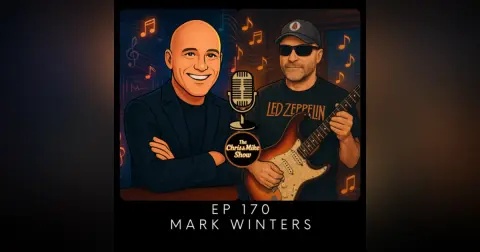
In this stunning episode, Chris, Mike, and Mark engage in a lively conversation that begins with some light banter about technology and time zones, particularly focusing on Mark's experience in Alaska. As they transition into sports, the discussion centers around recent coaching changes in the NFL, particularly John Harbaugh's hiring by the New York Giants. The trio debates the implications of coaching dynamics and the challenges of getting over the playoff 'hump.' Mark shares his unique background as a career pivoter from aerospace engineering to music, revealing his passion for both math and poetry. The conversation flows seamlessly from sports to personal anecdotes, highlighting Mark's ambidextrous abilities and his family's influence on his diverse interests.
In this engaging conversation, Mark Winters shares his journey from aerospace engineer to musician, detailing how he pivoted during the COVID-19 pandemic to embrace a solo career. He discusses the challenges of transitioning from a band to a solo act, the importance of online performances, and how he used the time to refine his songwriting skills. Mark emphasizes the positive themes in his music, drawing inspiration from various genres and artists, including John Mayer and Jason Mraz, while also incorporating elements of science and philosophy into his lyrics.
The discussion delves into Mark's songwriting process, his experiences at a songwriting retreat, and the collaborative nature of music creation. He reflects on the importance of melody and vocal training, sharing insights on how he has developed his craft over time. The conversation is filled with humor and camaraderie, as Mark connects with the hosts over their shared love for music and the creative process, leaving listeners with a sense of inspiration and positivity.
Stop by our website and leave us a review!!
0:06 I'm going to let you young. Welcome you to the Twitchers. Hey, guys. I got no picture. I think he's coming on. Yeah, well, Mark's here, kind of sort of. We can't see him. I heard Mark but I can't see him. Right. So this is Chris. I'm actually I'm Chris. He's my that's Mark.
0:47 Oh, oh, in a car, in a car in a car might might not work. Mark, you got to be on a dedicated you got to be on a dedicated Wi-Fi type thing. We've we've are. You headed home. I'm in Alaska and so my wife and I out here visiting and I thought for sure Alaska's theater time was one hour behind you guys, but apparently it's it's two hours. It's really bizarre. OK, well, it's. 2:00 here, yeah. It's 4:00 here. Yeah, it's 4:00 here. Yeah, yeah. So I thought it would be 3:00 Alaska time because it that's what anyway, yeah, it's all good.
1:28 I'll be home in about I'll be I'll be there at the hotel in like 5 minutes so. Actually, he's good. He's good right now. He's at 93%, Chris. OK, it's up to you. I just don't want to, you know, if you want to wait till he get we can talk until he gets to the hotel, then he's not. We're not going to watch him leave the car and go to the hotel room. OK, that's fine. Yeah, just walk back on when you get there, Mark. Yeah, yeah. Just do that. That'll. Work. Yeah, that work. Alright, we'll see you then. Brother, we'll see. We'll see. Drive safe. OK. All right. I'll be, I'll see you guys shortly. Thanks guys all. Right. No problem. Thank you. Bye. Bye. So that's fun anyway. So what were you talking about before Mark joined in football? Football.
2:16 Specifically, John Harbaugh. John Harbaugh John Harbaugh was introduced to New York Giants today. I saw a little spiel on the Instagram that a lot of players showed up. Congratulations by the way, I think that's a great hire. My personal opinion? I, I, I would now the more that I read about him and the more that I read about about. It's a dynasty family. Yeah, football. It's like the Mannings man. The hard balls, they eat, breathe, sleep. Football. I just could there have been maybe a a better choice if we really sat down and, you know, thought about it maybe, but. Yeah. But if you look at the ones that if you look like sell this Robert Sella. Yeah. So Robert Shelly got hired for Tennessee, which is interesting.
2:57 I did not know, I didn't see that. Yeah, that's that was dropping last night and then today, OK, Sean McDermott, I knew he was going to get fired and I actually posted something. I kind of knew he was, but I still find that surprising dude. I mean, I know he couldn't get over the hump, but. The hump is everything though. You got to get over the hump. It is I. Don't care if you get if you get to the first round. Playoffs every year, 10 straight years, but you don't get past the first round. There's there's a glitch in the matrix. Look at look at remember Jon Gruden and and Tony Dungy, right, Dungy left the the the Buccaneers because he couldn't get him over that hump goes Indianapolis wins the Super Bowl. Gruden gets that close to the Raiders can't get over the hump, He goes to Tampa Bay, wins the Super Bowl.
3:39 Some people just need to go somewhere else and get over the hump. Now granted, right, Gruden made won a Super Bowl with Dungy's team and I don't know who, I don't know who was coaching the Colts before Dungy, but he won, he won the Super Bowl with that previous coaches team, right? So. Who knows? I'm listening to you. I'm going to look up those contracts. Oh, I know you. I figured you're, I figured you're looking up research and doing some research. So, yeah. So the more I the more I've read about Powerball from people that are like, I have a really good friend, Steve Binger. What's up Steve, who lives in New York and he has his he has a giants page that that's How I Met him.
4:22 Really good guy. Love smoking cigars every time the giants when he smokes a cigar. I've tried to get him on the show, but such a weird dynamic of time difference and and and and he works and stuff. But so I asked him flat out like, is this a good thing for New York? I'm like, what's, you know, you're there and you hear all the speculation and rumors and stuff about the deal going South, that kind of jazz. And he's like, no, dude, this straight up the whole the whole hang up was the fact that Harbaugh Harbaugh's Harbaugh's deal was was he wanted to control, he wanted to be the GM. Well, obviously the Giants weren't going to give him the GM position because they like Joel shown for God knows why.
5:03 I can't imagine why. I don't I, I, I, I me either, man he's. I mean, talk about a failure. Well, and then his kids told him who the draft and he didn't draft, and those people that his kids told the draft went on to do. That's your point a second ago. And I agree with you. You know, sometimes I have a little too much heart. Yeah. It all starts at the top. So yeah, what have the Giants done for you as a fan lately? Nothing. Nothing since Coughlin was fired, which he shouldn't have been fired. I mean, you know, it's you went to Super Bowls with the team and you get fired. That was, that was an unclassy move from an organization that has a storage franchise. They should have dealt with that a little bit more graciously. You know, they should have just had him. I don't know.
5:47 I didn't like Kaufman though when he first started either. But with that being said, I'm not a huge football historian, as we've all established, but can you think of a person who's been a coach in the GM at the same time who's been super successful? No, no one. So I'm not sure. I think that's a lot to bite off, man. I agree that's too. That's too many hats. And I think if I were him when they said no, I would have just said what he wants anyway. Then can can I be involved in the draft procedure? That's what he wants, right? He wants to be involved in who are we going to put on the team that I'm going to coach? Well, and what it is is Harbaugh doesn't have to answer to shown he answers to the meritus. That was how they got around that. OK, which which you OK, good, because I wouldn't want to answer Joel Schoen either because I mean, it's on record. It's on film.
6:41 The the the stuff the people he didn't pick and his kids are telling him in behind in the NFL Hard Knocks. You should draft these guys, just guys, these guys. And he doesn't draft any of those. And his drafts are a bust. And he's on record saying that Saquon Barkley's done. He will not rush for 2000 yards. He'll never be the MVP. And what did Saquon Barkley do the year after he left the Giants? Both. Those things. Both those things. Now what did Saquon do this? Year, both of them, right? And what did he do this year? Nothing. He went back to his giant style of playing because he clearly stated on the Saquon documentary, I can't run like that anymore. It's not healthy. I can't run angry. And when you don't run angry, you don't have the success that he had that one year in Philly. Now, you can argue with me all you want. Look at the stats.
7:25 He cannot run out of this runner. So no, he's not. It's like Cam Scataboo. Cam Scataboo is not going to run like Barry Sanders. Cam Scataboo is going to run downhill like Dead Puckus. Those are two. Different styles of running for sure, right? Yeah, right. Right in your face, knock your ass over New York Giants football. You know the first time Jeremy Shockey got a ball, he he knocked over 3 or 4 guys on the sideline. That's New York Giants football smashed by the football, which is what I love. Look. At so you. Send me. Yeah, yeah. Look at the two Kyle Tucker ones first because those numbers will blow your fucking mind, man. Yeah, so, so with the luxury tax in baseball, the Dodgers will be paying $126 million a season for Tucker, assuming no deferrals. That's more than the 11 teams entire payrolls. And then the other one is Kyle Tucker will make $164,000 per day from the Dodgers on his new contract. Think about that for a second.
8:26 Yeah, every day. Yeah, there's another almost 200 grand. Yeah. OK, we'll round down $150,000 a day, every day. Yeah, that's $5,000,000 per month. That's just and you wonder why baseball tickets pricing is absurd. What are the Rams? When I got to pull up on my phone. There was one that I saw. Oh OK, the tax thing, sorry. So Matthew Stafford only makes 19,000,000, only makes $19 million after taxes despite signing a $44 million deal. Federal takes 16.2 million jock tax. Like the jock, he's going to wear the jock strap.
9:08 That's $220,000 a year. FICA $665,000 years. Agency gets $1.32 million a year. And the California State tax is 5.85 million a year. He's only making $19.7 million a year. See this? Well, smallest violin. Sorry, Matthew. So sorry, so sorry. Crazy. I cried when I read that. Crazy I I cried too. I'm weeping. I explains how Odell blew through $100 million in five years. No, it doesn't. Live within your means, Odell. You can't build generational wealth on that kind of money. Yeah, but you look at the Mannings, there's your OK, you can because, you know, you can.
9:51 We talked about that a couple episodes ago. The wealth, the wealth that's been built for the Mannings, not from the dad. The dad didn't play football at the time. You made bank. No, but his. Son's dead and they are, and then their nephew is making what we say, $6.78 million playing college football. Yep, more than a coach by a landslide, right? It's insane man. And that was going to be the thing that I I saw somewhere. And it might be Kyle Tucker now is worth more. One of those guys on the Dodgers is worth more than the owner. Think about that. Yeah, that's the first time that's ever happened in sports. That's why it made the headlines. That's because they got it. They put they need to put a cap in baseball and.
10:34 That was the question. On top of that statistic was, yeah, should there be a cap in baseball there? Should be there should be a cap in all sports because nobody, I don't care who you are, you're not worth, you're not worth that kind of money. You're you're hitting a ball, you're catching a ball and you're throwing a ball. That's it. Nothing else. Look Mark's back. Welcome back to Dudes. Dudes. That's that, man. Well, it's shaking. There we go. I'm so sorry about all this, man. It's all. Good brother, It's all good you're. Good. Take a breath. Relax. It's all right. We're we're into. It man, we're not those kind of people. We're not. That's good. We're relaxed. That's, that's cool.
11:15 I'm I'm appreciative. This is fun. Man, yeah. We're just conversation, having fun, man. That's why, that's why we that's why we hit it off in the e-mail, because we're not assholes, man. I'm in Illinois. Yeah, yeah, I'm in Illinois. You're in Alaska and he's in Arizona, so we made this work. Yeah, yeah, that's awesome. So. So what are you doing in Alaska, man? So we've been out here a few times and really love, we love my wife and I love hiking, backpacking, camping, that kind of thing. And we, we were out here. I'm just making sure y'all are on Wi-Fi here. Wi-Fi. Yeah. OK, good. Yeah. We, we love, we just love the culture.
11:58 It's very close to Texas in the way that the people are out here. And I've been my wife's been after me to buy a cabin in the mountains with for her somewhere. I thought it was going to be in in Colorado. That was my thought. But then when we, when we set foot in Alaska, like after the first night of camping out in the tent, she's like, right here, baby, find me a spot. So we're back up here in Fairbanks looking. We were in Anchorage a little, you know, bit ago. Cool. Yeah. And we wanted to come in the dead of winter to see what it was actually like to be in the dead of winter up here. So we're getting used to it. It's it's pretty cool. Is is there the ability to go house shopping in the dead of winter?
12:43 We wanted to know that and the answer is yes, yes we can. We were out. We have this the most amazing tour guide. She's a realtor, but she's really a tour guide and she's been out with us driving in the snow. She we got stranded yesterday. She had to have one of her friends with a big 4 wheel drive truck pull us out of the snow. And it's been, it's been an experience. I mean, we, we went, you had to think about this. We're on a like A5 acre parcel and you're going to go up to the house and the house is sort of set back halfway on the property. And so you have a little driveway and then, you know, so you kind of you make your way up the driveway and then from the driveway to the house, you got to go snow surfing, dude.
13:27 You're like you're you're plowing through the snow to make a lane for yourself to get to the door, right? On. So it's totally not the Texas experience, which is where I'm originally from. Yeah, yeah. So obviously you're going to you're going to vacation in the warmer months as opposed to the blizzardly winters, I would assume? We we don't know that. We've been told by most of the the locals that June is the time not to be here because the the mosquitoes are insane in in June. So come any other time besides June. OK, we were there. We did a Norwegian cruise, Alaskan cruise, and it was October.
14:13 So it was it was cold, but it wasn't, it wasn't. Holy shit. Cold. You know, it was it was bearable. It was, Yeah. And we did the whole glacier, all this stuff. We were Juno, Ketchikan, some some other spot. I forget now which, but yeah, so I don't. Not Fairbanks. What's the other one? Anchorage. No, not Anchorage. I don't know. I. Think you fly, fly into Anchorage, maybe the the cruises. I think because we did a cruise, that's how we first got the experience here where our cruise stopped in Seward and then you got a chance to do a train ride up to Anchorage. Or maybe it was vice versa. Maybe we flew into Anchorage and took a train ride down to Seward and the then the the port of call for the debarcation was Seward.
15:00 Yeah, we sell. That to Seattle. We went from Seattle to Alaska, OK. Well, that's cool, yeah. Yeah, it was fun you. Guys stopped somewhere in Canada too if I remember we. Did we stopped in in Victoria, Canada? Yeah. Nice people. Nice, yeah. Vancouver. We stopped in Vancouver. I love Vancouver. It's amazingly awesome. Yeah, yeah. Nice people, nice people. So now that you're now that you're here, you're settled, relaxed, chilled out. Give us a little bit about you and why you wanted to come on the Chris and Mike show so we can kind of start our conversation with you from there. Yeah, so I oops, I am a career pivoter. I was, I was in aerospace engineering.
15:43 I love applied math and physics. I studied it in school. Computational fluid dynamics. I love doing calculus and differential equations and studying, you know, physical phenomenon as this part of things I know. Nothing about this is. My head is like. But. That's. Cool. He's the smartest one in the room today, Mark I. Don't know anything about that, but I would tell you that. But I, I love, you know, I love that part of, of life. But I've also been a poet my whole life. My grandma taught me to write poetry when I was 5. And so I have these sort of competing facets to my mind always sort of trying to express themselves. Can I?
16:31 Ask you a question that you may not be able to answer. Sure, Mike. Shoot, man. What? Is it about math? Like, how does your brain work like that? I mean, what makes math so interesting? My brother's like that, like some people's brains, just they're geared towards that side of life and I, I just don't get it because I'm bad at even simple math. Yeah, I, I think personally that I have AI have a curious mind about a lot of things, but I have a curious mind when it comes to the intuitively the way things function. And so like I always just sort of get like how an engine works or how thermodynamics works across the surface or how, you know, fluid flows around an object.
17:20 It did to me, it makes sense. And, and so I think in the mathematics side of things other than just the, I really just enjoy more complex things to, to sort of sort through and figure out. It's a way for me to explain to myself and other people why something's happening. Why, why is the water freezing or why is the air flowing in a certain way? So I don't know. I say it's like a, it's like a language. Like my brother, he is a polyglot. What's a? What's a Poly? What's a polyglot? He he speaks lots of languages. Oh, right on. More. Yeah, more than something today. That's awesome.
18:02 Yeah, more than three or four. And he speaks them forwards and backwards. So like the word really the, the, the the English language he taught his twin to to speak backwards English. They call the language straw cab, which is the word backwards backwards. Wicked. And so Mark is crammed right and and Chris would be shirk right. He can speak like. Full sentences like that, like. Fluent like we're talking right now. Wow, that's. Amazing. Insanely, insanely. He learns French as his second language and he taught his friend Steven to speak backwards French that.
18:42 Is so wow right? And so he's just got this gift for language. And so when he's, as a matter of fact, when he's talking to you, like when he starts speaking French, his he gets very French. He's very, very, you know, Francophile. Yeah, exactly. And then he. Speaks. When he speaks German, he becomes, yeah, that's. Amazing. Man, right. That's amazing. He gets he gets language and I get math and science. Life it all. Makes sense now, right? So it's just kind of two, I guess there's two different ways that you sort of get the world right real quick. What did your parents do? I was. Just going to ask him that.
19:24 Thank you. They're. All mixed up. So my, my, my, my dad has a PhD in pharmacology, of course, and he's also an MD and he has a also a undergrad degree in history And so, and he's a dyslexic of all things, really. And so he had to, it took him like forever to learn anything. Like he reads at 110th the speed of a normal person, right? Wow. And my mom, it's impressive that he did. What he did, yeah. Yeah, they met in East Texas going to school and she. Didn't finish university and so she's been, she's had they, they were together for 16 years and 16 years and then they divorced. And so she has had a variety of marketing and sales type thing. So she's a very outgoing, social butterfly style personality, very salesy.
20:30 I would say my, you know, my, my grandparents probably had more of an influence on me because of my parents were divorced and I spent a lot of time with my grandparents kind of, you know, teenage years and, and after, you know, so I would say my grandma when I, I used to stay with her in the summertime with my, my four brothers. And she taught me the arts. So she taught me when I was 5 to write poetry. She taught me to paint watercolors. My grandpa taught me to do pen and ink. My brain is mixed up. My dad's left-handed, my mom's right-handed, and so I paint. I paint watercolors and do creative work in calligraphy with my left hand.
21:11 And I do. I do engineering work, math, and pen and ink drawing with my right hand. Wow. That's. Amazing It's it's Chris is terrible. It's terrible because look OK, I got OK. You think like a normal thing, like I played, I played football, like I played tennis going in in school. And so, you know, my dad and I go out that or baseball, I go, we go out to throw the baseball and it's like, what hand am I going to throw it with? I don't know. And so I got to go, I got to go hard with the left hand and then with the right hand and I'm like, which one am I feeling better? OK, I'm going to do that thing. So every single thing like I play ping pong left-handed, I play tennis right-handed, I play racquetball left-handed.
21:57 It's like so it it takes you twice as long to figure out whether you like a thing or how you do the thing with your body. So you're. Like, extremely. What is it? Ambidextrous. Ambidextrous. Just right down the middle. And be confused. Yeah, I'm like, wow. I'm like, no. So do you? Do you have kids? I do. I do so so. Did any of this translate into the kids? Yes. Unfortunately, my daughter's like, what did you do to me, Dad? So my daughter's trying to figure out how to write when she's go in grade school, right? And so she's like, and I did the same thing, like right-handed, left-handed, right-handed, left-handed. OK. And so she is trying to and she's like, I don't know, maybe 6 or 7 and she still hasn't quite decided yet. And So what she ends up with is she, she holds the pencil like a left-handed person would hold, which is different than a right-handed grip.
22:51 OK. She uses a left-handed grip in her right hand to write with a right-handed slant, Right. It's like the oddest thing ever to watch her, right. It's like, OK, Megan, that's her name is Megan. It's like, OK, that's odd. And she's like me. She has to figure out what she's going to do when she's picking up a thing. So she plays racket sports with different hands. And. Yeah. Yeah, my grandson is left-handed. My oldest grandson who's 6, and everybody else is right-handed. We don't know where that came from. And then his little brother is right-handed and we thought he was. So I coached him in baseball, I coached him in football. And we were always right hand, right hand, right hand. And then we realized one day, oh shit, he's left-handed like that. Explained everything.
23:33 Poor. Little man, everything yeah, my, that's, that's really cool. My yeah. My, my dad when he grew up, he, he, so he was left-handed, but they had no left-handed gear and so he had to play with a right-handed MIT. He was good at baseball. He had to play with a right-handed MIT and he would catch the ball and then he would take MIT off, drop the ball. I saw him throw that. There was a baseball player, I think his name was Jim Abbott, where he didn't have a hand. He lost his hand. He was a birth defect, so he did that. He was a pitcher, so he would throw the ball and as after he released the ball, he he'd have the glove on and then when he catch something like super fast man, he would just get rid of that glove ball.
24:25 It was crazy. So yeah, it can be, you know, Rick Allen, 1 foot exam and you can do all kinds of shit. You put your mind to it, right? Yeah. Yeah, that's that's crazy. Yeah. So, OK, we we've spent 10 minutes here talking about the ambidextrous of you. What? What about this? Why are we really here, Mark? Yeah, I'd say, you know, first of all, I checked out you guys show I really enjoy, you know, your, your the vibe for your show and you guys and your artists. And I think so from from my point of view, you know, I have a a music project and so I've done a career pivot. So I went from being the the aerospace dude to doing some life sciences for a little bit, and then I picked up a guitar to play a song to my wife for our anniversary, right?
25:13 Handed or left-handed? See, you know I'm Chris like I'm in the shop, right? And the shop had no left-handed guitars. Very. Rarely do that I. Was forced to do it with my right hand, which is OK, but actually I'm OK with the right-handed guitar playing. I wish I could turn my piano inverted because I really want to play the melody with my left hand and the rhythm or bass notes with my right hand when I'm playing the melody. And you can transpose on a keyboard but you can't flip it right anyway, so right-handed. Why? Did why? That's just just squirrel moment. Why don't you just Jimi Hendrix that shit and turn the guitar upside down? I I.
25:56 I, I would have, but I, it didn't register for me that that was a thing to do because I like, I had done nothing musical, no singing, no playing, no nothing. And so 2011 I pick up a guitar to play a wife, my wife a song for anniversary. And I'm like, OK. And the guitar shop owner, I said, look, I'm going to buy this acoustic guitar. I'll even buy like the little bit nicer model from you, but you got to agree to teach me to play a song and sing for my wife. So he's like, OK, I'm in. He's like, I'm all about that and being, you know, organic. And so, you know, that's a story all to itself. But I'll tell you, sitting in our favorite Italian restaurant singing a song to her was such an emotional connection for me. I was like, Oh my God, where has this been my whole life? Right?
26:46 It was just such a a connection. And so I've just became obsessed. My wife would say I was obsessed learning music. I put a little group together, we play some cover songs, and I just wanted to play 1 gig. And in doing that, I kept changing the lyrics to the songs that I was singing because I didn't like the way or I just wouldn't sing a song because I didn't like the vibe for the song. And that kind of removes a lot of material from your repertoire, right, that everybody wants to hear if you're doing that. And so I 2018, I decided, OK, I'm going to write my own stuff. And I taught myself and, you know, bought a few courses online to sort of self study. And so here I am, you know, my first album went out in 2018 in May, unfortunately, because COVID had a tour set up behind that and COVID sort of shut down all of our tour dates. And then I sort of roll through COVID. Well, the, the first month I was sad because I put so much energy and so much of me into writing the album, putting the band and the group together.
27:59 And then I ended up after three or four weeks of being sad, I, I pivoted online and became singer-songwriter guy online as opposed to a four piece, you know, soft rock band rewrote my material, did a bunch of Zoom ticketed shows and raised money for charities and went through, you know, the, the process of teaching myself to be a solo performer And coming out of, of, of COVID, I wrote more material and finally got some traction a couple years ago. I, I, I was in a showcase at South By and a Tour Company picked me up and had a, my first big tour last year and then so spring and a fall tour last year. And I'm doing the same thing this year, putting new music out and sharing my rock with a positive eye with a little nerdy twist in there.
28:51 That's my. That's my nothing. Wrong with that. Weezer is one of my favorite bands man. OK, yeah, they're they're and that's what. They were, but, you know, back in the 90s, they were the one of the first nerd rock bands, right? But they were cool, you know? Yeah. Yeah, so if you heard their music. You would have never known it, Yeah. For me, I play, you know, I, I see the world with, you know, my own little rose colored colored glasses. So I, I see lots of the positives in the world. And so my music is typically inspirational, has a positive element to it. And you know, I've got my, my songwriting influences who sort of shape the way I craft a song and I'm out, you know, talking about usually like the juxtaposition of science and philosophy. You have a song called Boundary layer. It's about breaking through boundaries in your life philosophically.
29:45 And it's also about computational fluid dynamics theory and boundary layers of particles entering the slipstream of another particle and approaching the boundary layer there and slowing down and getting some new energy and going in a new direction. So the physics and the philosophy kind of overlap in in a thought. That's really cool, man. That was really. Graham rambling. Sorry, Chris, I didn't, no. You're not rambling. Be long. Winded there that that's what we. Appreciation man. One of the things that I find fascinating, Mark, is most people. That's why I asked about your background, because it's super important if people aren't good at putting two and two together. Most mathematicians are not artistic, right?
30:28 So when Chris said you were coming on here as a musician, I find that fascinating when all of a sudden you're like, yeah, I'm into physics and aerospace and I really like doing calculus for fun and all of a sudden you don't hear in the next breath most of the time. Oh, and I love to play guitar. Right, Right. So who were your influences as a musician, being a new musician? What led you to, you know, you said I write music as my influences were. Who were they? I'm curious. Yeah, so I learned to play the guitar playing John Mayer songs. So I love John Mayer. I love his bluesy influences.
31:10 You know, he's obviously has a lot of influences himself from a lot of the the Blues greats. And so I I also love the the quirky positive energy and just the groove of Jason Mraz. So a lot of songs. Yeah, I love some of that. You know, dance joy. You know, dance joy is another influence of mine, Ed Sheeran. And so, you know, as I'm crafting a song, you know, I'm influenced by the the way in which those writers, you know, might structure a song.
31:50 And then, yeah, I've always been moved by really powerful vocalist. So Pavarotti, I like, I always like listening to his music or, you know, some of the more, you know, pop oriented vocalist like Adele, I like the way she approaches some of her lines. So, you know, for me, I, I think I've got an eclectic, you know, influence. And so I think as you, as I'm, as I'm through thinking through a piece and maybe as early as I'm writing, you know, my, my music was probably lyric driven. And I would sort of wrap in, you know, the instrumentation around the lyric and try to, you know, push my melody around with my chords.
32:40 Because vocal, you know, I, I was, I wasn't trained as a vocalist to start with. And so melody would come last. And as as I've written more, Co written more and trained myself more, now the vocal elements are more intuitive. And so now I can sit down with my guitar or a piano and, and sing a melody and, and sort of find the vibe of the lyric and, and you know, sort of put it all together. In my opinion, that makes a better vocalist when you start out that way where, yeah, you're in the driver's seat, right, and you're not real sure what to do yet. That's where you develop you, right? You can always learn how to hit that note.
33:22 You can't teach somebody attitude right? Yeah, I think you're I'm 100% with you. I think the just having, having the mastery or mastery enough of your instrument, whether it's your voice or you're, you know, the, you know, a piano or a guitar or whatever instrument you're playing, having it so that it's natural for you to express yourself. You know, I'm I can, I can write lyrics all day, but taking a lyric and making something powerful and moving and and emotionally connection connecting with that, that's that requires such intuition, you know, from all the elements of your musicality, right Well.
34:04 Here's a good example. I can teach somebody to become a good beginner to intermediate guitarist, but past that, you're on your own, right? Because I can do things on my instrument that I can't explain to you. I can't tell you the theory behind why it happened. I can only let you hear it and say, you know, it either sounds good or it doesn't. So if you say something sounds amazing, I can't just talk you through how I just did that. I just did it right. It came through the universe to me, back to the universe. That I feel you exactly. It's like one man's it's like, OK, so I'm like like I'll write a I'll write a lick on my guitar and then like let's say I'm cutting a track and my producer is is doing some of the guitar parts and he cuts the lick that I created right, as opposed to asking me to cut it for whatever reason, right.
34:59 And I'm listening to him like, that's not my lick. It's it's his interpretation of my lick, right? Which is like, OK, so two guys sort of fitting in the pocket of the music in a different way, right? Which is totally interesting to me because I was thinking like, you know, if I sent my lick to Mike, Mike would play the same way I would. And he wouldn't. He would play it his way. Absolutely. It's like, OK, that's really cool. Here's. Another thing that'll make people's heads turn is when you tell them that you had to go back and learn something that you recorded right. I'm like, I'm not sure I could play it quite that way again. And they're like, didn't you write it? Yeah. But you don't quite understand, right? That was a moment in time that happened that might never happen again.
35:45 That that yeah, like you have right now you have my song up. What does it mean to be human? The cover of it right. And I've got this really cool, you know, sort of Latin ish boss ish beat that's cooking in the background and it's got these licks. You know, even like when I go to when, when I make the arrangement for that song where it's just me playing, it's just solo me playing. So I get only one guitar. And you have to carry the whole song on it. Then you have to rearrange the whole song anyway because how much of it is percussion important? How much of it is the melody, the back melody or the counter melody, right? How are you doing all the pieces all at once on one instrument I. I just have to interject too. Do you look like somebody that would be fun just to freaking hang out with for a few months?
36:33 You know, it's just, I mean, it's just everything that I see on your and this is I like doing this when we're talking to somebody, you know, Mike loves talking more music and the dynamics of music and like you guys are having. So that gives me the, the kind of freedom just to kind of go down journeys of the people we're talking to. And I, I, there's not a single picture that I'm like, oh, that looks like it was fun. I think it's the same thing in my head as you've been scrolling through here. It's like, yeah. It's a blast. Man, yeah. I'm having so much fun. It should be illegal. That's supposed to be life, man. Yeah. Yeah, and my wife is so amazing. She's like, she's watched me reinvent myself right over. And over again. Yeah, and she's like, hello, I did not marry a musician, you know, but she's been super amazing and super supportive. And I can't be more thankful for, you know, for her being wives.
37:26 Wives don't like musicians, man, Even though you tell them on the very first date, this is what I'm going to do with the rest of my life. They just, they don't, they don't hear it. She. Didn't have that one luxury though, because she was like, see, but Mike? Is a bait. It was a bait and switch. But. You did the right thing, Mark. You wrote the first song ever for her, yes. Bingo. Yeah, genius. Yeah. That's amazing. So you are Aeros aerospace engineer. Obviously you fly planes because I see your plane. Yeah, right. Oh, I. Missed that part, no? Yeah, Yeah. So it's because, of course, as a pilot too. Yeah, he's a pilot. He has because he was in the plane. He was in the plane. And so it looks harder than it looks. So being an aerospace engineer, and this is totally off topic, but what do you think about Artemis 2? Oh, you know, so Chris aerospace has two segments to it. So there is the orbital mechanics crowd and then there is the compressible fluids or the atmospheric flight people, right.
38:32 And so So which one are? You I'm. The atmospheric flight guy because I like, I like my hair to be on fire. I used to race motorcycles. I like that's not. Surprising. Fast, right? Surprise. You know, I'm like, OK, so and I like to feel those G's when I'm when I'm flying or whatever can. You just give us a list of things that you haven't done in your life. Life resume times like like like you, you so far are beating everybody that we've ever talked to as far as life resume is concerned just in this fur volume. 35 minutes of conversation it's it's oh, check that, oh, check that oh, I can do that I can do that, I can do that. I did this, I did that, I did this, I did that makes. Me angry is he can do math at that level and he's so cool.
39:16 Right, right. It's, it's, it's like our own version of goodwill hunting. And and there's no chalkboard because he's already he created the chalkboard. You're just solved. All the problems. You know, there's, there's so much amazing gusto in life everywhere you look. I think, I think there, you know, you could live 1000 lifetimes and just not unlock all the doors that are out there. Your energy. Is infectious, man. It is. Thank you. I'm feeling it. You know, if you came to my show. OK, so like I have this, this is my signature merch. OK, It's think like a proton. OK, I'm gonna let. That sink in OK.
39:59 It's it's, it's, it's, it's science. OK, Proton is. Positive right proton is positive. See, look at that, Chris. Yes, you got it. Bingo. Right. So there's there's there's neutrons, which are neutral, and there's electrons and they're negative, right. And so my job is to add a few extra protons to your orbit. If you come to a show with me and you leave with some of that positive infectious energy, and I'll feel like I've done my job. And you got to have fun while you're doing that, right? Yeah, absolutely. We need to have what? The show's not over yet, but we need to have you back on a Friday because Fridays we can talk as long as we want because there's no time stamp, there's no time gap limit. OK, so in February, we're booking Fridays, 10:30 AM Pacific Standard Time.
40:42 So let's let's. Figure that out. Let's figure. That out because I I because really, an hour's not enough for you. Put it in my sundial so I get it right this next time, right? Well. No, it's all good man. My. Ass with angle was off by 1°. It's all. Good. But really, an hour's not enough. I mean, Michael agreed to that, but it's, it's, let me, let me tell. You how much of A blessing that is? Yeah, sometimes Chris will decide that, you know, we've covered what we needed to cover. I'm trying to say this nicely. And yes, we're moving on, right? This might be the first time other than people that we know together personally, where I've heard him go, we're running out of time. And I got a million questions and I do too. So your energy, dude is so infectious. And the amount of things that you've done, I would like to unbox them.
41:33 More one by one, yes. Like maybe a month of Fridays. I'm so down but you guys are cool to hang out with and talk with. So show me what's what's the story between y'all two? You you. Can tell the story Mike you tell. Them I do. When I was 19 years old, for whatever reason, I had fulfilled my obligation with my parents. I wanted to be a professional musician. I knew what I wanted to do from the get go, right? I didn't decide later, so I went and got a degree in graphic arts to appease my mother, and I moved to Arizona in 1993 with a mission to start a band, to see the world, to get paid to do it. You know, that's what I wanted to do for a job, so I did. The first incarnation didn't work out.
42:14 So Fast forward to Chris. I'm at a Candlebox show in Tempe, AZ at the Electric Ballroom. About 2000 people. It held on the big side and there's this dude singing behind me the whole show and unbeknownst to him, he thought I was, you know, pissed off or whatever. Long story short, the power goes out and he's still belting out the rest of the measure. After Kevin Martin had stopped saying, and I didn't remember this part, but apparently I turned around, did a 180 and was like a, are you a singer? I play in a band. And I handed him a business card. I'm like, we need a singer like stat. We got gigs booked or whatever. So we met him at a bar and had a couple drinks, went to the practice space and, you know, Chris showed up with like a suitcase of lyrics, I like to call him, and APA System. So back in the 90s, if you had APA System and you had written any amount of lyrics, you were pretty much in the band, right? Boom.
43:13 Look at that. He's got, he's showing me. That's sweet. And then I found last week in my barn, I found a tote full of lyrics that were from a file folder alphabetized. I haven't gotten in that yet, but this was just this is just from the Nemesis days and and my last band's days. That's not even by touching on it so. Him and I went on to form a band called Nemesis. We ended up with the development deal with Metal Blade Records, played countless shows together, opened up for everybody from the Marshall Tucker Band to Armored St. to Sacred Right to LA Gun 7, Dust, Tony McAlpine, Enough's enough. The list goes on. I mean, we kind of found a pot of gold in those four guys. It was the best, Chris describes it the best.
43:55 It was the best time of all of our lives. And we, whether we knew it or not at the time, yeah, we didn't. Realize it like we didn't live. In large favorite like. Like the fact that you open up for Marshall Tucker Band and you don't. You don't. You're so naive that you don't realize who the Marshall Tucker Band is yet. Or the opportunity that were you were just afraid, right? Like you just you just don't get it. Then you look back up like we were written up in a magazine that we did a cover with Mikes Guitar Hero buddy Ray Stone of Roadhouse Blues. And I love Jim Morrison. He's one of my gods. Morrison Morrison veteran Bono where my 3 like vocalists the. Whole crowd while they were playing us not to interrupt you, man, but no, you're good.
44:35 I just that he takes me back to these moments in time and I was a spectator of this because the guitar that's sitting behind me belonged to one of my best friends. His name's Ray Stone. And Long story short, it ended up going he sold it. He never knew where it ended up, and one day he saw me with it and he's like, that's my guitar, dude. And I was like, no, it's mine. I just bought it, you know, it's like. He said. You don't understand, is the serial number, blah, blah, blah, blah. And I said, yeah, how do you know that? He said that's my guitar. So anyway, he wanted to come play it. And I said, come down and jam with us, man. I was like, all right, what are we going to play? And I said, Chris loves Roadhouse Blues. Everybody in that crowd, Mark, all our jaws were hanging on the floor.
45:18 They did the best version outside the doors is what that article said that that reporter had ever seen. I can, I can, I can, I can channel Morrison. At least I could, I could, I could do Morrison like like. It was awesome. I. Was Blues was the one of the first songs I learned so the the group I played with. When I formed my my band, everyone had been in music for 10 or 15 years besides me. And so they didn't want to play anything normal. They wanted to play some crazy B side cars songs and just like complicated hard stuff. And Roadhouse Blues was one of the ones that was not as complicated.
46:00 And so I actually played that one on the lead guitar. It was my first lead guitar. The song that I ran ran the whole the whole song with, which was really cool. The other guy in the in the group sang as well. And he loved Jim Morrison and he loved to sing his songs. Yeah. Yeah, I used to. Do almost. My dad introduced me to The Doors when I was younger, but I didn't appreciate him until I met Chris. Because when you meet somebody that's so passionate about a group, then it starts to leak into you, you know, like, I got to listen to them a little bit more because this dude seems to really think they're all that, you know? Yeah. And see what, what, what, what lured me into the doors, which you'll like this, Mark, was the poetry. Because when I was in high school, my English teacher, one year, we had to write a, a ballad for the, for the class.
46:44 So I wrote this ballad and I got an A and I'm like, what the hell? And then all my friends like you can write. I'm like, apparently. So I started writing ballads for my classmates. And then she convinces me to, to come to the literary magazine called Dimensions for the high school. And then I, I scribed a poem called Touch of Grey and it gets published and everybody's like, all the girls like, oh, this guy's got soul, you know. But so for me, the poetry was cool because it opened a part of my brain I didn't know existed. And then that throughout my life has helped me purge a lot of darkness. But when I, when I stumbled across the doors, it was from a poet aspect I was in, it was in a bookstore, I think changing hand bookstore.
47:26 And I saw Jim Morrison's one of his poetry books. And I'm like, what the hell is that? And I bought it and I'm like, oh, the Lords and the creatures or something. I remember now. But that's what pulled me into the doors and that's what pulled me into Pearl Jam. That's what pulled me into YouTube because I'm that guy that when I would buy the record, buy the album, buy the cassette tape, I open it up for the lyrics. It was the lyrics that pulled me in. So if you really I didn't give a. Shit about lyrics to tell him, right? Right. Oh, he cared about what? He cared about the guitars. He was a guitar player. But that's the dynamic. My mother. Was Mark, this is a true story? My mom was always worried that, you know, we went through the Satanic panic of the 80s, right? So not that she was thinking. And she was just like, are these bands any good or blah, blah.
48:06 I'm like, I don't even know what they're saying. And I had, I had such an honest look on my face. She believed me. I'm like, all I care about how is the music? You know, I don't even, I didn't know the lyrics to half of those songs until I met Chris and he wrote lyrics that spoke to me. You know, like all of a sudden I got it because I was on the inside looking out, you know, that's. That's amazing, I find. So I went to my first formal education as a songwriter 3 years ago in Austin. Andrea Stolpi has a. She does a a songwriting retreat in in New York, in Nashville, in Austin and at all LA. And she's a former, you know, Berkeley professor and she does a lot of work with labels and whatever. She's been a label writer.
48:55 She's got a great background and a great energy, and her retreats are curated. So you have to submit your portfolio to her and she curates everyone to figure out what 25 or 30 people she's going to invite to the retreat for that that particular retreat. And so I went to my first one not knowing what to expect. And it's 5 days and you show up the first day, everybody sort of gets to know one another in a round table. And everyone's very accomplished that that I'm there with. I'm just feeling good to be there. You know, like, all right, yeah, I didn't get cut. Put me in coach. And so then the next day we start. So we do like a morning yoga, have breakfast.
49:37 Then we do a little bit of education about different, you know, didactic aspects of, of starring writing. And then by 3:00 she splits everyone up into three person teams and she makes the three people write a song. And then at 6:00, right after the late, the early dinner break at 6:00, everybody has to perform it as a trio. So each group, right. And so, you know, you're, you know, eight or nine groups are, are, are doing this and you're there with really good people. So there's a lot of pressure to write a song, finish it and then perform it.
50:17 And I'd never done any of that before. And so to me, like, what is, you know, as a poet, maybe I'd done a little bit of free writing, but never to that level because it was just sort of me, you know, learning from my grandma. And so, you know, went through, you know, these free writing sessions that we reduced down to, you know, lyric and made, you know, music out of them. And each of my groups, I thought it was, I thought I was just like, in the most amazing moment, everybody's we wrote an amazing song. We performed it that night. You're you swear that you've met your new soul mates that that very day. And then the next day she breaks you up into a different group and makes you write with another group. And five nights in a row you're doing that and you kind of get the vibe. For one, she tells you, what are you good at? So she's listening to she, she spends time in each of the writing groups watching the group interact. And then when you perform it, she kind of knows who did what in the performance.
51:16 And then she gives you a breakdown after the first two days and after the 2nd 2 days and then the last day. So you get 3 professorial check insurance. And she says, hey, hey, you know, Chris, you know, you've got a great voice or Mike, you're a great guitar player, whatever she's telling people. And so for me, she said, look, you know, you're, you've got a, your, your superpower is reaching into everyone and pulling the best out of them in the group. So you you observe what everyone's great at and you pull it out of them and make sure that's part of the song that you're writing together. You're great at me, she said. I'm great at lyrics, she said. You're great at arrangement and structure and rhythm and, and prosody and the collaboration and the harmonies.
52:00 But your melodies suck. So you need to work on your melodies, right? And so for me, she's asked, well, how do I fix that? Right? I've never been to school for melody writing. She said, hey, you need to find the very best melody writers that you you can and Co write with them and listen to what they do for the for 5 or 10 songs. And then you need to do that in the next set of songs you write. And so a a very long winning way for me to say like I, I, I Co write with when I when I got back from my my retreat, I, I started Co writing with everybody and I found you put me with an intuitive vocal melodist and we can write a pretty Dang good song in three hours and have and cut it if you.
52:52 If you give me that guy, we could write 10 songs in a day if we were having a good day, right? If they were just simple rock songs and we were just wanting to bang out some tunes that we could easily write 10 songs and two of them would be songs that we would probably play forever. Yeah, and, and for me, that was a new, a new revelation. And so I went through a period of writing with the very best melody writers that I knew. And then I I flipped it and I forced myself to be. Think about how terrifying this will be. Mike, put your guitar down. You can't pick it up. I've done. It you. Can't pick it up and you're going to just sit there and you're going to sing, right?
53:34 You're the singer in the writing group. You're not going to do anything but sing right? Terrifying. And to me it was great. It was, it was like bonsai base jumping or something like, all right, I'm there, man, I'm in. And so after you do it 5 or 10 times, you get over yourself and you know, you, you sort of developed some, some approach to, you know, what key do you write in or how do you sing a melody or how do you make a riff or whatever. Well. I'm sure even as an extrovert Chris could put himself in a situation where he's going to be uncomfortable, right? The guy could get in front of 60,000 people right now and sing his ass off. I know it. I've seen it with my own eyes. He's not afraid to go on stage, but I'm sure he can think of a situation like you just described for you and I. If you take my guitar away from me, that's 60 to 80% of my voice, right?
54:22 My. Mine, mine's karaoke machines. If you, if you want me to sing karaoke, I don't have any confidence of karaoke because it's, it's there's nothing, there's nothing there, right? Like I, I, I need the music, I need the band, I need the energy. I don't. I don't. We weren't. A cover band either. I mean, we played a few cover songs, but we didn't make it a point to learn other people's music. We were proud that we wrote our own music. That was part of our stick, you know I. Love that, right And. Part of the reason with karaoke is you don't have monitors. You're not hearing. I just, I just, I've never been a point. I've never heard about that. But I tell you what, I one of the things I do, Chris, one of the things I've been doing, so I have a vocal coach and he's been teaching. I had one. Yep, I had one. Yep, Yep. And I had to put my 10,000 steps in like everybody else. And so I, I spent time for a couple years now with a great vocal coach.
55:08 And now like what you would if you were getting proper vocal training, you would be able to start with the first note of the song, right? And I know it. I'm starting on the five of the song, you know, or wherever I'm wherever I am. And then you could sing the melody. That's where. Drummers come in real handy, right? And so for me, I've been training a lot to be able to take a note and sing them, sing the full melody, acapella, sing this dark standard banner, whatever, as a training exercise for myself. Star single banner is a good training song. Star single banner is a good training song because that's 90 seconds of take you all over the place. If you can pull that off, even even in key the entire time, you know you can sing because that's one of the things my vocal coach made me do.
55:51 He made me do that. It's like the first song we learned was that and you here you go. Because that is the most dynamic range song. That's a standard, traditional song to sing. If you can nail that, OK, you can. And as a. Singer I so many singers never concentrate on the beat, right? One thing that Chris was really good at is understanding where that not just the one started but where the accent of that measure started, right? Do I, where's my power come from? Is it got to be right on that one or can I wait just a second and make him wait it out and then he would hold it out past the measure, right? So now the key changes instinctively. We didn't know what we were doing, man, it just sounded mine was all instinct.
56:34 You. Know I had this had this tiny because so Mike I was really that sort of drew me back into my first studio session. So I'm recording my first album and I really hadn't spent time playing on a click track much Had some. And so I go in the studio and, you know, I'm with session musicians there who are playing the drums for me, for my track and bass and in the keyboard. And so I'm, I'm playing, but I told my producer when I, when I hired him, I'm playing every guitar part and I'm singing all the lead vocals and the harmonies. Why? Because I got to learn it, right. And so I just got to, you know, if I'm, if I suck, that's cool. I've got to do better so that I don't suck. And so I'm sitting down just doing the rhythm guitar part for my very first song, and I'm in the studio and everything's new. The headphones are new, in the booth is new, everything new. Everything's so new and you're listening to the beat. And so I'm playing and it took me 20 takes to do the rhythm part for my first song, which is terrible. This is how long it took me.
57:46 I've heard a lot worse. And then I'm like, I finally like on take 15, I was finally kind of getting it right. It was sinking in, and the producers like, sit back in the pocket a little bit, please, Mark. And I'm like, what the heck does that mean? He's like, wait for the. Back beat. You're play, you're playing on the beat, right? You need to sit back behind it. I'm like, well, my, and now my, my science mind starts. Is that 2? Is it 2 milliseconds? Is it 5 milliseconds? Right. It's a feel. Brother, it's a feel. How do I do? I'm like, OK, finally I just turn all that off. See I. Was going to say you got, you can't get, you got it. You got to shut the analytics off, man. Yeah, you got to feel it.
58:26 OK, I had the. Wave, baby, I'm on there. I'm surfing the wave now. Here's. A band that you probably, you didn't name them, I don't know if you're a fan of them, but if you want a shining example of an entire career of that, listen to ACDC. That's their whole gig is they're always ever so slightly behind the beat. That's what makes you want to keep listening without you even knowing it. Yeah, that's I, I, I've, I do enjoy some ACDC songs. Probably my favorite male vocalist that I've learned the most from is Chris Cornell. I don't know if you guys are Chris Cornell. Ones best or not one of the best vocalists. How? Could you not be a Cornell fan dude?
59:08 It's just how he chooses to Cornell. Everybody you know. Yeah, how he choose. Like he does this. He does this acoustic version of nothing compares to you. Oh, I know. I've heard it. I've heard it. Oh my. Goodness, yeah. So here's. Here's a fun little story about Cornell. When When before Seattle exploded, you had Mother Love Bone, you had Pearl Jam without Eddie Vedder, and you had Soundgarden. OK, none of them were known yet. They were just local heroes, that type of thing. Cornell and Andrew Wood, the lead singer from Mother Love Bone, who heroin overdose, God rest his soul socks. They were roommates, so they would challenge each other to write songs, kind of like what you're doing with that camp you did for five days.
59:50 So their entire lifetime as roommates where they're one upping each other every day each other. Yeah. They each had their own little 4 track recording things in their rooms. They were jealous. Oh dude, Can you imagine being a family on the wall? So I mean, just the growth that they both just challenging each other every single day. And again, nobody's just just garage band guys, but they were roommates. They both had their own trajectory. They're going down. And they were just daily, just different songs, so real. Quick, if you're a Chris Cornell fan, go listen to that Mother love bone mother. Love bone or or the OR the OR the. Nothing compares to you from Cornell. Yeah, but mother love bone to me. You'll give more ideas of where that started because Andrew Wood did exactly what Cornell did in the beginning. He took notes to a place where you don't expect them to go, but they're just sheer beauty.
1:00:44 Beauty. Yeah. And yeah, and Andrew Wood played every show like it was his last show, like he and he didn't care if it was some five people or 5000. He treated like a arena rock show. You can. Feel it on the record. And that's real, yeah. Come bite the apple. Come bite the apple by the level. We have to wrap this up. You have to come back. We're we're going to we're going to get you back. I'll e-mail you and we'll we'll set some dates in February and Fridays because again, Fridays we can talk for as long as we want. This is it's just you're amazing, man. This is Mark Winters. I'm going to, I'm going to go to your, I'm going to go to your share your website real quick while we wrap this up. I remember boys and girls, we are brought to you by Riverside FM, the only podcasting platform you should be using because they're absolutely fantastic.
1:01:27 And if you're feeling sad, suicidal, depressed, well, go listen to Mark Winter's music because it's upbeat and it's positive and that's going to change your mindset. And if it doesn't, then text 988. And somebody's there to talk you off that Cliff because you are a better person waking up tomorrow in our world because somebody does love you and somebody will miss you. Mark, thank you so much, so much. I really, really. We could just do this for six hours, but unfortunately can't. But definitely Fridays, we need to have Fridays with you because then it's just game on. We can just talk forever. Yeah. Then we have time. I'm off all day and yeah. That's sweet. Mike and Chris, you guys are amazing. Thank you so much for you're having me man. Maybe I'll. See you out on tour. I'm I'm headed out on tour in the spring, so maybe I'll. See you.
1:02:11 Guys out there? Yeah. Don't leave yet till we when we hang out, we'll. Actually talk to you before then, I promise you, yeah. Yeah, So markwinters.com is where you find everything about Mark Winters. He's the life resume. We just barely touched on it. It's it's like this. It's just we're going to have more conversation from Mark. Love you guys both. It's great. Great episode. I just literally stop us. Mark, I'm Mike, you know, just mind boggling. You're great, Mark. Thank you for for, for for joining us today. We don't want to fly in this door to you. Look the tablet. You're insane. Feel the Jesus. Focus your way all get your knees. Listen to the place where you will go.
1:03:00 Feel the trail behind your eyes. Feel the Take a moment. Look at you. See it? Fight the battle. That's you fuck Wheel. Fight the battle, but you fuck Wheel. Who is this baby to your feet? Come down here we haven't found
1:04:44 solid in the sand from fighting. Wait for the dead or when it's going to rob you. Hit for the wind. You ain't no creature we're playing found you should you quit on the almighty man. You got a dream. Who in your life to keep a soul in every man? Take the trail behind your eyes. Feel the soul evolution now. Yeah, yeah, yeah, yeah, yeah, yeah.


