

 YouTube

 Spotify

 Apple Podcasts

 iHeartRadio

 Amazon Music

 Audible
#187 - Sean Martin - The Quarantined
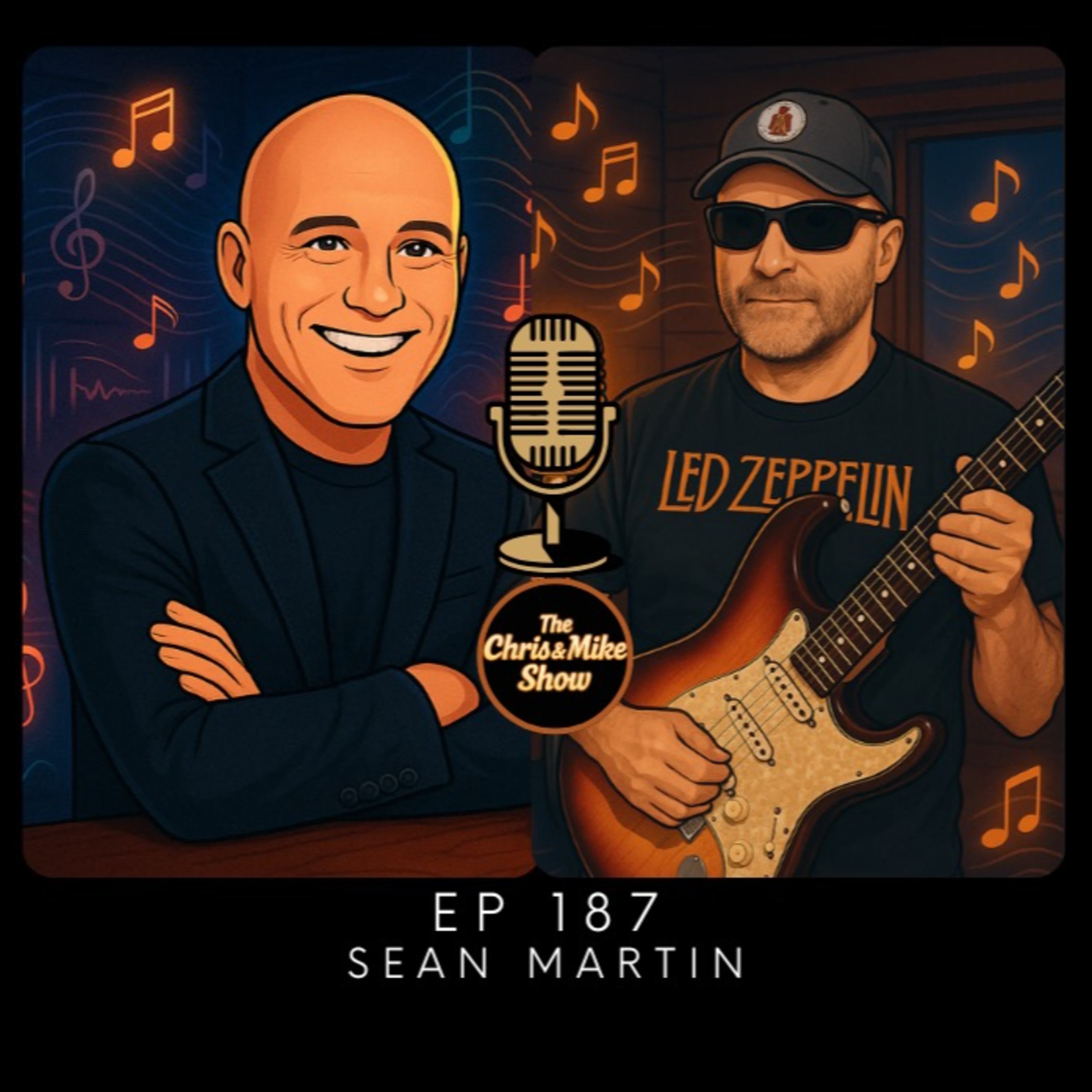
Join us as we explore Sean Martin's journey through music, military service, mental health, and independent artistry. Discover insights on guitar mastery, vocal techniques, navigating the music industry, and overcoming personal challenges.
Check out Sean and his band at their website below.
https://www.thequarantined.com
Drop by our website below and drop us a review.
0:58 And there you have it. Welcome to the Chris and Mike show, ladies and gentlemen. Chris will be along momentarily. He has a project he has to finish up real quick, but we're going to welcome Sean Martin and he's going to enlighten us on all things music, I'm going to guess, and among other things. As much as I can, Yeah, sure. Well, we were having a great conversation before we got started and I heard Chris in the back of my head saying you can hit record anytime. Golden moments. We're losing valuable information here. So I already know that you like to talk music, and I'm going to assume you're a guitar player. Yes, yes. Guitar player and vocalist. Yeah. OK, I read that.
1:38 Audio engineer too, and. Exactly. Me too. You have a lot of things in common. Yeah. Absolutely. Do you have a way to turn your? I should have told you this before. Do you have a way to turn your volume up just a little bit? Yes, through your microphone. Yeah. Purple let. Me try to bring this up a little bit, how about now sounds? Way better, dude. Yeah, and just stay close to your mic so we can hear. You OK? Sure. Yeah, absolutely. So what got you started in music? And what I started at nine years old playing guitar. So I kind of never quit from there and decided that I wanted to try it for a living for a while. And I started that journey at 18 in Chicago and then I moved to Phoenix and I was 19.
2:29 Then I met Chris shortly afterwards and we started Nemesis. And that's how we came to do this podcast, as we've said a lot of times. But these are, you know, some of these are stand alone ones. So I try and make sure that everybody understands why we're here. We are talking music. What got you started, man? So it was community choirs when I was four years old actually, so. OK, hold on. Let me interrupt you real quick. It was Belle Choir for me at church. I forgot I played in the Belle choir. Right. Thank you. Go on. Yeah. Yeah. It's So I was doing then I was doing opera at seven. I was one of the little kids in an opera production for the Mendocino Music Festival one year. And then at 12, I picked up the guitar and started learning. You know, the first thing that I learned was Green Daytime of Your Life.
3:21 And then the second song I learned was Crossroads by Cream. And then the third song that I learned was Purple Haze by Jimi Hendrix. And then after that it was all Metallica and Green Day. Pennywise, you know, Linkin Park, when they, when they came out, especially, I was learning a lot of their stuff. So great. Awesome. Yeah. And, you know, I would always play the, the classics. I would always play Zeppelin and Sabbath. And yeah, I, I, I definitely loved Boston a hell of a lot more when I was much older. But but when I was young, I mean, it was a lot of straightforward, especially like 9 Inch Nails when they were coming out like they, they, they were, they were really big, sublime.
4:10 I think you and I would have got along great. Yeah, probably. It sounds like I was the same way. I liked everything that was good but different than what was going at. Like, Sublime wasn't what was going on at the time, but that album was huge, you know? Yeah, yeah. I mean, they were. There's a bunch of bands after them that tried to be them, but they were the originators of that music, just like Rage Against the Machine was the originator of that style of music. And then along comes Limp Bizkit. We had a legendary DJ on here on the last episode on Friday, and he reminded us of that, you know? Yeah, not that Limp Bizkit's a bad band, but it's a commercial product by product of Rage Against the Machine.
4:53 You can't argue that at all. Yeah, yeah, absolutely. I would agree. Yeah, coming from that, they they were trying to ride the fad of having a DJ in your rock music. And you know, that was that goes back as well. You know, you can take it back to Aerosmith and run DNC back in the day, you know, but at least they got it really became a genre. Yeah. That's when that's when it really became a genre and a hook and a whole group of people doing it, not just, oh, look at this one cool thing that we did this one time, you know? Right. And boy, did that work. Yeah. That's what you call overwhelming success.
5:35 Yeah, but the Pennywise, the Sublime, what else did you mention? There was another one. How about like Coc? Did you listen to Corrosion? Oh yeah, yeah, I listen to Corrosion and Conformity. Yeah, they're from around the same. I think they're from around Sacramento if I'm not mistaken. I think you're probably correct. I don't know to be honest. Yeah, it was not. They were not far. Like I remember them even being mentioned, like in people going, you know, oh, we're going to go to the cursion conformity, you know, show and stuff. Even when I was young and then as well, when I was in music school, I had many of my friends who were very, very much fans of theirs.
6:15 Yeah. And for the people that don't know who The Corrosion of Conformity is, they would be a musician's musician band, like a band like Metallica looks up to Corrosion of Conformity still to this day. You know, they would bow down to him as just doing it, doing it their own way with such a unique sound. I have a producer friend of mine who said individually, those are two of the worst guitar tones in the history of the universe until you blend them together, right? And then it's that beautiful sound that you hear. And by beautiful, if you don't like distorted guitars, ladies and gentlemen, you will not like Corrosion of Conformity. But it is such a wall of sound, right?
6:58 Yeah. And he knows those guys personally. He just said it takes such a horrible, in his opinion, a horrible individual sound to create that blend. Yeah, yeah, it makes sense. Yeah. Like you, you've got to figure out how it fits into the entire of what I would say is the envelope of the, of the song, the the envelope of the of the sound, you know, So at any given moment, even though it may be a kind of sound, it still fits in somewhere. Because it belongs there sonically, right? Right. Yeah. And, and because there's still a a tonality and a modality in, in the sound of the music that keeps it all in, in, you know, in key. And so the things out of key also say something. And that's really where the artistry of metal really comes through that sometimes a lot of people miss, is that it's not just about the correct notes you play. It's also about the weird notes that bring emotion through. I'm really good at those, dude.
7:59 Right, because yeah, all the weird ones. And when? You don't know enough. I know. How do I want to say this? I know enough theory to get myself in trouble, right? Yeah, I developed my own sound. I got lucky in that I found my voice on the guitar before I was technically done learning it right. Yeah. But I think that that's such a great way of putting it. I've never thought about that. It's all those oddball things that I do that were near and dear to people's heart because a technically trained musician would not do such a stupid thing, right? Right, right. But exactly. With what I was doing, and like you said, Chris's voice was very unique and I was able to play with that musically. I could do things on the guitar that were countered of what he was singing for a melody, right?
8:49 And now you have that harmony of the guitar and the voice together. You just described something I painted a picture in my head as you were talking. It's like that's exactly what we were doing, was fitting ourselves into the song, but we were too stupid to know what we were really doing right. But you could emotionally feel it, and that's why you. Or somebody would say, I'm not trying to hurt your feelings or, you know, but that doesn't work there, right? Something's weird about how it sounds. That's how they would always say it. And you can't argue with that. It's like, yeah, you're right. It's weird. Yeah. But sometimes, you know, going through those those aspects of it, I mean, sometimes it's it's the constructive criticism that needs to be had for the moment.
9:31 But at the same time, you know, Jimi Hendrix would say no, I meant to do that. So, you know, you can. But when you've got, so when you've got a stylistic way of, you know, doing the, the kind of things on the fret board that, that make it speak, that's that's the kind of little bits that that I'm talking about adding in there. And in fact, you were doing it, you were doing a stylistic version when I, when I stepped on of Eddie Van Halen. So when you're adding in those little, those little bits into what to you is just normal, you know, rote mechanics, then just that little bit will give someone something to look forward to and to listen forward to.
10:16 You know, sometimes we, we as musicians have to remember that a lot of times that's all that it really takes. You don't need to put the whole bottle of salt on there to get someone to understand that you have command of salt. You know what I'm saying, right. So sometimes a little bit truly does. The long way. Sorry brother. Sure, he might be. No, he's back now. I can hear it. OK. Hello hello command of salt. Welcome, ladies and gentlemen, the one and only based on them. Right, right. How are you? Sorry, sorry for the welcome brother, the delay and then I got to I got to sneak away. You're fine. 4:30 because I got to shut the other port so I don't flat out my neighbor, but you know my cast. In here we were nerding out on you were nerding. Out on guitar 'cause I when I first came out I heard Sean saying you were wee wee wee on my call guitar talk, which is awesome.
11:14 And he's an audio engineer and he's a singer, so you have things in common with him as well. So right now, absolutely right on. Cool, he's a musician's musician. That's fantastic. Mike likes talking guitar talk, and that's something I cannot do for him. So it's fun when we have somebody on that can, you know, nerd out with guitars, man. That's awesome, Sean. Yeah, but he is real. Good. I'll be able to do both. Like, you know, I can talk about, you know, vocal stuff too. It's, it's a very important aspect of, of everything that I've been doing since I was very young. Is integrating on the breathing exercises cool match up to the same breathing exercises that you do to as coping mechanisms for panic attacks? Oh, no shit, right.
11:59 Yeah. So when you so when you're practicing becoming a better singer by doing the diaphragmatic breathing exercises, guess what? You're also training your body how to get over panic attacks. No, I did not know that. That's crazy. Yeah, that's crazy. And since I never had panic attacks, I just can't. I can just store that in their wheelhouse. OK, It's been a while since I did. Yeah, it's been a while since I did all the breathing exercises and stuff. But I I remember doing all that stuff because I had voice lessons throughout my tenure as a singer, because you got to every your voice is like everything else, right? It's an instrument. You got to treat it right. You got to take care of it. You got to work it out. And, you know, a lot of people don't get that, which I think is kind of funny. Yeah, yeah, absolutely. It's a very detailed thing, you know, it's for me, I've, I've lost my voice 3 or 4 times already and I've been able to, to bring it back because of the things that, that I learned in the, from the people that I trained under.
12:50 That's cool. And like, that was, and I remember the teacher telling me I'm training, this is what I'm training your, your voice to do so that when these things happen, you can feel how to bring it back instead of just knowing how to bring it back. Right on and that that was like some of the most invaluable things how to to open up the the registers and the resonances in each of the different spots where the voice usually comes from your throat, your nose, the front of your of your of your mouth and your chest that's. Cool, man, That's very cool. I, I, I, I was in shape enough from a vocal standpoint. When I, my last band I was in, we went to Nashville and the first day we were there, I thought it was all scratch vocals.
13:36 Like I thought we were just recording the music and stuff. And we did 4 songs in 12 hours with a like an hour lunch break. And I sang the entire time and I could talk fine the next day. And then when we were done with the four song, the producer was like, OK, we got 4 songs down and I'm like, well, I got to do the vocals. He's like, you did the vocals? I was like what? And he just, yeah, he took the best, the best version of every song we I sang. And just without, without knowing what I thought was kind of cool because then there was there was absolutely no pressure on me at all, at all. I just, I thought I was just scratch recording. So they were following along with the music and then we were going to come back the next steps, lay down the tracks and he's like, no, you, you're done.
14:17 Like, OK, what the hell are we going to do tomorrow? Yeah. You know, I think Legend has it that's how Stranglehold got recorded too. Really. Yeah. Yeah. I'm pretty sure that's the first take he did, and he did many more takes after that and never liked anything as good as that. Eruptions the same way they they did that to Eddie. Same trick they did to you. That's crazy. We're just warming up. Can you play that thing you've been playing? Wow. Yeah, and Eddie always hated it because he said there's a mistake at the top of religion that bothered him for Yeah. Wow. But the rest of it, I guess was the best. And back then, you know, you didn't have the option of, I don't know, maybe they weren't cutting tape then or something.
14:57 That's interesting, I never knew that. Or maybe it was in a spot where you couldn't cut to. Yeah, there's so many notes on a guitar. Yeah, when you tell that story. I was thinking those two stories, Eddie's eruption. And so I'm pretty sure strangleholds the first take too. Wow, kind of like Stairway to Heaven first take. Yep, yeah. Of course people don't understand if you're not a musician, they don't understand what well versed musicians Led Zeppelin was leading up to becoming Led Zeppelin. Jimmy Page played on over half of the recordings that came out of Europe from like 1940 something to the early 19 or midnight. And then and and. John Paul, Joan, Same way.
15:39 Yep, studio musicians that just non-stop just played and played and played and played. And it's kind of like The Beatles people. A lot of people don't understand The Beatles. Hold on. Before you go on to that, think about Led Zeppelin. Yeah, I just thought of this. You got two of the best studio musicians arguably in the history of the world put together with two guys who were playing in a bar band. Yeah, yeah. And you had the most magic in Rock'n'roll history. What were you going to say about The Beatles? I I watched they had a documentary a long time ago. It was like AI don't know 12 hour documentary or something so they had to watch it in pieces. Like a Ken Burns. They would play like legit like 6 hour shows. They would just play non-stop.
16:21 They would just play after song after song after song, which nowadays I you know, I mean aside from rehearsal, right? But they would actually be in front of crowds just playing like these elaborated, lengthy shows. And you and I, and you probably know this too, Sean, when you're on stage with your band in front of a crowd that's like 10 practices in one, you know, because you can't stop. You can't say whoops. And you can't recreate that setting. No, right. Yeah. So it sounds exactly like it's going to sound there and it's going to be that way, right? So that's the thing with The Beatles and Zeppelin, man, they just they had their they had their craft down to a just a tea. I mean, it was in their in their souls and their bones, every fiber in muscle memory.
17:08 Just that's when we talked to Paul. We talked to a Neander Paul, that last show we did a disc jockey that's been all over the United States. Really cool guy. We talked about how Zeppelin is. It's just timeless. Like it's just timeless. It doesn't matter when it comes on what era comes on, what decade, what year, It just sounds like it was just recorded. Yeah, always. Which is cool. Yeah, it still grabs you emotionally regardless of of any anything else. And it does the same thing for me. I mean, every time that I hear something on on the catalog and it's, you know, one of my favorites, one of the 25 different songs that I can't decide which ones are my favorites. You know, it's it's still grabs you and still takes you back to that place, but also at the same time is still an anthem for something that you would want to do right now. You know, like, that's why Black dog is I think the way that it, that it really is and has become the, you know, been on everybody's list from the song that they that they want to have at their BBQ to the song that Chevy wants to use to promote its new truck.
18:17 You know, it's so it's, it really spans the, the, the generations and it, it really doesn't matter if it wasn't recorded in Pro Tools. It really, it really doesn't fucking matter. I. Don't think, I don't think it would have ever sounded the same if it had been. I think it took those guys as minds of setting John Bonham's drums up in a hallway or whatever they did to get When the Levee breaks. And come to find out years later, Jimmy Page mostly used little 8 and 10 Watt amps. He wasn't using gigantic Marshalls in there, you know. He was using boutique amps that were small and compact and unique enough that he could blend those sounds together to get a massive guitar sound.
19:01 And we just established John Paul Jones was a musical and is still a musical genius, right? He's been composing for movies and TV scores and God knows what for 40, some 50 some years now. Yeah, it's like Brian May astrophysics who plays guitar. Yeah, just happens to play guitar. I need something to fall back. On In the World. I'm going to play guitar, but I need something to fall back on, something in astrophysics just to just in case this doesn't work out. So think about this real quick, and I promise we'll get on to Sean's story. OK? Yeah. Mark Winters did it in reverse. He became like an astrophysicist and then a musician. Yeah.
19:41 Yeah. Yeah, we have this guy that's just insanely genius, man. That that. Yeah, So cool, really cool. Just I just, you know, fun guy, really fun guy. Just for who he is and what he is. Well, yeah. So whatever you guys are talking about when I jumped on. Go ahead. We got up to the point where Sean had become a musician. He's now an audio engineer as well. Songwriter, singer. Nice. What? Where did you go from there? You know, did you start a band? At what point? You know, I think you said you were in your teens by the time you, you know, started singing and playing guitar, right? 12 to 19. Nice. Yeah, yeah. And, and I recorded about 10 of the songs that I wrote there and just really kept them for myself.
20:26 You know, it's really just for, for me to accomplish, you know, that because I knew that at that point that I was going to go into the military. So I joined the Airborne infantry right after my 18th birthday and went to, I joined up in the 18X program, which was the fast track into Special Forces. And so it required you to go through airborne school, you know, basic training for infantry and then airborne school. And then you could decide whether you would go to Fort Bragg, NC to do the Special Forces training or go to a unit at the needs of the Army and deployed to Iraq.
21:06 And then after that, you could request to go to Special Forces and you would school and you would get it. So that's, that's essentially what I was on. And when I got to that choice, after airborne school, I decided to join. I decided to go to a unit and deploy to Iraq. So I deployed to Iraq in 2006 with the third of the Five or Ninth Airborne Infantry Regiment. Thank you for your service by the. Way. Thank you. I appreciate your support. Absolutely. And so, you know, the deployment was a crazy one. It was not fucking normal at all. And IA lot of strange experiences, a lot of combat experiences, a lot of, you know, issues with people who I worked with, you know, issues with the way that the war was being conducted, issues for the reasons why we're there, lots of.
22:03 You got there and all the sudden things were not kosher for you mentally or the what you're. Seeing no, no, like I had to go through a lot of combat experiences to truly know what was going on. And it wasn't until July or so that of 2007, like after I'd been there about 8:00 or nine months or so already that I that I was even considering not being in the military anymore. It, it wasn't until the Sergeant major who I was working directly under sent me to go do a mission that he knew and was expecting that I was going to die at.
22:46 And when I didn't die at it and it came back to him, he was thoroughly surprised. And it was after that, that I, that I had all of the Intel that, that this happened from the person who I wasn't supposed to interrogate. I was just supposed to watch, but I interrogated them and I found out that he, that it's a whole, that he was a triple agent. It was a long fucking story. But the point of, of all this is, is that it made me very, very disillusioned to what the system really was that I was a part of. And then they, and because of that, they gave me a choice. They gave me the golden ticket into Special Forces school and they said, we'll give you recommendations or you can get the golden parachute out.
23:28 And I said, let me go. I don't trust you guys anymore. Oh. Right on. So after that I took my GI Bill and went to music school. My son's a Marine. He's getting out in August. Oh yeah. Yeah, he just decided. He decided he couldn't. They couldn't get. It was weird, man. He like he was looking all these different MLSS he's going to transfer to because he made Sergeant, became a supply chief, wanted to change the MLS. Then Iran happened and then all the MLSS were no longer available. And I was like, well, dude, think about it, we're at war now. So you got to, they probably have to stop the MOS stuff because they're not going to let people move and shit and train them why chaos is going on. But yeah, he's he's, he's bouncing. He's he's going to be home in August, so. Yeah, well, you know, that's good. Yeah, yeah.
24:25 Interesting. Yeah, if that's his decision, then that's his decision. Yeah, you know, we're a little surprised by it, you know, but. Well. Really. Why? What's that? Why are you surprised by it? Because all the conversations we had, he was, he was going back to drill instructor school, then he was going to do another three years of that. Once he got done with that, he was going to do a lateral move and, and get in the fire science aspect of it. And you know, he had, he had reached out to try to get into a program that would allow him to leave, come home for four years and go to school full time. And then once he graduated from ASU, then goes, goes right back into the core. But those four years count.
25:07 But then he goes in as an officer, then he's so he's kind of an untouchable guy. And you know, you know, for lack of a return is going to be a lifer. And then just when he went from one spot to another spot in Pendleton, got the promotion, got the rank, the rank up. And then just kind of within two weeks span, he's like, I'm out. So that's kind of why it was like, OK, reel it back, man. Like what happened? What's what's what's the underlying tone here? You know what's you know, and then when we had the conversation, it's like, OK, we'll make sure you, you know, look at all these options and stuff. Just don't knee jerk react because you're not happy with going from point A to point B. Because you know, once you, once you get settled into that new spot and learn all the stuff, then you'll be back, you know, dominating like you've always dominated.
25:54 He's an accounting supplier and logistics. So he's not, it's not a, it's not a infantry guy. He was a backup shipper. So when he when he went in, he had to fall in line with those three MO s s that kid couldn't that was going to do 2 he couldn't do because he's color deficient. So it was, you know, those two are accounting, supply and logistics. So he's 18 years old and had $1,000,000 credit card moving, you know, equipment around the world. You know KAKE job. Totally KAKE job. It is a good gig, you know for sure. So, you know, as a father, you just, you know, it's that worry, you know, it's that concern. OK, what are you going to do? Life is not going to be as easy out here now as this cake job where you get up, you have to go into 10, you get 2 hours for lunch, then you go back and you're back.
26:40 You're done every day by 5, you know, and you're working out in the morning, working out at lunch, that type of thing. So you know. Well, see, he's he's lucky though, in in multiple ways and it's a little bit of wisdom about things kind of tells me at least a a few things that most likely what what is probably going on is that program that he was wanting to get into got ripped right out from under him because everybody was going to war. Well, that's what I'm saying so. Because, Yeah, so because of that, because if they take away your your future, then the whole reason of why you were joining is kind of like, right, gone. So what the Hell's the point of it? You know? And he has a job that transfers into the civilian world, correct?
27:24 He can go to a lot of different companies and probably get, you know, experience and they will count the experience that he had in the military, right, as something that helps him and benefits him for a job that is not a fucking anywhere near what I had. I had zero. Gotcha. Like when it comes back for that kind of shit. Yeah. For, you know, doing infantry stuff. You, you don't like the civilian world doesn't get it and they don't understand, you know, and also the skills and stuff just don't apply to the majority of the legal businesses that you could get into in the United States. The rest of it is all pretty much, you know, under the table kind of shit that you again better decide you're going to be doing this for the rest of your life again or else you're going to have some fucking problems. You know, and and and I had, I had told him before that you know when he does like I had a client, I sell hassles. So I had a client years ago that his dad had that same MOS in the Marines.
28:21 He was accounting supply and logistics. He spent 20 years in the Marines, got out, went and got a job at City of Phoenix and accounting supply and logistics, spent 20 years doing that. He had just retired when I met his son to sell his son a house. Double pensions, you know, double health benefits, double everything because he spent, you know, 18 to 38 as a Marine, 38 to 58 with the city of Phoenix. And you know, 58 nowadays is 40. You know, I'm 56 years, 56 years old and nobody guesses that, you know, when I, when I was a kid, 56, man, you, you were fucking in a Walker, you know, going to this old, you know, go to eat at 4:00 because you had the gummy food and shit. I literally just read the other day that Archie Bunker was 49 years old when All in the Family started. Wow, wow.
29:10 That blew me away. That's that is so emboggling. You, you just described what we were looking at in a 50 year old man back then. Yeah, a lot of them did look like they were, Yeah, basically over the hill. Yeah, yeah, yeah, I'm going to be. 53 nobody guess is my age no how. Old are you, Sean? I'm 40, OK? You're doing good too. Yeah, yeah. We were taught never to trust anybody over 40 When? We were 20. True story now. We're 50 something. I don't know where that came. Now it's then we don't trust anybody under 40, right? Yeah, that's a good.
29:51 Story it's kind of like, it's kind of like you, you have these Realtors on TikTok now they go viral, right? They have like 23 million views and they're they're walking through $10 million houses and Scott Stone shit. And you know, they're thinking they're bad ass and stuff. You look them up, they've never sold a house in their life, but they're gone viral. Yeah, like cool, I'm going to go viral. I'm going to go viral with this house. That's how they're making their money then. Yeah, if they're doing it right, yeah, but they're not. They're not selling houses that you know, but they're acting like they. No. They're monetizing off Instagram or whatever. Right, it's just kind of comical. It's like, OK, you know, viral doesn't give you business. It's just, it's, it's a video Next, next, next, next. You know, it's comical.
30:32 There's. There's some things that you that you can get from, from going viral, but it's not directly like linked or related. It's it's essentially the best that you can have is just another feather in your cap. And in a way, and I can guess from this, you know, from this guy that you know, he's looking to get attention onto a specific thing. So the being a real estate agent, I imagine he probably has some budget for it. So he puts a little bit of budget and he can get a lot of eyes on one particular thing and that's. But he's never sold anything. So when you're going, when you're, when you're going forward, it's a chick by the way. And you know he's a chick.
31:13 So when you're going out there, you know, doing that, you're not. You must be. There's no experience to back it and you're, you're, you're going through somebody else's listing And, and the way they go by the sign really quick. This is like, because they get away with, oh, why I I gave the realtor who hasn't listed credit. Like we're really mindful when, when a 20 year old tries to show one of my million plus listings, like here. Why are you showing a listing? Well, I'm going to make video. Yeah. No, you're not. No, you're not. My seller's not going to appreciate you popping for TikTok, walking around their house and what you call the dress. Sorry, not happening. You know, Yeah, but you know, teachers own man, I don't care. I, you know, you do what you got to do, but it's just to me, it's it's kind of false advertising because you're not you're not you don't have any knowledge or experience because you've never sold anything. And here you are going to a multi million, I'm talking, you know, eleven $12 million house in Scottsdale. Look at me, look at me, look at me. And it's like, oh, you don't know the first thing about selling a house, yet here you are walking through somebody's thing and those type of people, you know, they don't live on TikTok and shit.
32:22 So they're never going to realize it's there. But if they did, I'm sure the shit would hit the fan. Because they're not. It's not a proper representation of that lifestyle or that house or that property or what it is. My opinion, obviously. Well, well, simply, you didn't have their permission. Right. Yeah, and you have to have permission to advertise somebody else's listing, which is why they just braced by the sign writer and well, that's that's the guys name. Yeah, okay. But here's here's my point to she's point. If I were the owner of that property, then you came to me and you said this kid wants to go viral on Instagram, can he shoot a video? If I had a badass house, I might just say yes. Right. To get those million views or 2 million views, I just think I agree with the way you're looking at it because if the seller doesn't say yes, you can bring my house on TikTok. Most people don't want that done. Right.
33:13 That's the problem they're going through. And we're totally off topic here, but they're going through and and, you know, they want to show a listing and then all of a sudden they're there and then boom, you know, two days later shows up and there's, you know, yeah. And then you look him up, It's like, OK, yeah. They didn't have permission because they didn't disclose who it was and the way they filmed it and the way they just breezed by the sign. And so I'm sorry, scroll moment. I'm just going to blame Sean because he got involved and then I backed him up, so I remember where we were at. You went to audio school on the money that the military gave you for getting out. Keep. Talking about audio, I got to go pull the porch. So continue the conversation. I'll be right back. You're fine, brother. Yeah, So where'd you go? I'll So I at first I decided that I was going to go to Minneapolis, the Saint Paul. There's a school there.
34:05 That I researched almost all of them. Yeah, so maybe you'll know the name McNally and Smith. It sounds familiar, yeah. Yeah, they they were in Saint Paul. So I went there and I went through the process and everything and it was all good. And I was going to go for the audition to the school, and I get there to the audition, and the guy is this very crotchety old, you know, guy who's super pissed off that he has to be there, you know, and is listening to me play, you know, like Voodoo Child. And, you know, it's some. And I didn't realize Nellie Smith was trying to be like the Western version of Berkeley. Like they were much more jazz focused and they were like rock or even pop for that matter.
34:47 If you liked any of those, you were kind of like not really taken seriously, kind of, you know, so I show up there and, and doing straight rock and like playing ACDC and Black Sabbath and Jimi Hendrix and stuff. And they're like, and so that the guy was like, you don't belong here. Like you, you really shouldn't, you know, you're not going to fit in this. I didn't like anything that you're doing. You only have two versions of a pentatonic scale. You, you don't belong here. I mean, he discouraged me a hell of a lot. So I just wrote it off. And then two weeks later they gave me a call back and we're like, hey, why aren't you in classes? And I'm like, because the audition dude told me I didn't fucking belong here and that I only knew 2 versions of the of, you know, pentatonic scales and that wasn't enough. And they're like, well, no, no, like you can still come. And I'm like, no, if you got people like that at that school, like I, I don't, I don't really want to go. No, that would turn me off as well. Right.
35:40 Yeah. So. So I just let it go. And then I looked at Musicians Institute in Los Angeles and they didn't care that I didn't know everything that I didn't know. They were like, yeah, we'll teach you it. That's the whole point of why you're coming here. So they finally had the right attitude and I was there at a very, a very unique time in it's in the school's evolution because there was still remnants and of the spirit and like the original founders of the, of, of some of the programs, we're still like alive and still there and running around the, the, the school and, and doing open counseling and stuff.
36:24 So you know what? There was still this very, this awesome sense of community where the the teachers are leading by their example of technique of leading by their, the way that they play. And that's what people are really going after and spending a lot of time to learn. It wasn't and, and now it's kind of become a little bit more like everything is multiple choice questions and there's a whole lot of reliance on, you know, like online quizzes and you know, it's, it's kind of formulated a little bit much, you know. I could have been an early adopter of that school because that's one of the ones that I looked at, and I'm thirteen years older than you almost.
37:16 So yeah, that school was not just getting started, but it was becoming the school that you experienced back. You know, Jennifer Batten went through there and ended up playing for Michael Jackson. And I can't think of everybody that went through there at the time, but that is. One of the places. That I really wanted to go. Yeah, Jennifer Batten was was on the one of the boards for for a while, Like she was there at the school for one of the years, like trying to, to direct it, it, it like it was really amazing. Yeah. Like there's the the a lot of the teachers who who were there, you know, it's stuck it out for a a while into the 2000 teens. And some of them are even still there, and they're still, you know, shaping a lot of great guitarists to come out of there.
38:10 And, you know, for me, I went through the independent artist program as well that was centered around giving you a bit of audio engineering and music business to get you the sense of how to release your own music. And that was a very useful program. I did it twice, in fact. Yeah, 'cause. You can make money with those skills. Right, exactly. And so as well as taking full on music business class, I also did the audio engineering program twice as well. And so I got to work on the on the boards they have there and and really get a sense of all of the different positions in a studio and knowing how to do all of them and how they all apply to the artist. Because I knew I was going to be the artist, but I had to be. I wanted to be the artist that knew. Me too.
39:02 What the expectations of the other people in the room were, so that I wasn't. Super important to me too, Sean. Yeah, yeah. Like so that I know who the fuck I'm even talking to, you know who to ask the right questions to so that I get the right results. What are drums supposed to sound like? What is the bass supposed to sound like? Because it's not the same as when you're in a concert venue, right? Those are two different thought processes. Studios, A controlled environment. What kind of song are we recording? Rock. Country, rap, pop, you know, all those are different recording mentality. So I'm with you man. That's really cool. I like where your thought process was. Yeah, yeah. And I even took, you know, live, live live sound classes multiple times in multiple different, with multiple different kinds of boards. It was really, really expansive.
39:53 I really tried to capture it from every different aspect that I could so that every single bit having to do around around music that was going to be happening in front of me in the future because I knew all music was all I was going to do. I wanted to be able to have something to do with it, to at least know a little bit about it. And eventually, once I graduated in 2012, I had a temporary psychotic breakdown. And eventually, yeah. Yeah. Yeah, yeah. I think more and more that people talk about these things, we find that it's it's much more common.
40:37 For people, we flip it like that. But yeah, you know. No, it's it's much more common than people and I. Feel bad saying it because mine was drug induced and yours was serving our country I'm sure. Well, yeah, my, my, mine wasn't, wasn't drug induced, but it was, yeah. As a result of not dealing with the emotions of everything that was taking my nervous system completely off on a just on a tangent, you know, so I would be subject to whatever my nervous system wanted to Take Me Out into based off of anything that was going on around me. And when I'm living in Los Angeles at that time and you know, there's, there's, there's a whole lot of things that will trigger you, you know, like it's and that way because I didn't know how to deal with any of this.
41:33 It was just I was just being taken. And so I could never really focus on anything. And my life was just becoming more and more of a shamble and less of a journey. Do you see what I see, Mike? Yeah, I knew. We're sorry to interrupt. You that was I heard you guys reference that you guys had a band named Nemesis. Well, I have a song named Nemesis. Friend of mine, yes. He's got the evidence right there. I like, I like to troll photos, like where our guests talk, because it it's just, it shows, you know, it's. Visual shows how the universe is all cohesive. Yes, look at that full circle moment.
42:14 Right. That's pretty cool, man. Yeah, Keep talking. Keep talking. Yeah, you're fine, man. Yeah. Sorry to Yeah. So let's see, where was I? You were at the end of your psychotic break, yes? Oh, right, right. OK, So yes. So after that happened, I had some friends reach out to me and they were like, hey, what are you doing? And I'm like, I've been stocking the streets of Los Angeles for the last three days. I don't know where the fuck I'm at. Come pick me up. Oh, and they were like eventually talked me into and you need to start asking for help. You can't do this all the time. This is you're meant for so much more than this. And because it's so I'm looking at losing everything and, you know, eventually, you know, I did and became homeless for a while in Los Angeles and only for a short period of time was like really, truly on my own and and homeless. And I was lucky because there was a, an inpatient clinic that I eventually got selected into once I was in the cycle at the WLAVA.
43:21 And I was selected to go and do this program that they were calling FoB Hollywood, which was an inpatient clinic for veterans with PTSD, combat veterans. Everybody in there was, was, had experienced some kind of combat experience that was significant to have them all have a diagnosis of PTSD. So everybody in there is going and fighting the same battles from some different other form or another. We're all fighting the same battles. And it was in this beginning that the band still stuck with me. They're like, you're going to be in here. But you know what? We're still going to be making content. We're still going to try at your speed whenever you want to, as much as we can. We'll do it.
44:02 And they stuck with me all the way and completed our album Antiquate Hate that we were all ready to release in 2016. We worked with Charlie Wade Meyer in Los Angeles who recorded it all and we had George G1 Archie who did the the final mixing and mastering and he was the audio engineer for Death Row Records in it's day. And he he brought a really awesome way to, to make the, the rap and rock music really mixed together. So it's not really relying on that new metal edge, but still more organically because the, the, the soul of it is really connected.
44:47 And that's what we're going after. And I think we accomplished that with that record. However, we had a manager at the time who tried to steal the record at distribution. Oh. Ouch. It was super fucked up so that management still had claimed it's copyright on Spotify and it was really fucking ridiculous and it took me a long time to undo it, but once I realized that's what was going on, I had to kill the whole record. That sucks. Five years, everything that I had gone through, all of that, that you know, coming from these are some of the pictures that we had from it. They were golden pictures. Yeah, for the time, yeah, they were that fucking golden, the pictures. He's scrolling through are amazing. Yeah, it this, this one is more recent. This was taken to the wheelhouse in Colorado. OK.
45:31 But these are these are clear. We're back in LA during that time. Yeah, with the guys there up in the yeah, up in the corner there, yeah. Like whenever they're when, whenever those Caspers and Alex are in there, that's that's from that era. Cool. And it was, it was such an an amazing experience to go through all of it. And you know, it's, it really ended up getting taken from them as much as it was taken from me. That's awesome. And after that, they were, both of them were, were immigrants. And at that time in 20/16/2017, there was a whole lot of serious issues with immigrants being in the United States and with the music that we're releasing. Yeah, we didn't like, nobody knew. So at some point, we had to be like, look, we, their lives were pulling them apart.
46:19 It wasn't just the emotionality of the of the moment. It was their lives pulling them apart, their lives, my life pulling myself apart with that let down. I also was going through a divorce. I had to leave Los Angeles entirely. Like everything was crashing down horribly in that area. And it was one of those times when it's like, man, maybe this is the end. Did you write? I just have to. Oh yeah, OK, cool. I wrote a. Lot the writer, the lyricist did me. Did you write, did you write through all that? Because I mean, of course, I'm sure, I'm sure there was some great, great lyrics and songs and poems and journaling Journal the Chaos man.
46:59 Yeah, I still remember everything very well and draw from all that stuff. What I tried to do was put, what I ended up doing is I left Los Angeles at that point and I went to Florida and when I was in Florida, there's. A large baseball. That's a big fucking move, man. Oh, man, I did it in 38 hours. I drove like, you guys want some stories? That's my fucking stories. All right, So driving from Los Angeles like for 18 hours straight lands you in somewhere around like Katy, TX, right? And I did the southern route. That's I think it's through around where you guys are AT and you guys may know.
47:42 I'm in Arizona, am I from Pontiac, IL? I'm in Illinois, yeah. OK, Yeah, yeah, around around Arizona. Yeah. So there was, well, maybe I can't tell the story, but the, the, the idea is that Border Patrol still has a where they a spot where they take over the entire highway in that area, still do to this day. And it's very important, Yeah, it's still, it's still very important for people to realize that that's there. That's what I'll say when you're travelling in California, OK, Very. Important. Because we're live. That's well, I'm just be aware. I'm thinking that, Sean, we got to have you on a Friday because Fridays we have unlimited time because, you know, I miss some of your story, obviously, from doing what I had to do with my my water irrigation.
48:29 But yeah, I could see us going down so many different paths. Just talking to you right now. Oh yeah, we keep going, keep going for short time. So, so it gets you around Katy, TX. I'll, I'll Fast forward to going around Katy, TX and there's this town, I don't know what town it is, but when I got there, I got to this Motel 6 after 18 hours of travel. I look like hell, but I'm wearing my A/C DCT shirt and ripped jeans and, you know, combat boots. And when I walk out, this is like a Sunday. Everybody's in their khakis and pastel shirts. Like everybody is looking like they're straight out of the Stepford Wives. And I'm like, I am going to get lynched here like this is going to be bad. And so I asked the the the person at the front of the desk at the Motel 6 who has nose rings and piercing, you know, it looks totally goth.
49:19 I'm like, is it okay? Here is like, I'm going to be. And she's like, Oh yeah, I'm way worse than you are. You don't need to worry about a thing. You'll be fine. Yeah, OK. So I went to the barbecue and lo and behold, everybody's fine with it. But I was really scared for a second there, you know, because everyone looks so just over the top together, but that's just how they look on Sunday, man, That's Texas. And that's just weird me the fuck out. Like I'd never seen anything like that, you know? But that small town, Eastern Texas for you. And so from there, I did another 18 hours straight to Tampa from there. And it was like, by the time I got to to Florida and that warm air is hitting you. It doesn't matter if you're that tired and you've, you know, you're trying to keep yourself awake, that warm air is good. It doesn't matter if it's blowing your face, it's still going to make you want to pass out. So after that, I think I slept for a solid like another 18 hours after that.
50:12 It was one of the most intense Rd. trips I've ever done, but I absolutely needed to do it. We're kindred spirits, man. Let's get to where we're going now. Yeah, fuck it, we're going. Yeah, I came back here from Arizona for a two week vacation and almost 16 years later I'm still here, so. Yeah. That's how I operate as well. I got to stay. Yeah. Well, yeah, for me, I, I had, you know, I still knew that I had to deal with the the issues that were still a part of me and how I got to the place of where I was without anything that I'd been working for for the last six or seven years or so. So I around in Tampa, there's a, a large baseball community and I leaned into that.
51:02 I, I started playing baseball more and more. So, you know, pitching and and working on all the different types of pitches that I could throw, working on my curveball and my change up and the circle change and trying to get every different aspect that I could just get myself not focused on playing music like I had been, but to grow into something more than what I had been because that's when I needed to. Be. Right. Yeah. And how and how I did it was I, I took all of everything that I had and that was going on and put it into therapy and put it into baseball and slowly brought myself back into mixing and slowly brought myself back into playing just music whenever I really felt like I needed to.
51:50 So I really started connecting to it and not like making it into something that I had to do, which is kind of what it was looking at before we were signed to a sub major of Sony. And like the the pressure of that was coming up from this record was, you know, was big. It was a big deal for us. But you know, we were expecting big things from it and it just turned out to be a big it was end up getting kneecapped. From There's a time when there's a time when you can't say I don't want to play today, you know? Yeah. If you're doing it professionally, there's no calling in sick, there's no saying I'm not going to do that gig, I'm not going to go to that recording session. You have to. That's your job. Right.
52:31 And I wanted to avoid that in myself. I wanted to not build that habit. I wanted to give myself the find the real connection that I have to it in the growing person that I was becoming, the learned person that I was becoming every day because I'm focusing on being the eternal student all the time. Just to make it fun to keep learning. Yeah, so I took the time and I then I, I wrote and compiled and recorded Aversion to Normalcy. But at the IT took me about three years through the pandemic, I went to multiple different and and even while aversion to normalcy was in its infancy of, you know, just being tracks that I recorded and mixed myself and I still knew they weren't good enough.
53:14 But at this time, I also went on a an open mic tour. That was that's what I call it. But essentially I drove across the country again and went to and stopped at open mikes whenever I could just to meet as many different kinds of people I could in who are trying to do the same kind of stuff as me. And I ended up meeting some really, really awesome people and seeing some really awesome music communities across the US. And it gave me hope to realize that it's, we may just be feel like we're in some kind of isolated pocket, but there is truly when you're around all of the people who are really going after the same thing that you are, it's really easy to become inspired and. It's somebody else went through what I went through, Right? Right.
54:01 And vice versa. Yeah. I heard you say it, too. I went through the same thing, just in a different way. Just to know that you're not alone in knowing that you lost your mind, that you were put in a position you never intended to be in it. It helps to know that you're not the only one that's ever been there. Right? I felt like such a failure that I pretty much gave up more times than I'd like to admit. But I'm still here so. Right. Failure is just learning, you know? Failure is truly if you learn from it, then truly it's not a failure. Well, I've always told my kids it's not how you follow, it's how you get back up. Everybody follows, right? Right. You know? Absolutely. Yeah. Yeah. And the more and more that that instills into this in into everyone, including the younger generation, the better the world is going to become.
54:47 Yep, Yep. So true, man, so true. Yeah, so I knew that I had aversion to normalcy and and after the working with Plaid Dog Records to create Instagram hell and One Last Chance and One Last Chance is much more of like a R&B kind of song that is very, very different from the majority of the the quarantine stuff. But I wanted to create that R&B kind of feel like we're using organ and shit, you know, like we're, we really get into it, but we're still using a kind of, I'm still adapting a, a rock lick into, into a more R&B kind of setting with, with one last chance.
55:36 For me, it's, it's actually much more akin to The Beatles than it is anything else because it's, it's so I, I highly recommend people go and listen to it. But the newer music that we released, Aversions to Normalcy, is when I decided to take. I knew that what I had with Aversions to Normalcy wasn't good enough. I knew that I didn't meet the requirement that I needed for the music to be as good as it possibly could be. I knew that I failed in that. But I knew that if I took it to the right people, they could make it what it needed to be. So I took it to Nashville and I took it to Blackbird Studios and with Nathan Yarbrough, who has done albums with Hailstorm, Evanescence, Alice In Chains, Korn, like all of the the bands from like the I was, I was on a show and I was like, they're like, they haven't music hasn't really been, you know, haven't been meaning really good stuff since like 2005. And I'm like, man, all of those bands that that need to work with, they're all putting out music. Yeah, past 2005.
56:47 So yeah, there's a ton of good. Music. Yeah, yeah. Yeah, like they, they really, and they're really bringing it like all the time. Yeah. Like Lizzy Yale is, is off the charts with what she's able to do. It's really, really impressive just to see her play live, but let alone on the records, like it's, it's awesome. So I knew that Nathan could capture everything that I'd be trying to put it down because he's already done it before. So when I brought it all to him and he was ready to go and I'd already recorded this three or four times. So I get in the studio and he's like, dude, you're 1, take Jake all the time. Damn. What? You know, what the hell is this? We had set 4 hours to do guitars. You'd knock them out in two. What the hell is the matter with, you know, like, are we missing anything?
57:27 Like what, what's the matter with me? You know? So it's very fun to to have these, you know, to really sit with an expert who knows that he's still, because he's still doing the same eternal student kind of mentality that I am. And it was such a great thing to to see the place that I was missing with mixing was really just in my mentality and my approach. It wasn't the technical knowledge. I wasn't thinking about all of the different elements of a mix. And it was so great to see that I was much closer than I thought that I was, you know, But I still know and know that any great record that I'm going to put out, I'm going to use Nathan or somebody of his excellence or better.
58:16 You know, it's, it's got to be that way so that the quality remains that high. But I'm still going to try and I'm still going to be working on my album Bedroom Ink, which is all an album of covers. But it's something that we that we put our own spin on these different covers. And so I'm mixing them myself. I'm starting to bring them up into it, you know, so to, to be ready to go. So we've got aversion to normalcy. We did A and once that album came out, we had a really crazy response. We just crossed a million streams where the album as a whole. Congratulations man, that's amazing, that is. Thank you. Thank you. Yeah, it, we went through a, a, you know, a few different avenues to try and build up the streams.
58:58 And what I've, what I've come to find with these numbers is that it's more of a reflection of your marketing efforts and less of how good your art really is. There's a lot of times that musicians think that because I don't have a lot of fans right now, that says something about the value of my art and it truly does Not at all, not anymore. And you really need to stop doing that to yourself if you're doing that to yourself. I found that the numbers now a reflection of the marketing efforts that you put into it. And a lot of times that's marketing money. That's why the numbers for these other artists are so high is because they have they. Spend the money budgets. Yeah. So there are ways in which you can go about doing it your own self, but it's also important to adjust your expectations when you do that. Because I've done it both I've done, I've tried to release a record on my own and do it on my own. And then I've paid subject matter experts to place it and where it needs to be and to do the things that it needs to do so that the algorithm works.
59:53 Not just what I think should happen, right? Not just how I think it should look, but what the algorithm needs it to look like so that it gives it to everybody else. And when you just sort of. Take that sort of adjustment to it instead of I'm giving up all my creative freedom. Then it becomes a lot more palatable when the good things start happening and then a lot of people start seeing it. So that was a, a fun journey to go on my own to start realizing that the, the authenticity that I have of who I am can transfer into this medium of social media, even though it seems like it can't or it won't. I'm not exactly like, you know, some of the best streamers. So that obviously means I don't have a place. That's not how the shit works either. You can forge your own place when you go about doing it the right way.
1:00:42 Cuz there's a process to everything, Sure. So once I took that mentality and with this record has pointed me and orientated me in that direction, I've started to open up a whole bunch of different avenues to make creation work for me so that it stimulates the revenue streams. And then when I control all of the revenue streams, then that becomes an artist centric business model instead of the artist bottom business model, which is we feed up everything to everybody up there and they take our records and they take all of the the lion's share and give us what's left. So when we control the the levers of of command, essentially, yeah, the levers of power in this way for ourselves, yeah, truly in the music industry, that's when we truly become free and independent. That's fantastic.
1:01:34 That's cool. We got to have you back on on a Friday, man. There's I can just tell we could talk to you for like 3 hours, like it's 20 minutes. We'll. Expand on these stories some more. Yeah, we are limited on Tuesdays. Yeah. So look at tell. Everybody again, where they what your latest releases are? Yes. They can find him. They can find him on Spotify, they can find him on all streaming services, but mainly the Spotify 1. You can find us on the the quarantine.bandcamp.com. We're on band camp as well. So you can, you know, pay for the albums there, give us donations, tips, anything like that. It's all very much appreciated. And streaming we're on, you know, social medias, TikTok, YouTube, Instagram and Facebook at. Yeah.
1:02:19 And then obviously the quarantine.com is your website and all the social media links are on your website as well, correct? Yes, absolutely. Yeah. And obviously YouTube channel, etcetera. Yes, cool. Right on, I found Martin at the corner. Are you subscribing? To all those. Right after this, yeah. We'll get all that subscribed and, and give you props and, you know, and then I'll shoot you an e-mail with Fridays and you pick a Friday that works for you and we'll we'll get you back on and go down deeper down the rabbit hole of Sean Martin in the quarantine. Yeah. That sounds awesome. Dude really enjoyed talking to you brother. Yeah. Thank you so much for having me. Yeah. And the parts that I was available to, to be present, I enjoyed it as well. I just, I looked at the clock. Holy shit, it's like that.
1:03:02 We wrap up every show like this, which I'm sure I'll appreciate considering where you've come from. If you're feeling suicidal, depressed, don't do it. Go for a run, go jog, go journal, go scream in a pillow. Go find somebody to talk to you. If you cannot find somebody to talk to you, text 988. Someone is there waiting to talk to you, to help help you change your mindset, talk you off that ledge, get you off that Cliff. Tomorrow is a much better day with you in it. Don't leave a hole in somebody else's heart because you decide to leave the world before you should. For the Chris and Mike show, I'm Chris. He's Mike. This is Sean Mart of the quarantine thequarantine.com. Go check him out, go buy his music, go follow him on all his socials. We're going to have a back on the show go a little deeper dive into his life resume, which by the way, we've just touched on just a portion of.
1:03:43 Lost the surface. It's just, I mean, I'm excited to have you back and just have more of an in depth conversation with you because I just imagine everybody came back to that was too short, that was too short and get him back. So I'll get you back, absolutely. Yeah, thank you so much for having. Me truly, truly appreciate your time and again, I'm sorry I had to bounce a couple times with, you know, the damn irrigated lot. You have to, you know, be responsible so you don't flood your neighbors out. God forbid. It's all good, brother, it's all good. Until next time we'll see you peace. Love you brother. Peace, love you too man. Thanks, Sean. Much love.


